

Use the links below to jump to a section, or continue reading for the full article. You can also view the full specifications, image gallery, charging performance, and online reviews. Sections:
Alternative Models
Compare the Nissan Leaf Standard Range with these alternatives:
Performance
The Nissan Leaf Standard Range has a maximum power of 130 kW (177 hp / 174 bhp) and a total torque of 345 Nm (255 lb-ft). It accelerates from 0 to 100 km/h (0 to 62 mph) in 8.3 seconds and reaches a top speed of 160 km/h (99 mph).
Battery, Range, and Charging
The battery has a gross capacity of 55.0 kWh and a net usable capacity of 52.0 kWh, with a 3.0 kWh buffer (5.5%) for battery protection. With a nominal voltage of 350 volts, the system is classified as a 400-volt battery system.
The lithium-ion battery uses NMC (nickel manganese cobalt) chemistry.
According to the WLTP (Worldwide Harmonized Light Vehicles Test Procedure) standard, the vehicle's range is 451 km (280 miles), with an energy consumption rate of 11.5 kWh/100 km (5.4 mi/kWh).
For more details about the range, see real-world data and range listings on this model’s range and consumption page.
The vehicle supports fast DC charging with a maximum power of 105 kW. A 0–100% charge takes approximately 86 minutes. A typical 10–80% session takes about 28 minutes at an average power of 77 kW.
With five minutes of overhead per stop, the optimal charging window is 4–60%. Effective average power, including overhead, is 72 kW over a session lasting about 24 minutes and 23 seconds.
Onboard Charger
The standard onboard charger supports AC charging at up to 11 kW. A full 0–100% charge takes about 4 hours and 43 minutes with a suitable home charging setup.
Charge Port
The location of the charge port is on the left front side. This location makes it easy to charge stations where you park side into the charger.
Additionally, a second port on the left front side offers greater flexibility for AC charging.
This model uses a CCS Combo 2 connector in its charge port.
Bidirectional Charging
This model supports V2L (Vehicle to Load), allowing you to power electrical equipment requiring up to 3.6 kW of power, and even charge other electric vehicles.
Drivetrain
The Nissan Leaf Standard Range has a front-wheel drive system supported by one motor on the front axle.
The motor used is Wound-Rotor Synchronous Motor.
Suspension
The suspension system features a MacPherson strut front construction and a multi-link rear construction. Both the front and rear dampers are monotube dampers. The front and rear springs are coil springs.
The standard suspension has a fixed height and damping characteristics.
Ground clearance with this setup is 135 mm.
Drive Modes
The Nissan Leaf Standard Range lets the user select different drive modes that affect the car's handling.
The driver can choose between 3 modes:
- Eco: Customizable lift-off regeneration, comfort-oriented steering, and efficiency-oriented throttle response.
- Normal: Customizable lift-off regeneration with balanced steering and throttle response.
- Sport: Customizable lift-off regeneration with dynamic steering and throttle response.
Brakes
The Nissan Leaf Standard Range is equipped with cast-iron disc brakes on both the front and rear.
The front discs measure 350 mm, while the rear discs are 291 mm.
Regenerative Braking
Regenerative braking works in two ways: through one-pedal driving, or through the brake pedal using blended braking while coasting.
However, it is not considered full one-pedal driving since, at low speeds, the vehicle will keep rolling until it comes to a stop by itself.Drivers can also adjust the regenerative braking strength when lifting off the accelerator. There are four levels of regenerative braking to choose from, allowing you to customize the driving experience to your preference.
Exterior
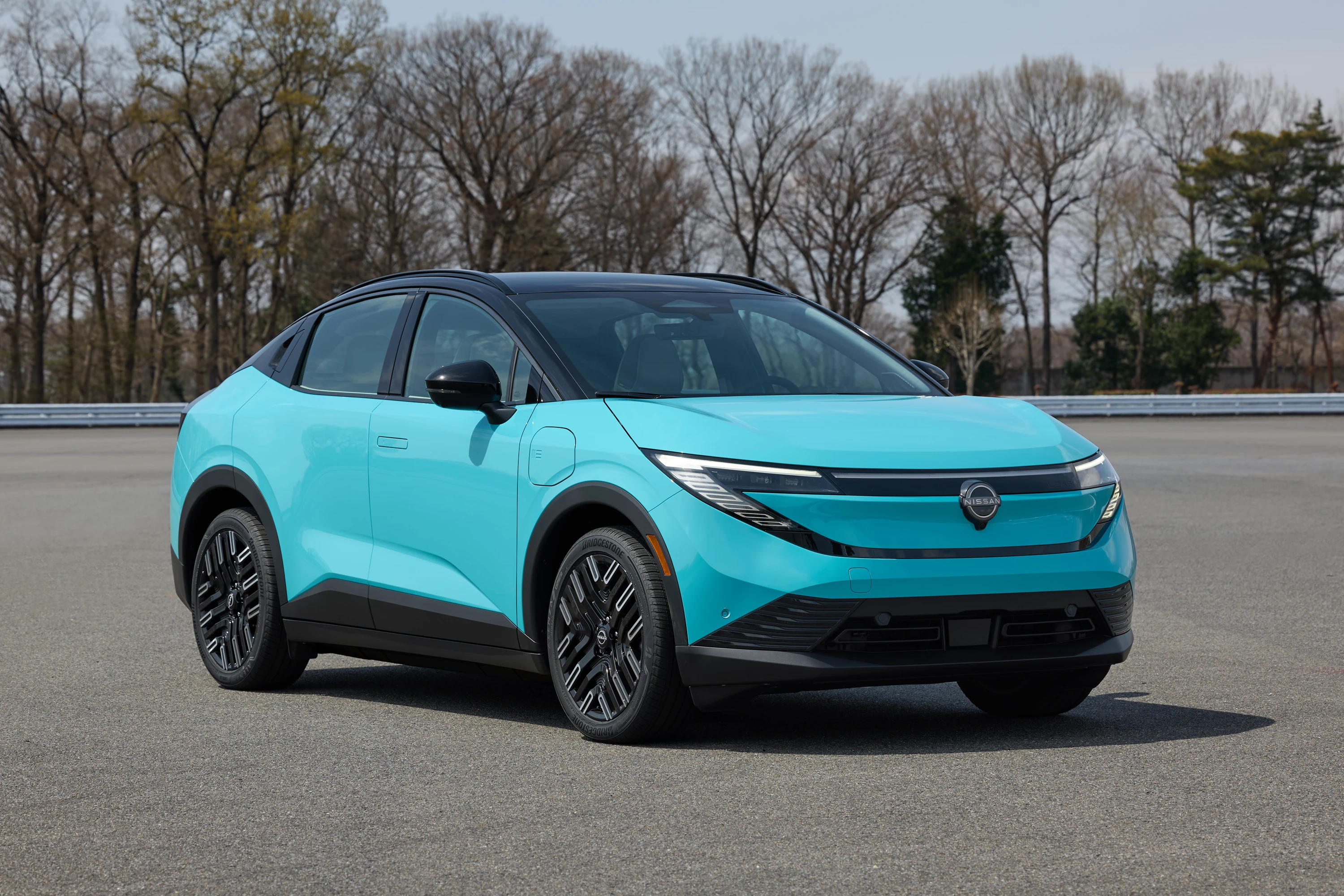
The Nissan Leaf Standard Range, with dimensions of 4350 mm in length, 1810 mm in width, and 1550 mm in height, falls into the B-SUV segment, also known as subcompact SUVs or crossovers.
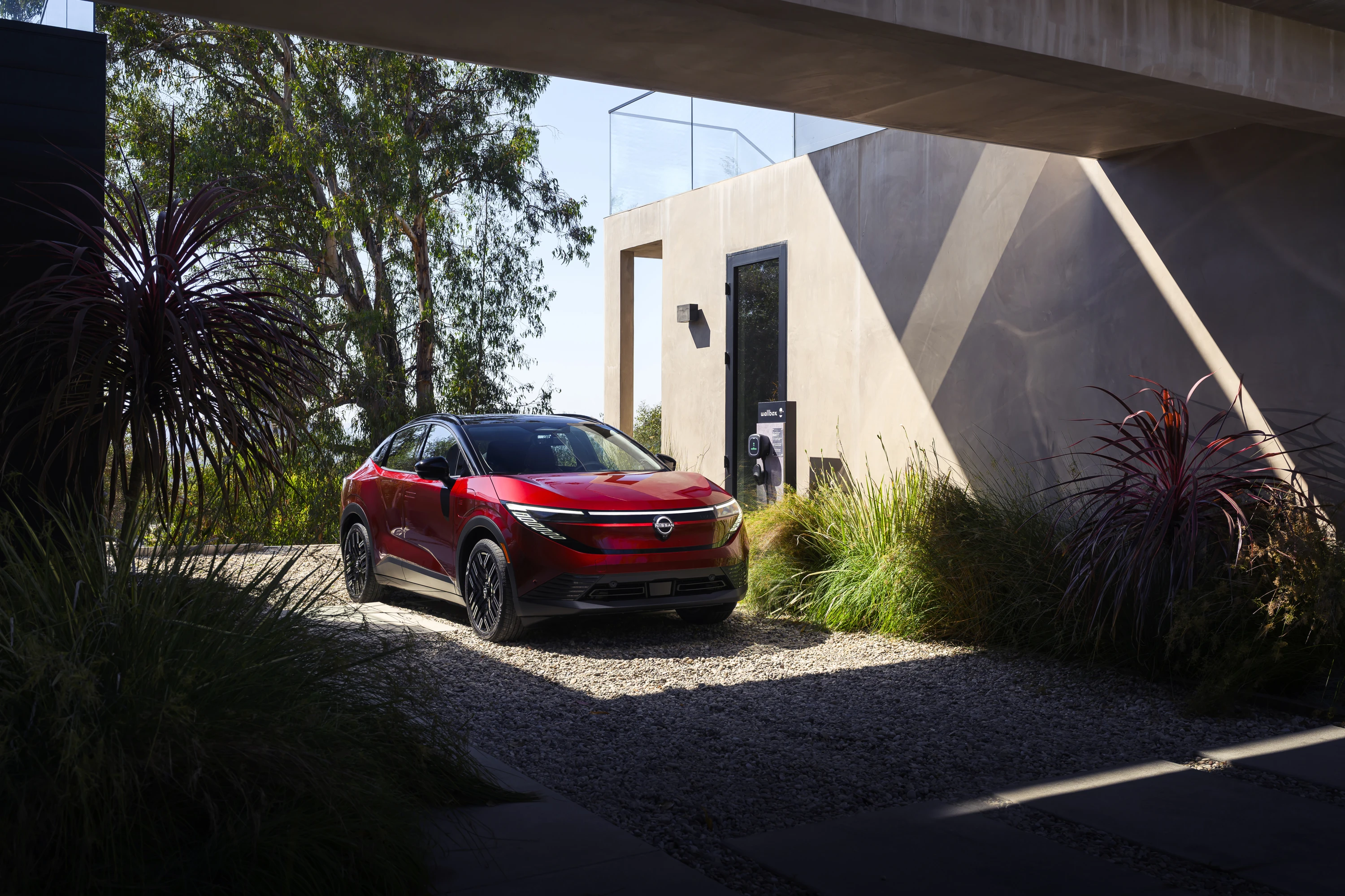
You can choose between 6 different paint colors when ordering this model.
The Nissan Leaf Standard Range offers multiple wheel options in different sizes. The available tire and wheel combinations include:
- 215/55 tires on 18" rims
- 235/45 tires on 19" rims
Narrower wheels reduce energy consumption and can increase range, while wider wheels can improve traction and handling.
The car has four regular doors and a liftgate.
You can choose an option to have the liftgate electrically powered. You can also have the liftgate with a kick sensor, making it possible to open it by just kicking the foot under the tailgate.
There are two different roof options to select from.
A conventional roof is standard.
As an option, you can order this model with a large panoramic roof extending from the front to the rear. This glass creates a more spacious and bright interior. The glass has an electrochromic function that lets you blend the glass to protect against the sun.
Nissan Leaf Standard Range
Interior
The interior of the Nissan Leaf Standard Range is functional, with medium-quality materials used throughout. It includes a floating center console that creates an open space between the passenger and driver. The overall design prioritizes practicality and ease of use.
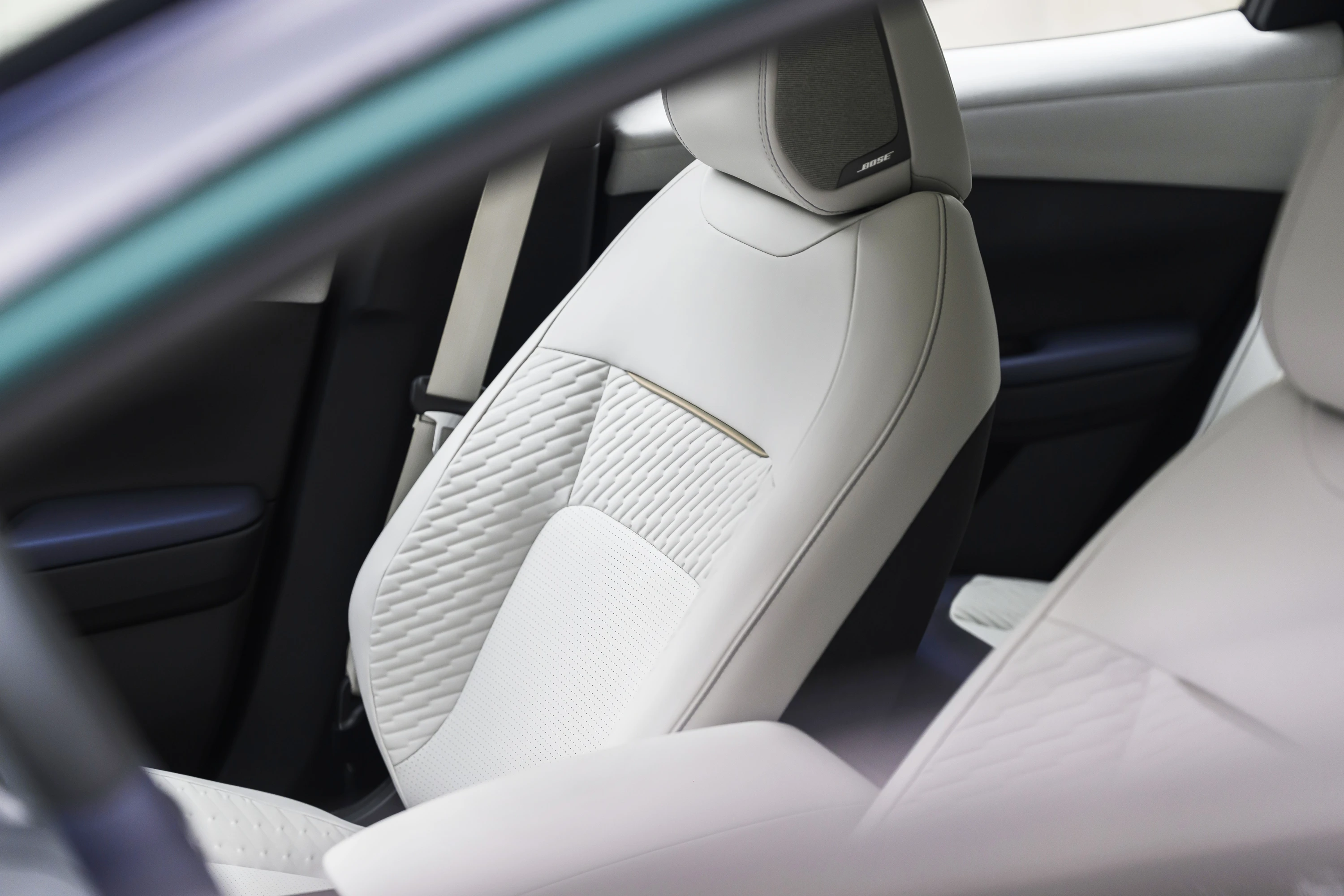
You can choose between different types of seat materials and interior styling.
You can choose between several interior designs.
Seats
The Nissan Leaf Standard Range accommodates five passengers with two front seats and a three-seat bench in the rear.
First Row Seats
The Nissan Leaf Standard Range offers a single type of front seat.
The following functionalities are available on the seat:
- Fore-and-aft adjustment (manually adjustable, electrically adjustable as an option)
- Recline adjustment (manually adjustable, electrically adjustable as an option)
- Heating (optional)
- Adjustable lumbar support (electrically adjustable for driver, not available for passenger)
Available in:
- Black fabric upholstery
- Beige/Blue leatherette upholstery
Nissan Leaf Standard Range
Second-Row Seats
The second row features a standard three-seat bench with a SixtyForty split, allowing each section to fold separately to increase cargo space.
Additional second-row features include:
- Height adjustable headrest (manually adjustable)
Interior Storage
The Nissan Leaf Standard Range has the following interior storage:
- Glove Compartment: Located in the dashboard in front of the passenger.
- Center Console: A storage compartment is located beneath the front center armrest.
- Door Pockets: The front and rear doors include integrated storage pockets.
Interior Lighting
The Nissan Leaf Standard Range offers several interior lighting options.
- White Ambient Lighting: Extends across the dashboard, door panels, and footwell.
- Multicolor Ambient Lighting: Across the dashboard, door panels, and footwell, with selectable colors.
Climate System
There is one climate system available:
- 1-zone climate system: Controls a single zone for the whole cabin.
A heat pump is available as an option and can reduce the energy needed to heat the cabin in cold weather.
User Interface and Control
The Nissan Leaf Standard Range uses a primarily screen-based interface while retaining steering-column stalks and a limited number of physical buttons.
Two different screen setups are available on the Nissan Leaf Standard Range.
The standard layout has the following configuration.
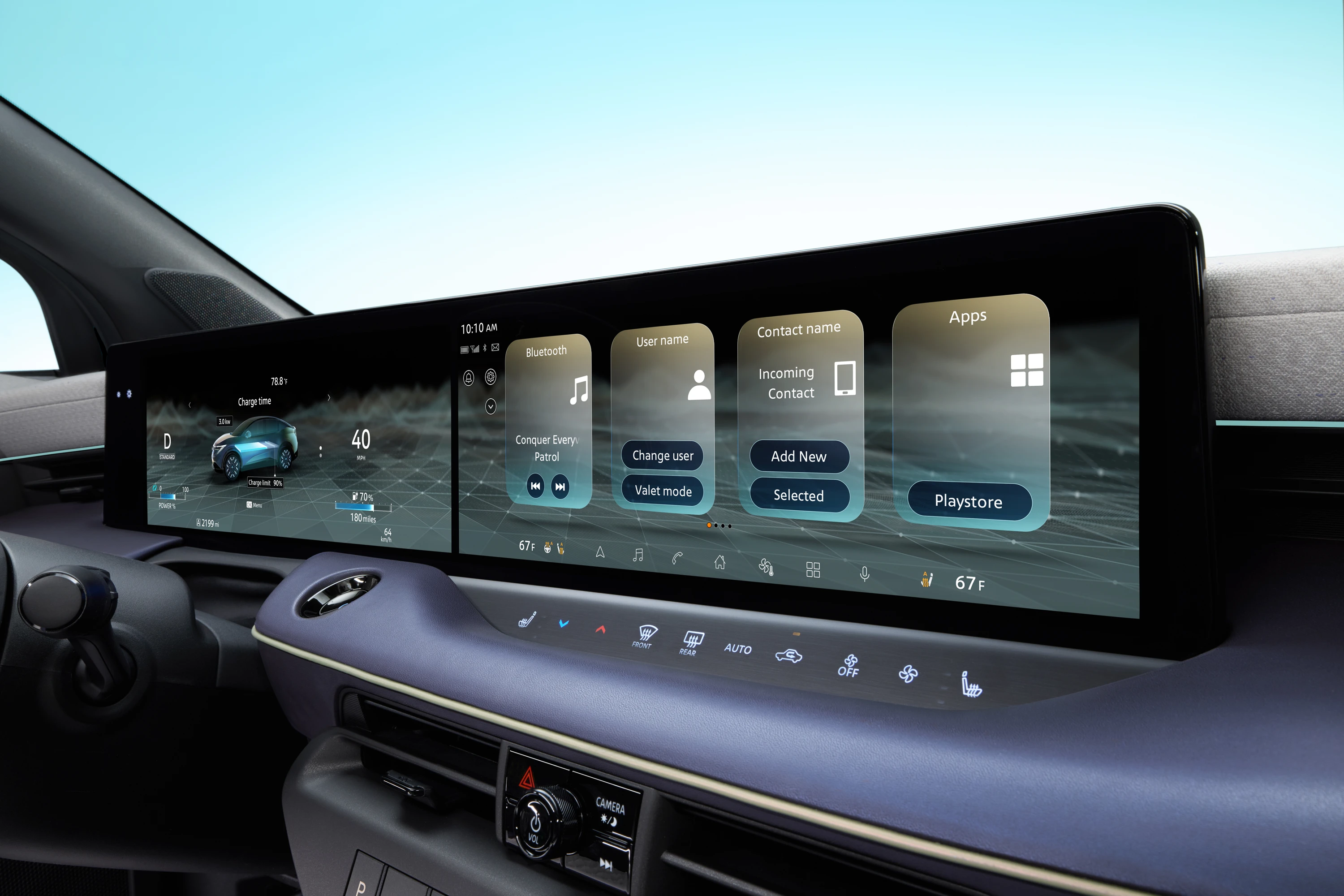
This model features a dual-screen setup integrated into a shared horizontal frame on the dashboard, clearly separating driver and infotainment functions while maintaining a unified visual design.
Key screen details:
- Driver Information Display: A 12.3-inch screen positioned behind the steering wheel on the left side of the shared dashboard frame. It provides essential driving data such as speed, range, and navigation prompts.
- Infotainment Screen: A 12.3-inch touchscreen located on the right side of the same shared frame. It serves as the main interface for infotainment, navigation, and vehicle settings.
The standard layout has the following configuration.
This model features a dual-screen setup integrated into a shared horizontal frame on the dashboard, clearly separating driver and infotainment functions while maintaining a unified visual design.
Key screen details:
- Driver Information Display: A 14.3-inch screen positioned behind the steering wheel on the left side of the shared dashboard frame. It provides essential driving data such as speed, range, and navigation prompts.
- Infotainment Screen: A 14.3-inch touchscreen located on the right side of the same shared frame. It serves as the main interface for infotainment, navigation, and vehicle settings.
An optional head-up display projects key driving information such as speed and navigation cues onto the windshield.
Nissan Leaf Standard Range
Steering Wheel
The Nissan Leaf Standard Range is equipped with a single type of steering wheel:
The steering wheel adjusts for tilt and reach. The adjustment is manual.
Design: Circular
Controls: Capacitive touch buttons, Paddle shifters
Heating: Available as an option
From the steering wheel you can control:
- Infotainment: Steering-wheel controls provide access to media and infotainment functions.
Mirrors
Both the exterior and interior mirrors use conventional mirror technology to provide a clear view of the area behind the vehicle.
Voice control is standard.
Infotainment
The Nissan Leaf Standard Range features an advanced infotainment system built on Android Automotive OS with Google Automotive Services, offering a seamless integration of Google apps and services directly into the vehicle. This robust system includes built-in Google Maps for navigation, Google Assistant for voice commands, and access to a wide range of apps via the Google Play Store. Nissan has further enhanced this platform by integrating their own suite of applications, providing comprehensive car settings and additional features tailored to the Nissan driving experience.
Navigation System
The built-in navigation uses satellite maps and supports route planning with a target charge level at the destination, plus real-time traffic.
App Store
The infotainment system includes an app store for third-party apps that run directly on the car's display without a connected phone. App availability varies by market and includes:
- Spotify: Stream music, playlists, and podcasts directly from the car's infotainment system.
Phone Mirroring
The Nissan Leaf Standard Range supports Android Auto and Apple CarPlay, providing access to compatible phone apps such as Google Maps and Waze on the car's display.
Sound System
You can choose between three sound systems for the Nissan Leaf Standard Range:
- 4 Speaker sound system: Features four speakers.
- 6 Speaker sound system: Features six speakers.
- Bose Sound system: Features ten speakers.
The model includes USB-C connectivity as standard (total: 2).As an option, you can get additional 2 USB-C connections.The model includes USB-A connectivity as standard (total: 1).
Mobile App
The Nissan Leaf Standard Range has a mobile app for Android and iOS to manage and monitor the vehicle remotely. Features:
- Locate Your Vehicle: Check the current location of your car.
- Preconditioning: Preheat or cool your car before you start your journey.
- Lock and unlock: Lock or unlock the doors remotely.
- Scheduled Charging: Set a charging schedule.
- Charge Target: Set the battery's target state of charge.
- Find your car: Sound the horn or flash the lights to locate the car.
- Route Planning: Plan your route and send it directly to your car's navigation system.
- Driving History: Review the details of your past trips.
Lights
Standard Headlights: These use LED technology.
The taillights use LED technology.
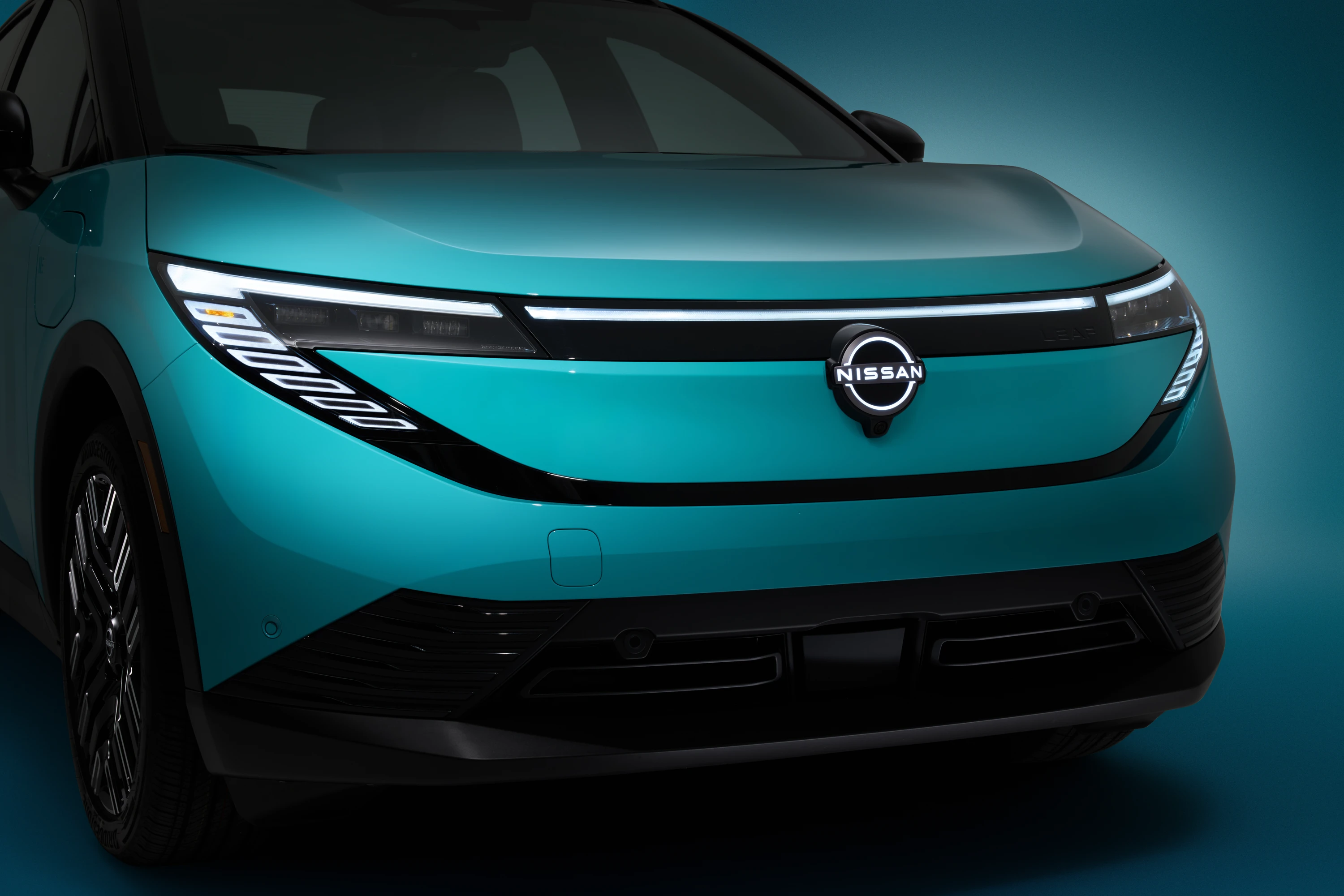
Nissan Leaf Standard Range
Advanced Driver Assistance Systems
The Nissan Leaf Standard Range offers standard and optional advanced driver assistance systems (ADAS).
Safety Systems
Anti-lock Braking System (ABS): Standard on the Nissan Leaf Standard Range. It prevents the wheels from locking during braking.
Electronic Stability Control (ESC): Standard on the Nissan Leaf Standard Range. It improves stability during sudden maneuvers and on slippery roads.
Lane-Keeping Assist (LKA): Standard on the Nissan Leaf Standard Range. It applies steering corrections if the vehicle begins to leave its lane.
The Lane Departure Warning alerts the driver if the vehicle begins to leave its lane.
Rear Cross Traffic Alert (RCTA): Standard on the Nissan Leaf Standard Range. It detects vehicles approaching from the side while reversing out of a parking space or driveway.
Forward Collision Warning (FCW): Standard on the Nissan Leaf Standard Range. It warns the driver of a potential frontal collision.
Automatic Emergency Braking (AEB): Standard on the Nissan Leaf Standard Range. It applies the brakes automatically if the driver does not respond to an imminent collision.
Blind-spot Monitoring (BSM): Standard on the Nissan Leaf Standard Range. It detects traffic in the vehicle's blind spots.
Driving Automation
The standard ProPilot SAE Level 2 system includes the following driving automation features:
- Adaptive Cruise Control (ACC)
- Lane Centering Assist (LCA) / AutoSteer: Centers the vehicle in its lane and adjusts speed in traffic. The driver must keep their hands on the steering wheel and remain attentive.
Sensors & Cameras
This model uses cameras, radar, and ultrasonic sensors for its driver assist systems.
Up to three radar sensors, five cameras, and ten ultrasonic sensors monitor the vehicle’s surroundings.
Safety
The Nissan Leaf Standard Range is equipped with the following airbags:
- Front airbags for the driver and front passenger
- Side curtain airbags for both the first and second rows
- Side airbags for the driver and front passenger
The front and rear seatbelts use pyrotechnic pretensioners without load limiters. In a collision, the pretensioners remove belt slack.
Security and Access Technologies
The Nissan Leaf Standard Range includes the following security and access features:
- Keyless Entry and Start: Unlock and start the car with the key in your pocket or bag.
- Alarm System: Monitors for unauthorized entry or tampering and sounds the alarm when triggered.
Cargo Capacity and Towing Ability
The trunk offers a cargo capacity of 437 liters (15.4 cu ft). With the rear seat folded down, this expands to 1052 liters (37.2 cu ft).
The maximum roof load is 75 kg (165.3 lb).
Optional roof rails are available for easy mounting of a roof box or rack.
The maximum permitted vehicle weight is 2305 kg (5082 lbs), and the base curb weight is 1791 kg (3948 lbs). This leaves a payload of 514 kg (1133 lbs), including occupants. Options can increase curb weight and reduce payload.
A towbar can be added to the vehicle. The maximum permissible weight for a braked trailer is 975 kg (2150 lbs), while for an unbraked trailer, it is 750 kg (1653 lbs).
Availability & Pricing
This model is available exclusively in Europe.
Pricing
Pricing may vary depending on local conditions, incentives, and promotions. Below are the starting prices for select countries:
Other markets (9)
- €37,690 (Belgium)
- 249,900 DKK (Denmark)
- €37,390 (Finland)
- €35,300 (France)
- €36,950 (Italy)
- €33,990 (Netherlands)
- 349,900 NOK (Norway)
- 149,900 PLN (Poland)
- CHF 38,990 (Switzerland)
Alternatives to Nissan Leaf Standard Range
Compare These Vehicles
Get detailed side-by-side comparisons of specifications, range, charging performance, and travel capabilities.
Complete Specs
Compare all technical specifications side-by-side
Range Analysis
Real-world range and charging performance
Travel Calculator
Plan trips and compare travel times