
EV Batteries
An EV’s traction battery stores energy chemically and supplies electricity to the drive system. This series explains how its specifications, construction and controls affect driving, charging and ownership. US Department of Energy: how batteries store and release energy US Department of Energy: how all-electric cars work
What matters when comparing EV batteries
Start with what a capacity figure measures. Gross capacity is the manufacturer’s declared total energy before the driver-accessible operating window is applied. EVKX defines net, or usable, capacity as all energy accessible from displayed 100% until propulsion stops, including any accessible reserve below displayed 0%. Manufacturers may use different boundaries for figures labelled net or usable.
Displayed 100–0% energy excludes that below-zero reserve. Inaccessible protective margins sit outside net capacity. The Battery buffer and usable capacity chapter explains these quantities and why a gross-to-net difference cannot tell you how much energy remains at displayed zero.
Range depends on both available energy and vehicle consumption. For an illustrative calculation, assume both vehicles have 60 kWh available for driving. Consumption of 16 kWh/100 km gives 375 km; consumption of 24 kWh/100 km gives 250 km. Both calculations use energy drawn from the battery, rather than electricity billed by a charger. These are illustrative distances at constant consumption, not predictions for particular cars.
For charging, compare the time and energy added over a stated charge window, with the battery temperature and charging equipment specified. Peak power describes one point on the charging curve. The Battery charging chapter explains how battery, vehicle and station limits shape the rest of the session.
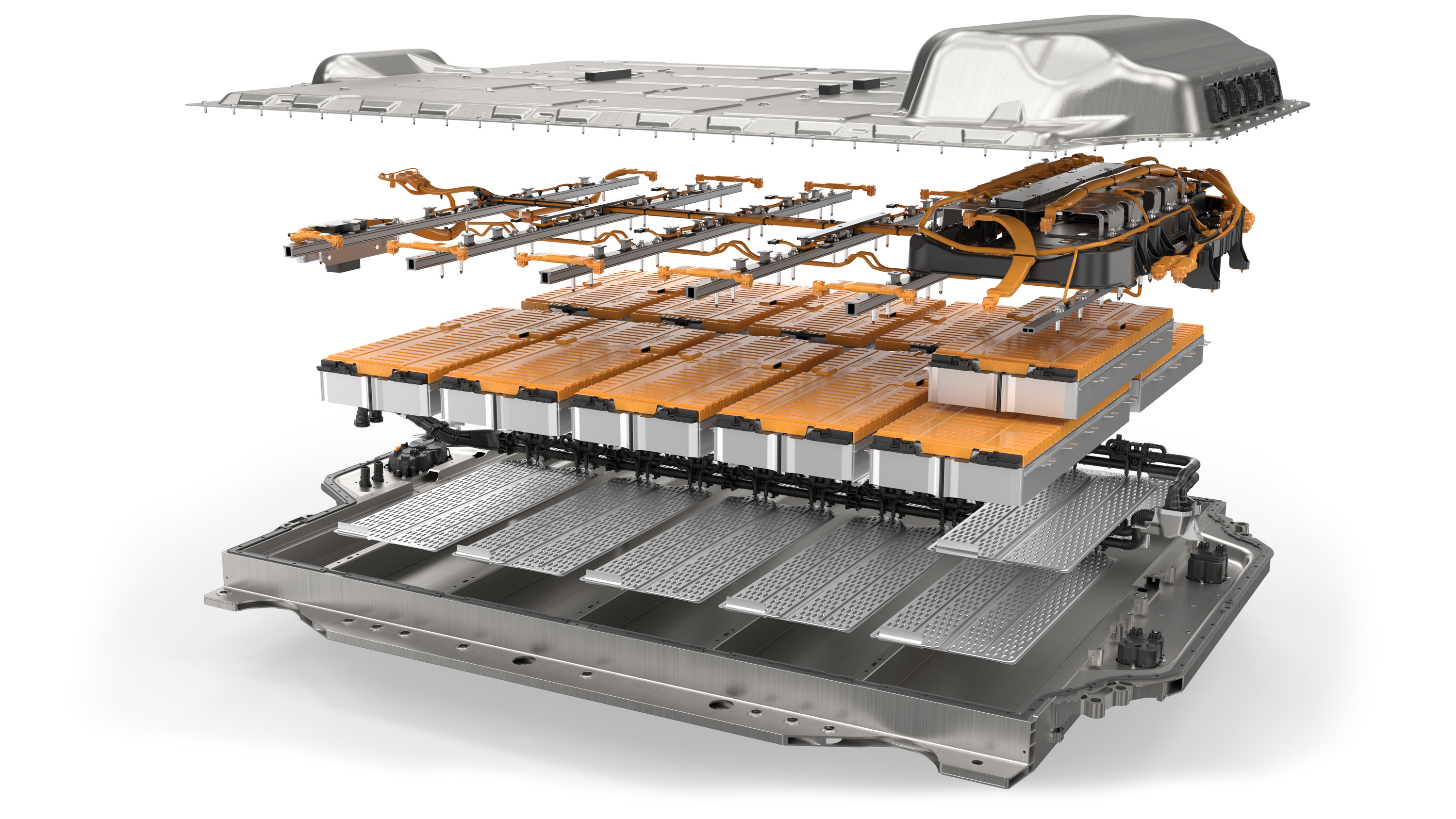
LFP describes cell chemistry; prismatic describes cell format. Reducing module hardware can lower pack mass, while bonded assemblies can make individual-cell replacement harder. Structural packs can still contain modules. Battery packs explains these construction choices and their repair implications.
Find the chapter you need
Foundations
- Battery basics explains how cells store and release energy, and distinguishes voltage, current, power and energy.
- Cell chemistry and components covers electrode materials, electrolytes, separators and how their combinations affect cell performance.
- Cell formats compares cylindrical, prismatic and pouch cells, including BYD’s long prismatic Blade design. Fraunhofer ISI: lithium-ion battery cell formats (2022)
- Battery packs explains electrical connections, modules, structural integration, pack energy density and repairability.
Operation and control
- Battery management systems explains how measurements become estimates of battery state, operating limits and fault responses.
- Thermal management follows heat through the battery and explains cooling, heating and preconditioning.
- Cell balancing explains how passive and active methods correct charge differences between series-connected groups to improve access to usable energy.
- Battery charging covers charging curves, charging time, temperature limits and charger compatibility.
- Battery buffer and usable capacity distinguishes gross, net and displayed-window energy, protective margins and any accessible reserve below zero.
Ownership
- Battery degradation explains permanent capacity and power loss, ageing conditions and the interpretation of battery health.
- Battery safety covers fault prevention and containment, what safety tests establish, and responses to warnings or suspected damage.
- Battery warranty separates defect coverage from capacity guarantees and explains accepted tests, eligibility and repair commitments.
- Battery lifecycle follows diagnosis, repair, second-life assessment and recycling, including battery passports and EU recycling requirements.
The practical guide How to check EV battery health with a capacity estimate shows how driving data can estimate energy across the displayed charge range and help track changes. It explains the method’s limits and when a diagnostic test is needed; a driving estimate does not by itself establish a fault or an accepted warranty claim.
Industry and developments
- Battery manufacturers ranks major cell suppliers by installed energy and explains pack assembly, automaker-owned production and joint ventures.
- Latest advances in EV battery technology examines production developments and emerging designs, separating development stage from the quality of evidence behind performance claims.
For connectors, home and public charging equipment, bidirectional charging and battery swapping, use the separate EV Charging series.
Sources
3
- US Department of Energy: how batteries store and release energy — chemical energy storage and rechargeable-cell operation.
- US Department of Energy: how all-electric cars work — the traction battery, drive system and charging components.
- Fraunhofer ISI: lithium-ion battery cell formats (2022) — cell-format classification, including BYD Blade within the prismatic family.