

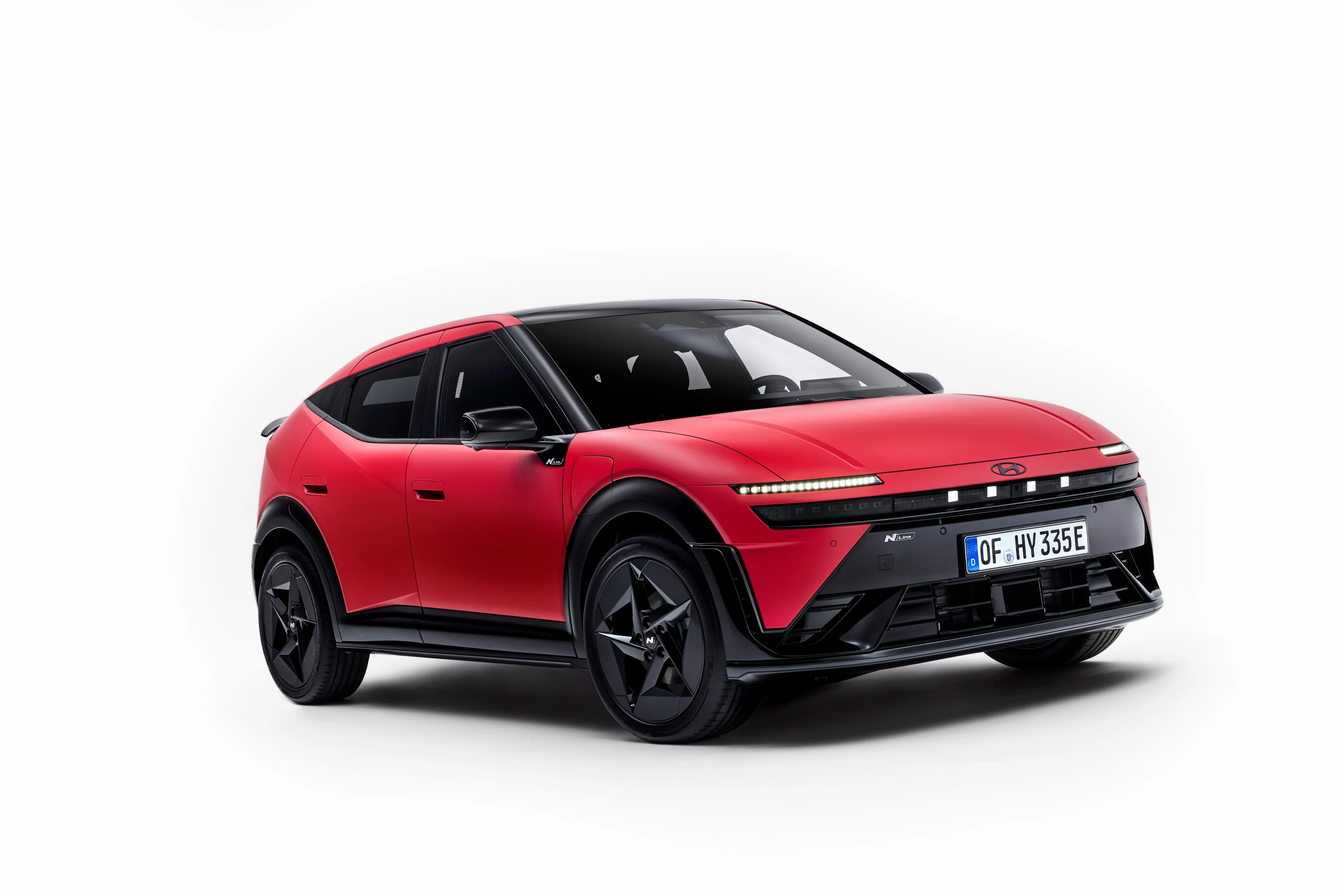
Use the links below to jump to a section, or continue reading for the full article. You can also view the full specifications, image gallery, charging performance, and online reviews. Sections:
Performance
The Hyundai Ioniq 3 Standard Range has a maximum power of 107.8 kW (147 hp / 145 bhp) and a total torque of 250 Nm (184 lb-ft). It accelerates from 0 to 100 km/h (0 to 62 mph) in 9.0 seconds and reaches a top speed of 170 km/h (106 mph).
Battery, Range, and Charging
The lithium-ion battery uses NMC (nickel manganese cobalt) chemistry.
For more details about the range, see real-world data and range listings on this model’s range and consumption page.
The vehicle supports fast DC charging with a maximum power of 110 kW. A 0–100% charge takes approximately 2665 minutes. A typical 10–80% session takes about 1866 minutes at an average power of 1 kW.
With five minutes of overhead per stop, the optimal charging window is 0–100%. Effective average power, including overhead, is 1 kW over a session lasting about 2670 minutes and 16 seconds.
Onboard Charger
The standard onboard charger supports AC charging at up to 11 kW. A full 0–100% charge takes about 3 hours and 50 minutes with a suitable home charging setup.
An optional 22 kW onboard charger reduces the full charge time to approximately 1 hours and 55 minutes.
Charge Port
The location of the charge port is on the front. This location makes it easy to use charge stations where you need to park with the front in.
This model uses a CCS Combo 2 connector in its charge port.
Bidirectional Charging
This model supports V2L (Vehicle to Load), allowing you to power electrical equipment requiring up to 3.6 kW of power, and even charge other electric vehicles.
Drivetrain
The Hyundai Ioniq 3 Standard Range has a front-wheel drive system supported by one motor on the front axle.
Suspension
The suspension system features a MacPherson strut front construction and a multi-link rear construction. Both the front and rear dampers are monotube dampers. The front and rear springs are coil springs.
The standard suspension has a fixed height and damping characteristics.
Brakes
Regenerative Braking
Regenerative braking works in two ways: through one-pedal driving, or through the brake pedal using blended braking while coasting.
One-pedal driving offers two stopping modes. Hold mode brings the vehicle to a complete stop using the friction brakes; Creep mode moves it forward slowly when the brake pedal is released.Drivers can also adjust the regenerative braking strength when lifting off the accelerator. There are four levels of regenerative braking to choose from, allowing you to customize the driving experience to your preference.
Exterior
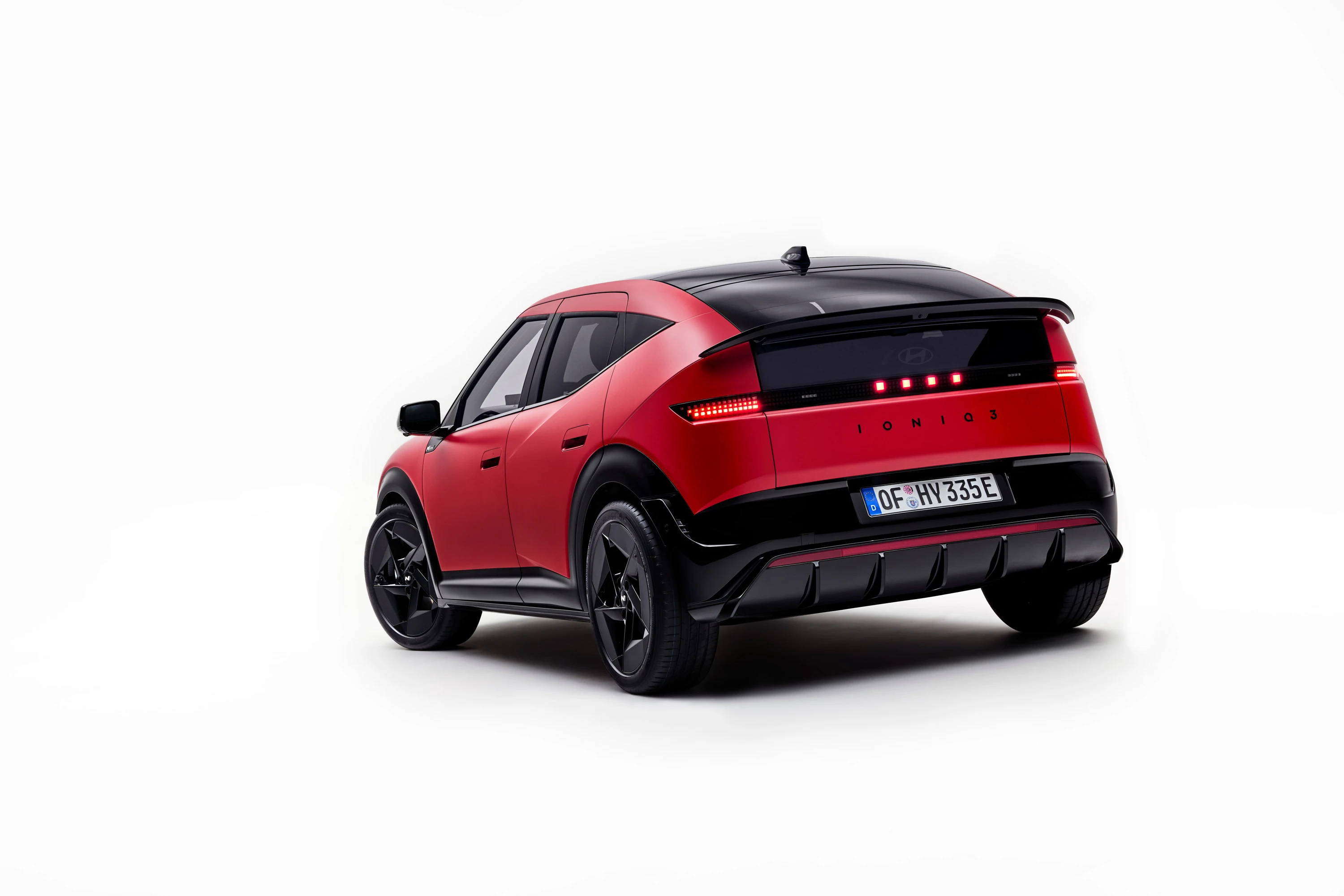
The Hyundai Ioniq 3 Standard Range, with dimensions of 4155 mm in length, 1800 mm in width, and 1505 mm in height, falls into the B-segment, also known as superminis.
The car has four regular doors and a boot lid for the trunk.
There is only one roof option for this model.
A conventional roof is standard.
Hyundai Ioniq 3 Standard Range
Interior
Seats
The Hyundai Ioniq 3 Standard Range accommodates five passengers with two front seats and a three-seat bench in the rear.
First Row Seats
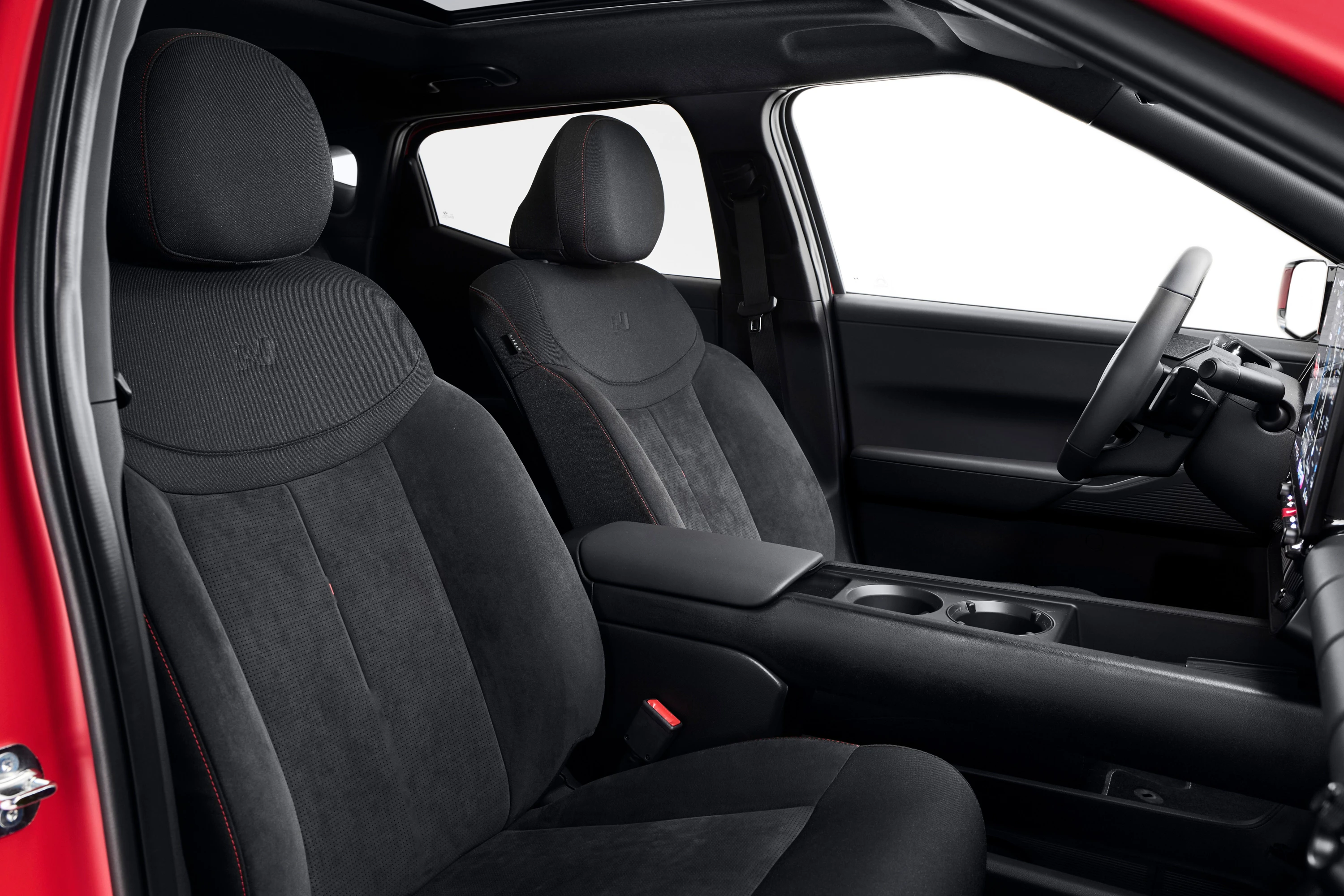
The Hyundai Ioniq 3 Standard Range offers a single type of front seat.
The following functionalities are available on the seat:
Hyundai Ioniq 3 Standard Range
Second-Row Seats
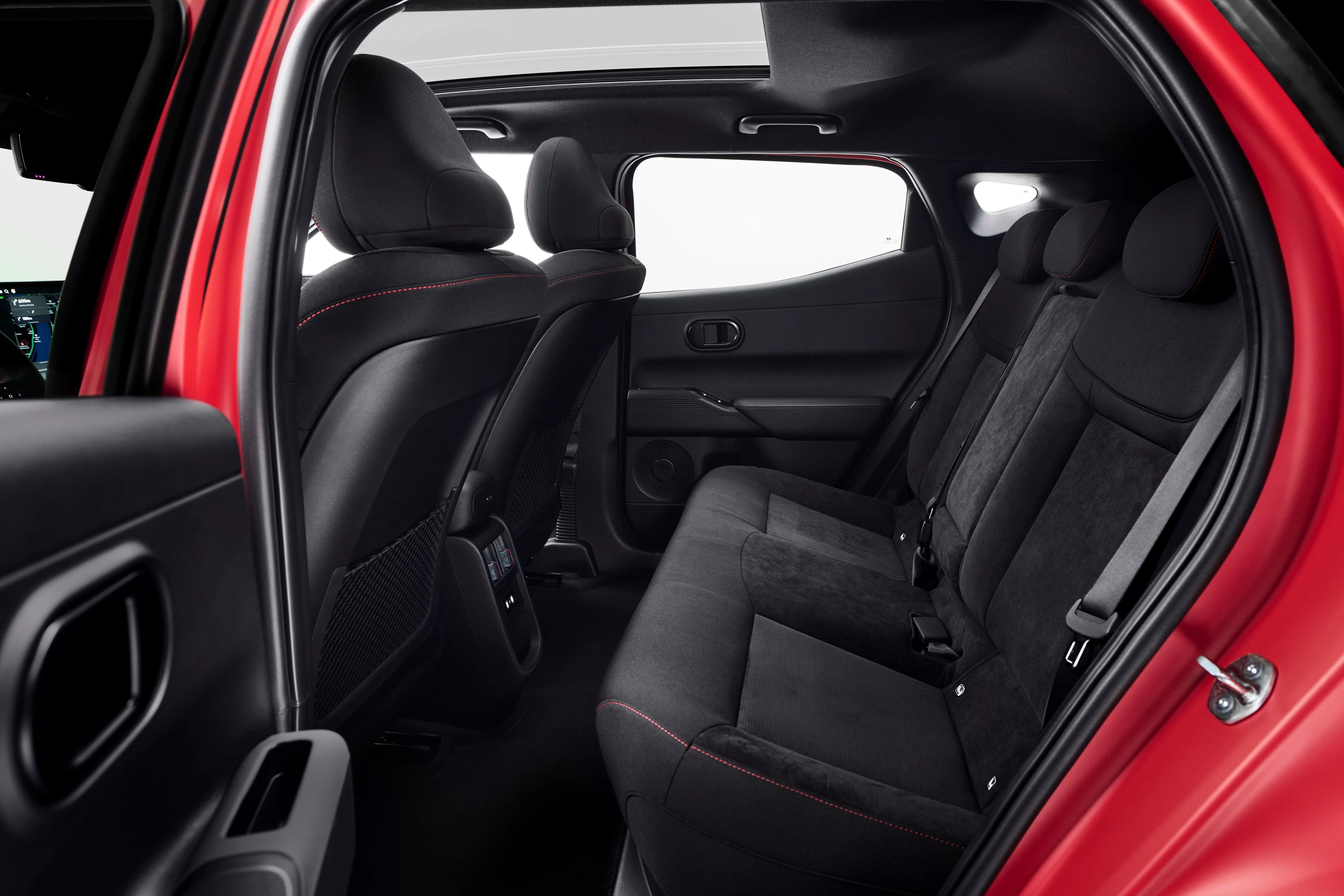
The second row features a standard three-seat bench with a split, allowing each section to fold separately to increase cargo space.
Additional second-row features include:
Hyundai Ioniq 3 Standard Range
Climate System
There is one climate system available:
User Interface and Control
Two different screen setups are available on the Hyundai Ioniq 3 Standard Range.
The optional 12.9-inch center display layout has the following configuration.
Behind the steering wheel is a digital instrument cluster, and on the right part, there is an infotainment screen.
Key screen details:
- Center Dashboard Touchscreen: The 12.9-inch touchscreen is located at the center of the dashboard. It serves as the main interface for infotainment, navigation, and vehicle settings.
- Driver Information Display (optional): A compact screen mounted directly on the dashboard behind the steering wheel. It shows essential driving information such as speed, range, and navigation prompts.
The optional 14.6-inch center display layout has the following configuration.
Behind the steering wheel is a digital instrument cluster, and on the right part, there is an infotainment screen.
Key screen details:
- Center Dashboard Touchscreen: The 14.6-inch touchscreen is located at the center of the dashboard. It serves as the main interface for infotainment, navigation, and vehicle settings.
- Driver Information Display (optional): A compact screen mounted directly on the dashboard behind the steering wheel. It shows essential driving information such as speed, range, and navigation prompts.
The Hyundai Ioniq 3 Standard Range does not have a head-up display. Speed and navigation information remain on the vehicle's other displays.
Infotainment
Hyundai Ioniq 3 Standard Range uses Hyundai Motor Group's Pleos Connect infotainment system, which is based on Android Automotive OS.
Navigation System
With the standard in-car navigation system, you have all the assistance you need to reach your destination effortlessly.
App Store
The infotainment system includes an App Store where you can download third-party apps to run natively on the car's screen without needing a connected phone. Available apps vary by market.
Phone Mirroring
The Hyundai Ioniq 3 Standard Range supports Android Auto and Apple CarPlay, providing access to compatible phone apps such as Google Maps and Waze on the car's display.
Mobile App
The Hyundai Ioniq 3 Standard Range has a mobile app for Android and iOS to manage and monitor the vehicle remotely. Features:
Lights
The Hyundai Ioniq 3 Standard Range comes equipped with standard headlights.
The vehicle is equipped with standard taillights.
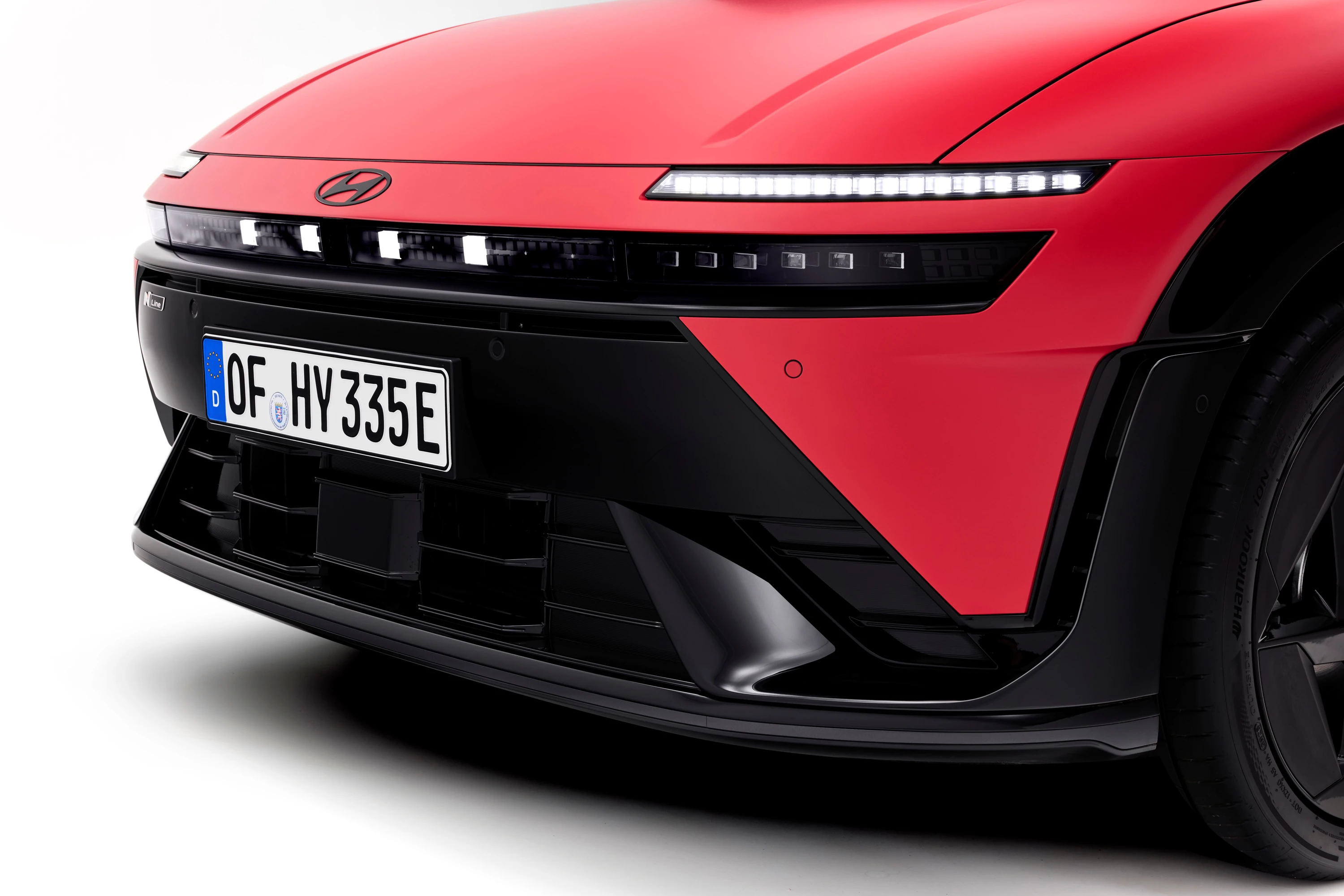
Hyundai Ioniq 3 Standard Range
Advanced Driver Assistance Systems
The Hyundai Ioniq 3 Standard Range offers standard and optional advanced driver assistance systems (ADAS).
Safety Systems
Anti-lock Braking System (ABS): Standard on the Hyundai Ioniq 3 Standard Range. It prevents the wheels from locking during braking.
Electronic Stability Control (ESC): Standard on the Hyundai Ioniq 3 Standard Range. It improves stability during sudden maneuvers and on slippery roads.
Lane-Keeping Assist (LKA): Standard on the Hyundai Ioniq 3 Standard Range. It applies steering corrections if the vehicle begins to leave its lane.
The Lane Departure Warning alerts the driver if the vehicle begins to leave its lane.
Front Cross Traffic Assist (FCTA): Standard on the Hyundai Ioniq 3 Standard Range. It detects traffic crossing ahead when entering an intersection or pulling away from a stop.
Rear Cross Traffic Alert (RCTA): Standard on the Hyundai Ioniq 3 Standard Range. It detects vehicles approaching from the side while reversing out of a parking space or driveway.
Forward Collision Warning (FCW): Standard on the Hyundai Ioniq 3 Standard Range. It warns the driver of a potential frontal collision.
Automatic Emergency Braking (AEB): Standard on the Hyundai Ioniq 3 Standard Range. It applies the brakes automatically if the driver does not respond to an imminent collision.
Automatic Emergency Steering (AES): Standard on the Hyundai Ioniq 3 Standard Range. The system can steer automatically to help avoid an imminent collision.
Blind-spot Monitoring (BSM): Optional on the Hyundai Ioniq 3 Standard Range. It detects traffic in the vehicle's blind spots.
Exit Warning: Standard on the Hyundai Ioniq 3 Standard Range. It warns occupants not to open a door when it detects approaching traffic or another hazard.
Driving Automation
The standard Highway Driving Assist 2 SAE Level 2 system includes the following driving automation features:
- Adaptive Cruise Control (ACC)
- Lane Centering Assist (LCA) / AutoSteer: Centers the vehicle in its lane and adjusts speed in traffic. The driver must keep their hands on the steering wheel and remain attentive.
- Automatic Lane Change (ALC)
Security and Access Technologies
The Hyundai Ioniq 3 Standard Range is equipped with essential security features to protect you and your vehicle, offering simplicity and reliability. These include:
Cargo Capacity and Towing Ability
The trunk offers a cargo capacity of 441 liters (15.6 cu ft).
This model is not available with a towbar and cannot tow a trailer.
Availability & Pricing
This model is available exclusively in Europe.