
Suspension Constructions
Suspension constructions define how the wheels are located and how alignment changes through travel. Learn MacPherson, double wishbone, multi-link (including 5-link), torsion beam, and more.
Last modified: Mar 06, 2026What is a suspension construction (architecture)?
A suspension construction (also called an architecture or layout) describes how the wheel is located relative to the vehicle body. In other words: which arms, links, joints, and mounts control the wheel’s movement.
This matters because the construction strongly influences:
- Grip and stability: how well the tire stays in contact on rough roads and during cornering.
- Wheel alignment through travel: camber and toe changes as the suspension moves.
- Steering feel: how consistent and predictable the front end reacts to inputs and bumps.
- Comfort and refinement: how impacts, noise, and vibration are isolated (with help from bushings/subframes).
- Packaging and cost: space for motors, steering gear, frunk/crash structures, and large wheels.
There is no “best” design in isolation — the calibration and execution are just as important as the layout.
Independent vs semi-independent vs dependent
Independent suspension
Each wheel can move vertically with minimal direct effect on the opposite side.
Typical benefit: best potential for comfort + grip on uneven roads.
Semi-independent suspension
One side influences the other to a degree (common at the rear in compact cars).
Typical benefit: compact and cost-effective, decent everyday behavior.
Dependent suspension (solid axle)
Both wheels are linked by a rigid axle.
Typical benefit: strong, durable, and load-capable (more common in trucks/vans).
Common constructions in modern EVs
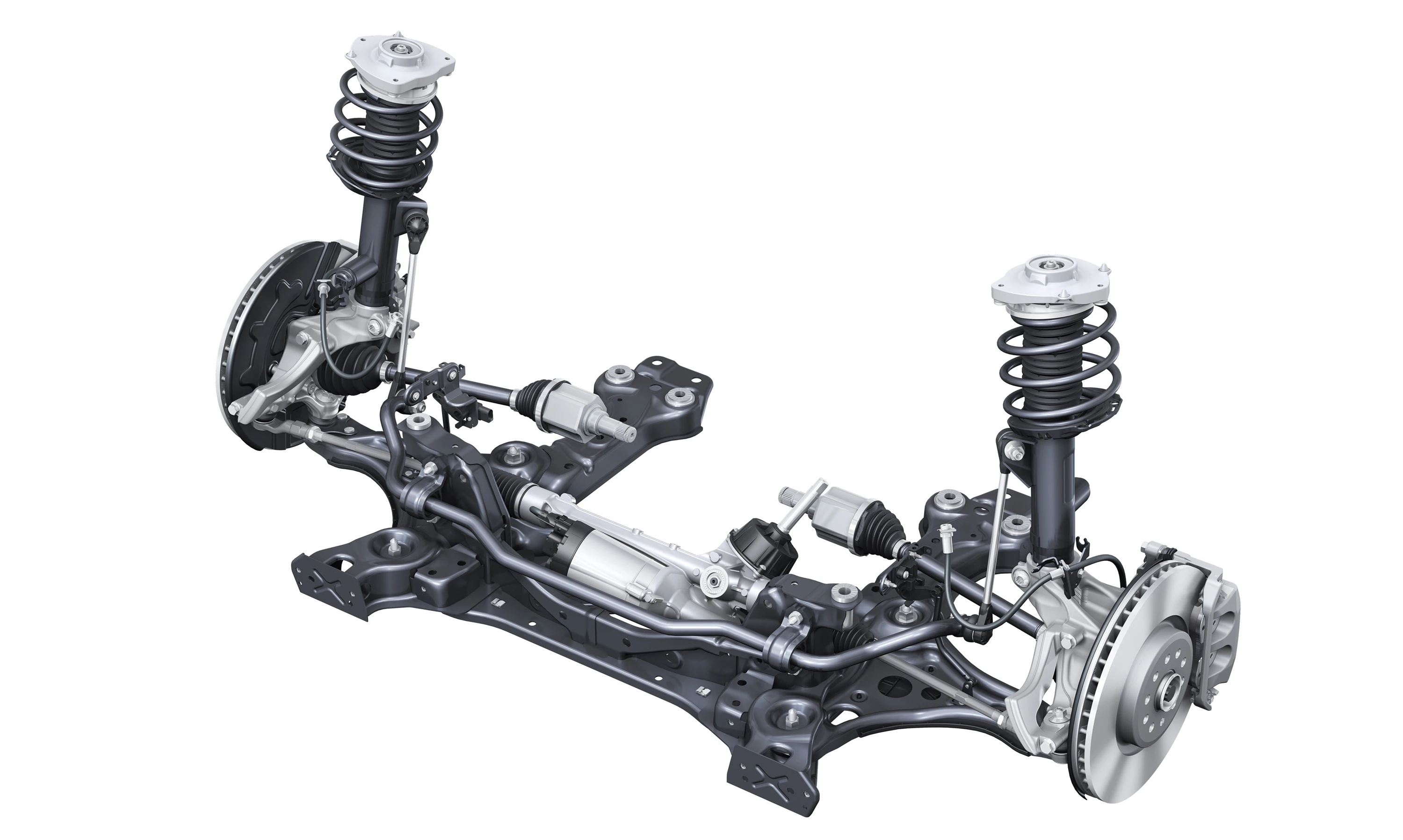
MacPherson strut (typically front)
MacPherson is widely used because it’s compact and affordable. The strut is a structural member, and its top mount becomes part of the steering axis.
Why manufacturers choose it
- Excellent packaging efficiency (space for front structure and components)
- Fewer parts, lower cost
- Can be light and efficient
Typical trade-offs
- Less geometry freedom than wishbone/multi-link designs (especially camber control)
- Steering feel and refinement depend heavily on mounts, bushings, and subframe stiffness
- Limited “tuning range” compared with more complex layouts
BMW “double-joint / double-pivot spring strut” (a strut evolution)
BMW often describes some strut-based front suspensions as a double-joint (or double-pivot) spring strut axle. This is still fundamentally a strut layout, but the lower link/joint arrangement is designed to improve kinematics under load — typically targeting better steering precision and stability compared with a simpler single lower arm design.
EVKX takeaway: If you see “double-joint spring strut” in spec sheets, think MacPherson-family strut with upgraded geometry, not a full double wishbone.
Double wishbone (front or rear)
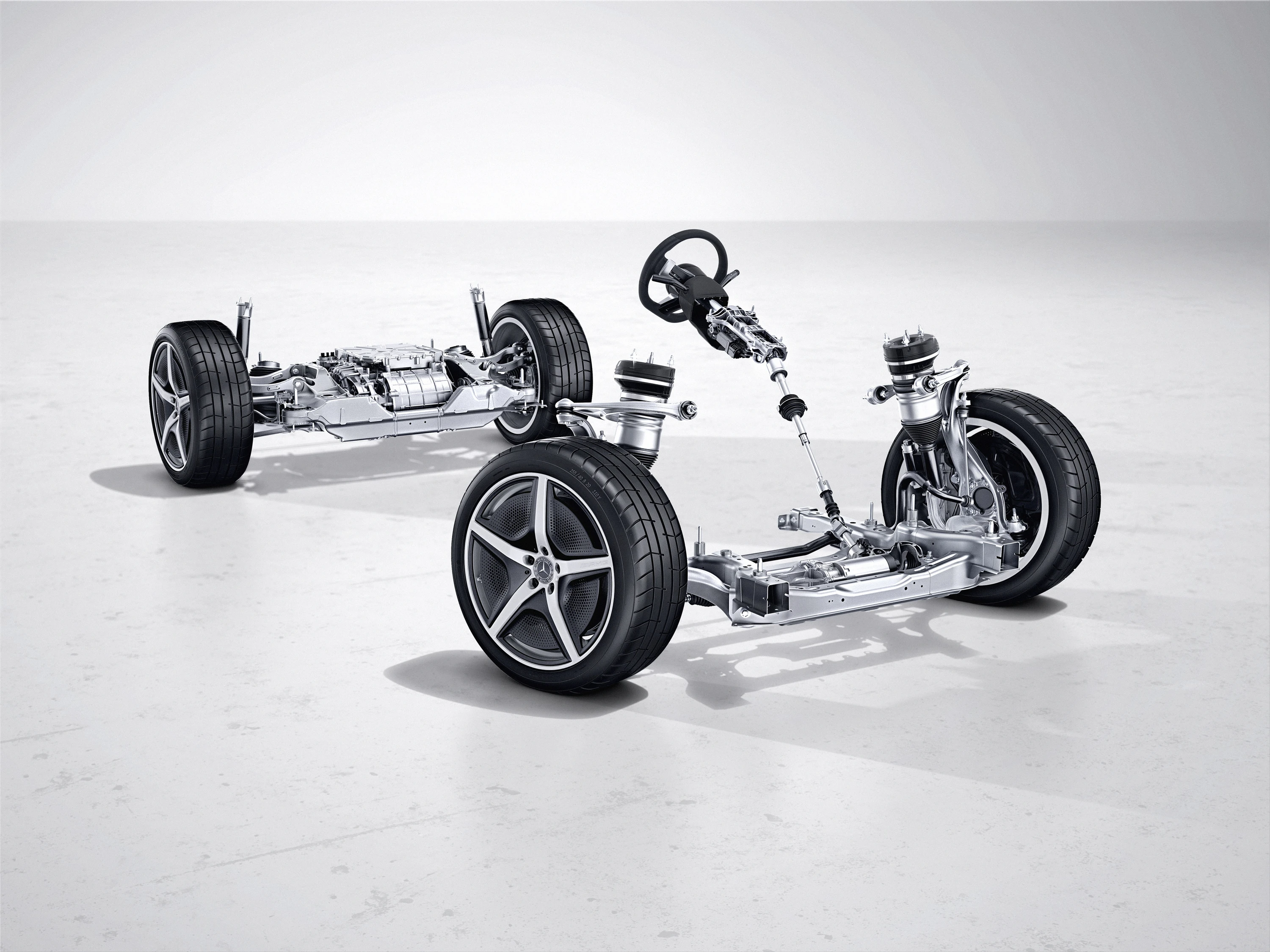
Double wishbone uses two A-shaped arms (upper and lower) to locate the wheel. Engineers value it because it offers strong control of camber change as the suspension moves.
Why it’s used
- Excellent camber control in cornering (helps keep the tire working hard)
- Highly tunable geometry and steering behavior
- Often strong steering feel potential when executed well
Typical trade-offs
- More parts, space, and cost than strut-based solutions
- Packaging can be challenging with large wheels and tight front ends
Multi-link (often rear, sometimes front)
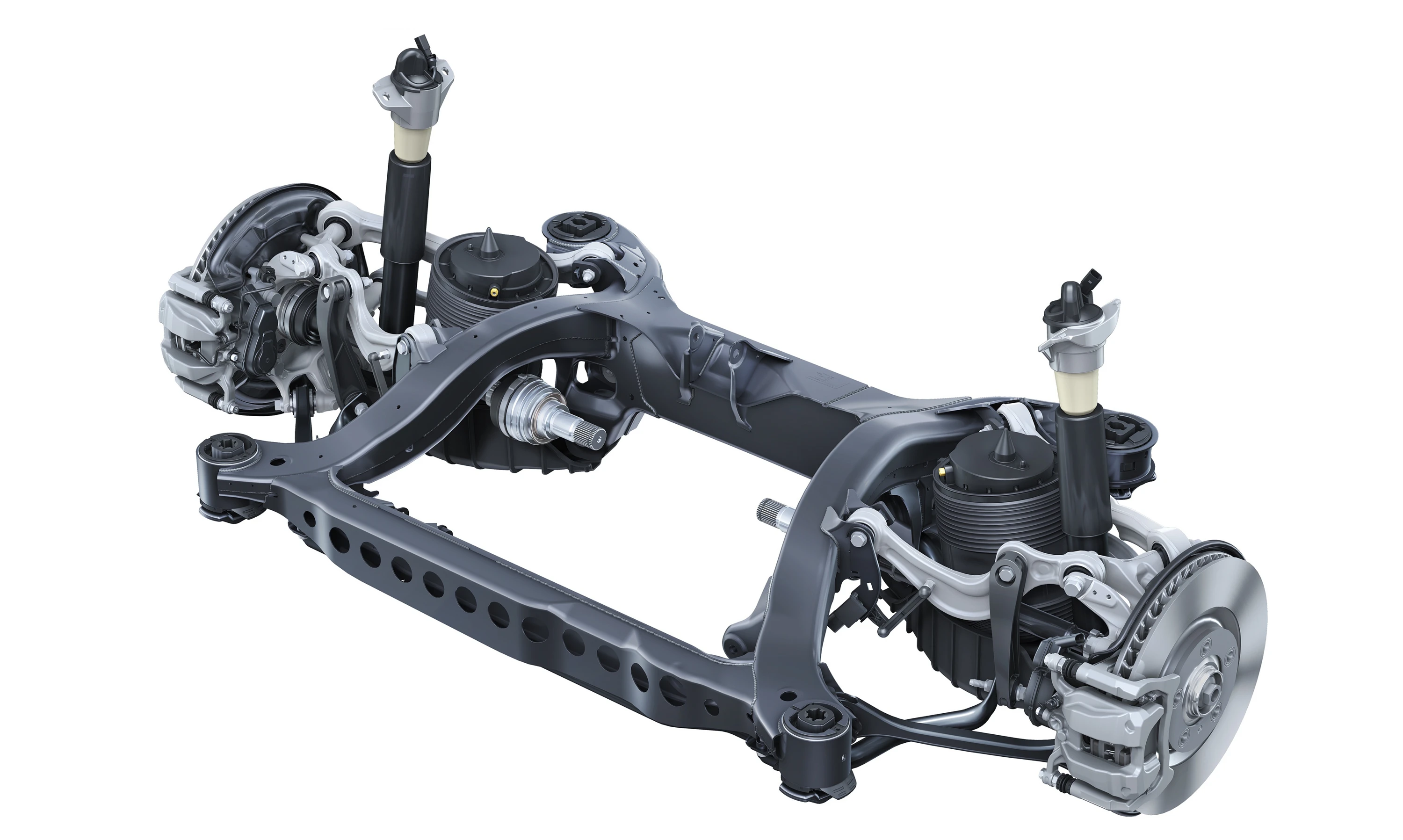
Multi-link is an independent layout that uses multiple links per wheel to separate and manage forces (longitudinal vs lateral) and to shape alignment changes through travel. It’s common in premium EVs because it can deliver both comfort and handling when tuned well.
Why it’s used
- Strong balance of comfort + stability
- Excellent control over toe and camber behavior
- High refinement potential with good bushings and subframe strategy
Typical trade-offs
- More complexity (more joints, more wear items)
- Alignment and service can be more involved
- Higher manufacturing cost
5-link rear suspension (a very common multi-link variant)
“Five-link” is not a unique architecture on its own — it’s a very common multi-link implementation where the wheel carrier is located by five separate links (per side). Many brands use this naming because it’s easy to communicate.
Why 5-link is popular
- Designers can tune ride comfort and handling with high precision
- Good control of toe under acceleration/braking and over bumps
- Packaging can be optimized (for example: separating spring and damper placement to free trunk space)
Where you’ll see the term
- BMW commonly uses “five-link rear axle” wording for models like i4, and also describes a new five-link rear design in the newer iX3 generation.
- Volvo also uses “5-link rear suspension” wording for newer platforms (for example, the EX60 tech page describes double wishbone front and 5-link rear).
EVKX takeaway: When comparing cars, “multi-link” vs “5-link” is usually a wording difference — what matters is how it’s tuned (bushings, subframe stiffness, damper calibration, and available travel).
Torsion beam (twist beam) rear
A torsion beam is a semi-independent rear suspension where a cross-member twists to allow some independent movement.
Why it’s used
- Very compact and cost-effective
- Leaves space for packaging (often helpful in smaller vehicles)
Typical trade-offs
- Less composure on uneven roads compared with independent rears
- Limited geometry control under load
- At the limit (or on broken pavement), it can feel less stable than a good multi-link
Trailing arm / semi-trailing arm rear
Trailing-arm solutions can be simple, robust, and comfortable. Semi-trailing designs can be more sensitive to toe/camber changes, so execution matters.
Why it’s used
- Simpler than multi-link
- Can deliver a comfortable, predictable ride if designed well
- Packaging advantages for some platforms
Trade-offs
- Geometry through travel can impact stability if not carefully managed
Solid axle and leaf springs (heavy-duty)
Rare in passenger EVs, more common in heavy-duty vehicles.
Why it’s used
- High payload and towing capability
- Durable and cost-effective for work use
Trade-offs
- Harder to achieve premium ride comfort and isolation
- Uneven-road grip and refinement require extra engineering effort
How construction influences “feel” (the practical summary)
- Steering precision and cornering grip: double wishbone and well-designed multi-link often have an advantage due to geometry freedom.
- Comfort on broken roads: independent rear suspensions typically ride better than torsion beams, especially on uneven surfaces.
- Cost and packaging efficiency: strut-based fronts and torsion-beam rears are hard to beat for affordability and space.
- Refinement: multi-link rear designs are common in premium EVs because they can isolate impacts well while maintaining stability.
How to read spec-sheet terminology (avoid the traps)
Manufacturers often use different names for related ideas:
- “Strut front suspension” / “spring strut” / “double-joint spring strut”: strut-based (MacPherson family), sometimes with upgraded geometry.
- “Multi-link” vs “5-link”: usually the same category; 5-link is a specific multi-link layout.
- “Integral link / five-link / multi-link”: brand naming varies; focus on whether it’s independent and how it behaves in tests.
Architecture is only half the story
Two EVs with the same construction can feel completely different due to:
- damper quality and calibration
- spring rates and available travel
- bushing stiffness (refinement vs precision)
- tire choice and wheel size
- body stiffness and subframe mounting strategy
That’s why EVKX separates constructions from the deep dives on springs, dampers, and active suspension.