
Bateria e configuração
Uma bateria de veículo elétrico combina células com ligações elétricas, equipamento de refrigeração, eletrónica de controlo e estruturas de proteção para formar um sistema de energia de alta tensão.
A configuração elétrica determina a tensão, a capacidade e a capacidade de corrente, enquanto a integração física influencia o peso, a refrigeração, a proteção em colisões, o acondicionamento, a reparabilidade e a densidade energética ao nível da bateria.
O que existe dentro de uma bateria?
As células armazenam a energia, mas são apenas uma parte da bateria completa.
Uma bateria típica de veículo elétrico contém:
- Células de bateria
- Módulos ou outras estruturas de agrupamento das células
- Barramentos e condutores de alta tensão
- Eletrónica de monitorização das células
- Contactores principais positivo e negativo
- Fusíveis e dispositivos de corte pirotécnicos
- Sensores de corrente, tensão e isolamento
- Um dispositivo de corte de serviço
- Placas de refrigeração e canais de líquido de refrigeração
- Materiais de interface térmica
- Uma caixa estanque
- Proteção contra colisões e intrusão
- Percursos de alívio de pressão e gestão de gases
- Conectores e junções de alta tensão
Os contactores principais desligam as células do resto do veículo quando o sistema de alta tensão é encerrado. As células permanecem ligadas e eletricamente ativas dentro da bateria.
Um fusível convencional protege contra corrente excessiva, enquanto um dispositivo de corte pirotécnico consegue interromper rapidamente uma ligação de alta tensão durante uma colisão grave ou falha elétrica.
O sistema de gestão da bateria monitoriza e controla a bateria, enquanto a gestão térmica da bateria explica em maior pormenor os sistemas de refrigeração e aquecimento.
Configuração da bateria
A configuração da bateria descreve como as células estão ligadas eletricamente.
Os dois métodos básicos de ligação são:
- Ligação em série, que aumenta a tensão
- Ligação em paralelo, que aumenta a capacidade em amperes-hora e a capacidade de corrente
A maioria das baterias de veículos elétricos combina ambos.
Ligações em série
Quando células ou grupos de células idênticos são ligados em série, as suas tensões somam-se.
A mesma corrente atravessa cada célula ou grupo em paralelo da cadeia em série.
Tensão da bateria = Número de grupos em série × Tensão da célula
A ligação em série de 100 células com uma tensão nominal de 3,7 volts produz uma tensão nominal da bateria de cerca de 370 volts.
A capacidade medida em amperes-hora não aumenta quando células idênticas são ligadas apenas em série.
Ligações em paralelo
Quando células idênticas são ligadas em paralelo, a tensão permanece igual e as capacidades em amperes-hora somam-se.
Capacidade do grupo em paralelo =
Número de células em paralelo × Capacidade da célula
Quatro células de 72 Ah ligadas em paralelo formam um grupo de 288 Ah.
As células em paralelo também partilham a corrente. Em condições equilibradas, cada uma de quatro células idênticas em paralelo transporta aproximadamente um quarto da corrente do grupo.
A divisão real da corrente pode variar ligeiramente devido a diferenças de:
- Resistência interna
- Temperatura
- Idade das células
- Ligações elétricas
- Tolerâncias de fabrico
O BMS monitoriza normalmente as células em paralelo como um único grupo de tensão, porque partilham a mesma tensão nos terminais.
Compreender a notação s e p
As configurações das baterias são habitualmente escritas com:
- s para série
- p para paralelo
Uma configuração 3s4p contém:
- Três grupos ligados em série
- Quatro células ligadas em paralelo dentro de cada grupo
- Doze células físicas no total
O número total de células é:
Total de células = Número em série × Número em paralelo
Para uma bateria que utilize células idênticas:
Tensão nominal da bateria =
Número em série × Tensão nominal da célula
Capacidade da bateria em Ah =
Número em paralelo × Capacidade da célula
Energia nominal da bateria em Wh =
Tensão nominal da bateria × Capacidade da bateria
A tensão multiplicada pelos amperes-hora proporciona um valor nominal de energia aproximado.
A tensão da célula muda continuamente com o estado de carga, pelo que este cálculo não é uma medição exata da energia que a bateria consegue fornecer durante uma descarga completa. Os fabricantes também podem definir a capacidade nominal ou bruta através de métodos de caracterização das células que diferem ligeiramente deste cálculo simples.
Exemplo: Audi Q8 55 e-tron
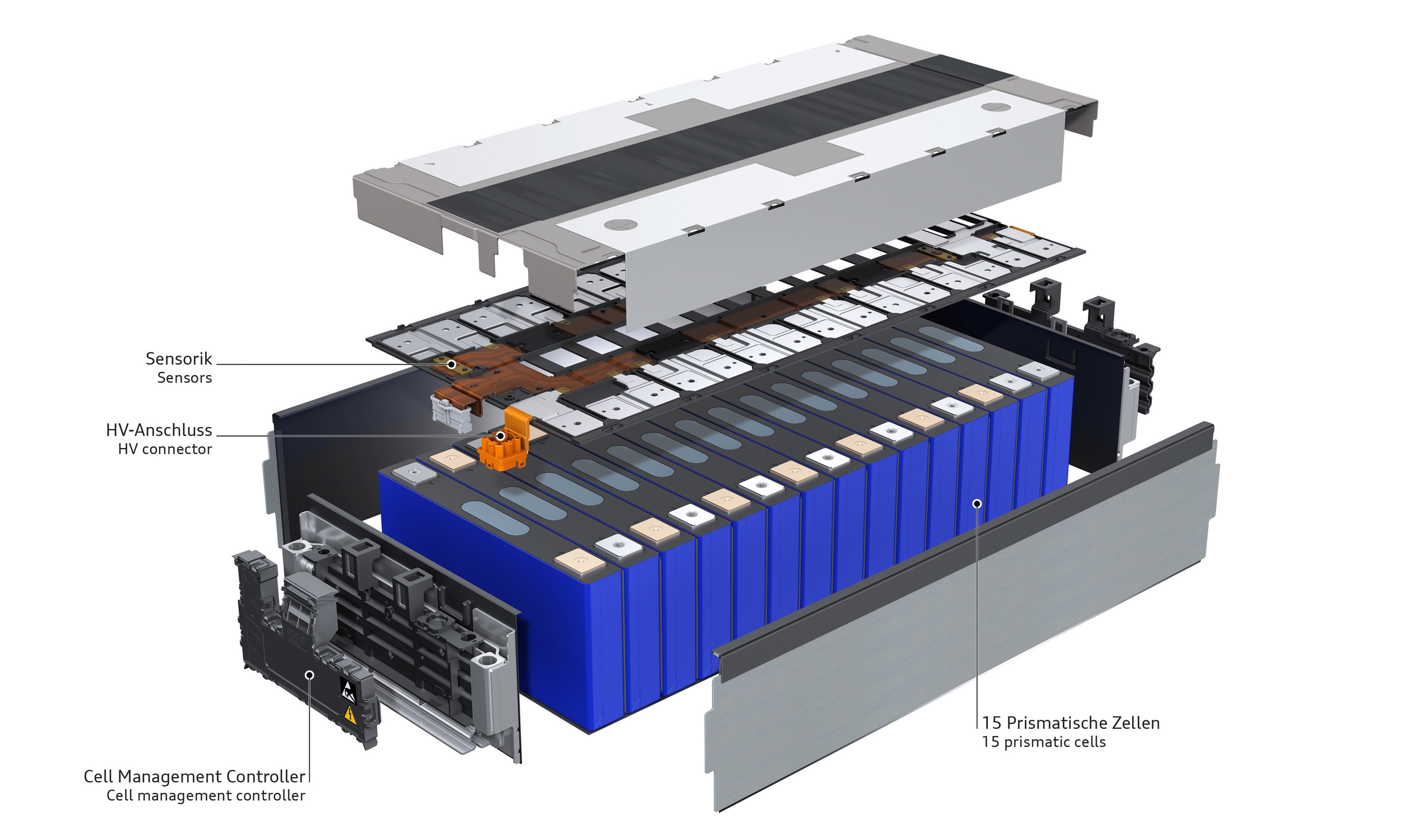
A bateria do Audi Q8 55 e-tron contém 432 células prismáticas divididas em 36 módulos. Cada módulo contém 12 células.
A Audi especifica:
- 114 kWh de capacidade bruta
- 106 kWh de capacidade útil
- 396 V de tensão nominal
- 36 módulos
- 432 células
Cada módulo utiliza uma disposição 3s4p. Por isso, a bateria completa é 108s4p. (Audi)
Utilizando os valores nominais das células:
- Tensão da célula: Aproximadamente 3,6667 V
- Capacidade da célula: 72 Ah
- Capacidade do grupo em paralelo: 4 × 72 Ah = 288 Ah
- Tensão do módulo: 3 × 3,6667 V = aproximadamente 11 V
- Capacidade do módulo: 288 Ah
Os 36 módulos estão ligados em série:
- Configuração completa: 108s4p
- Tensão da bateria: 36 × 11 V = 396 V
- Capacidade da bateria: 288 Ah
- Energia nominal: 396 V × 288 Ah = 114,048 Wh
O resultado é aproximadamente 114 kWh, em conformidade com a capacidade bruta publicada pela Audi.
Este exemplo demonstra dois princípios importantes:
- A ligação de células ou módulos em série aumenta a tensão
- A ligação de módulos em série não aumenta a capacidade em amperes-hora
Exemplo: Porsche Macan Electric
O Porsche Macan Electric utiliza:
- 100 kWh de capacidade bruta
- Aproximadamente 95 kWh de capacidade útil
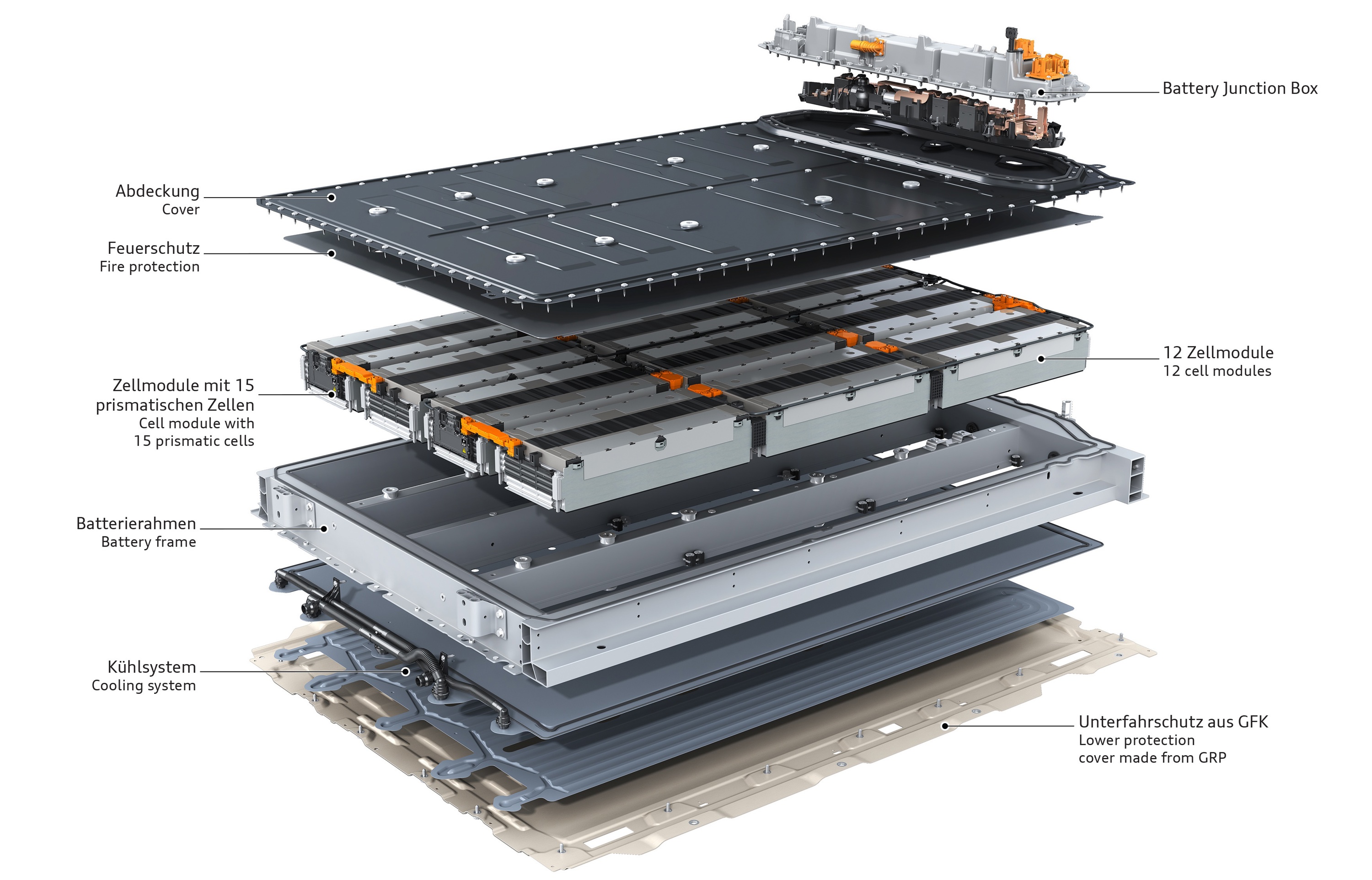
- 12 módulos
- 15 células prismáticas ligadas em série por módulo
- 180 células no total
- Uma arquitetura da classe de 800
A bateria completa pode, por isso, ser descrita como 180s1p. Cada célula prismática grande já proporciona a capacidade necessária em amperes-hora, pelo que não são necessárias células físicas em paralelo em cada posição da série.
A Porsche afirma também que os 12 módulos e vários outros componentes importantes da bateria podem ser substituídos individualmente. (Porsche Newsroom)
Esta solução difere substancialmente de uma bateria que utilize milhares de pequenas células cilíndricas, embora ambas desempenhem as mesmas funções básicas.
Bateria ilustrativa com pequenas células cilíndricas
Considere uma bateria com 4,416 células cilíndricas dispostas em 96s46p.
Admita que cada célula tem:
- Tensão nominal: 3,7 V
- Capacidade: 4,8 Ah
A bateria resultante tem:
Tensão da bateria = 96 × 3,7 V
                  = 355,2 V
Capacidade da bateria = 46 × 4,8 Ah
                      = 220,8 Ah
Energia nominal = 355,2 V × 220,8 Ah
                = aproximadamente 78,4 kWh
Esta é uma configuração ilustrativa, e não uma especificação para todos os veículos com uma contagem de células semelhante.
As baterias cilíndricas reais variam consoante:
- A capacidade das células
- A química das células
- O fornecedor
- A fábrica
- O ano-modelo
- A versão da bateria
- A janela útil de tensão
Exemplos de configurações de bateria
Os fabricantes nem sempre publicam a notação sXp completa. As configurações assinaladas com um asterisco são deduzidas das disposições publicadas de células e módulos.
| Bateria | Ano | Capacidade bruta ou nominal | Células/módulos | Configuração | Tensão nominal ou da arquitetura |
|---|---|---|---|---|---|
| Mitsubishi i-MiEV, especificação dos EUA | 2012 | 16,3 kWh | 88 células | 88s1p* | 325,6 V |
| Volkswagen e-Golf | 2014 | 24,2 kWh | 264 células / 27 módulos | 88s3p* | 323 V |
| Volkswagen e-Golf, geração de 35,8 kWh | 2017 | 35,8 kWh | 264 células / 27 módulos | 88s3p* | 323 V |
| Audi Q8 55 e-tron | 2022 | 114 kWh | 432 células / 36 módulos | 108s4p | 396 V |
| Bateria PPE do Audi Q6 e-tron / A6 e-tron | 2024 | 100 kWh | 180 células / 12 módulos | 180s1p* | Classe de 800 |
| Porsche Macan Electric | 2024 | 100 kWh | 180 células / 12 módulos | 180s1p* | Classe de 800 |
| NIO 150 kWh Ultra-Long Range Battery | 2024 | 150 kWh nominais | 384 células | Não publicada oficialmente | 337 V nominais |
| Porsche Cayenne Electric | 2026 | 113 kWh | 192 células de bolsa / 6 módulos | Não publicada oficialmente | Classe de 800 |
A bateria ensaiada do Mitsubishi i-MiEV utilizava 88 células, tinha uma capacidade nominal de 50 Ah, uma energia nominal de 16,3 kWh e uma tensão nominal de 325,6 V. (US Department of Energy)
O e-Golf original utilizava 264 células, 27 módulos, 323 V e 24,2 kWh. A versão posterior de 35,8 kWh manteve a mesma contagem de células, número de módulos, tensão nominal e massa publicada da bateria. (VW Press)
A bateria PPE da Audi utiliza 12 módulos e 180 células prismáticas grandes, em vez dos 36 módulos e 432 células utilizados pelo Q8 e-tron. (Audi)
A NIO publica 384 células, tensão nominal de 337 V, 446 Ah e 575 kg para a sua bateria de 150 kWh, mas não fornece informação pública suficiente para indicar uma configuração sXp completa e fiável. (NIO)
O Porsche Cayenne Electric utiliza seis módulos e 192 células de bolsa grandes numa bateria com funções integradas. (Porsche Newsroom)
Tensão, corrente e potência
A potência elétrica depende da tensão e da corrente:
Potência = Tensão × Corrente
A mesma potência pode ser transferida utilizando:
- Tensão superior e corrente inferior
- Tensão inferior e corrente superior
Uma transferência idealizada de 300 kW exige:
A 400 V:

Corrente = 300,000 W ÷ 400 V
         = 750 A
A 800 V:

Corrente = 300,000 W ÷ 800 V
         = 375 A
O sistema da classe de 800 fornece a mesma potência com metade da corrente.
As perdas elétricas nos condutores podem ser aproximadas por:
Perda resistiva = Corrente² × Resistência
Se a resistência permanecer inalterada, reduzir a corrente para metade diminui a perda resistiva para um quarto.
Os veículos reais são mais complexos porque as dimensões dos condutores, a resistência dos conectores, os semicondutores, a refrigeração e a tensão real da bateria também mudam. Ainda assim, o cálculo explica por que motivo uma tensão superior se torna atrativa à medida que aumentam a potência de carregamento e da cadeia cinemática.
Sistemas das classes de 400 e 800
Os termos 400 volts e 800 volts descrevem classes gerais de sistemas, e não tensões fixas da bateria.
A tensão da bateria muda com:
- O estado de carga
- A química das células
- A temperatura
- A corrente
- O número de células ligadas em série
- Os limites de tensão do fabricante
Uma bateria comercializada como sendo de 400 volts pode funcionar desde a gama baixa dos 300, chegando a mais de 400 V.
Uma bateria da classe de 800 pode ter uma tensão nominal mais próxima de 650–750 V e aproximar-se ou ultrapassar 800 V com um estado de carga elevado.
Sistemas da classe de 400
Uma arquitetura da classe de 400 continua a ser suficiente para muitos veículos elétricos generalistas.
Vantagens
- Componentes maduros e amplamente disponíveis
- Menor custo dos componentes
- Compatibilidade simples com carregadores existentes
- Requisitos de isolamento menos exigentes
- Potência adequada para muitos veículos de passageiros
- Processos estabelecidos de reparação e fabrico
Compromissos
- Corrente superior para a mesma potência
- Condutores de corrente maiores com potência muito elevada
- Maior aquecimento dos conectores e cabos
- Maior dificuldade para atingir potências extremas de carregamento
- Requisitos de corrente superiores para cadeias cinemáticas de alta potência
Uma boa bateria da classe de 400, ainda assim, pode carregar muito depressa quando combina células de alta corrente, refrigeração eficaz e uma curva de carregamento ampla.
Sistemas da classe de 800
Uma arquitetura da classe de 800 reduz a corrente necessária para uma determinada potência.
Vantagens
- Corrente inferior com elevada potência de carregamento
- Menores perdas nos condutores
- Possibilidade de cabos de alta tensão menores ou mais leves
- Maior potência dentro dos limites de corrente dos conectores
- Fornecimento eficiente de elevada potência à cadeia cinemática
- Boa adequação ao carregamento de alta potência
Compromissos
- Componentes de alta tensão mais caros
- Isolamento e distâncias de fuga mais exigentes
- Maiores requisitos para contactores e sensores
- Eletrónica de potência mais complexa
- Desafios de compatibilidade com carregadores de tensão inferior
- Maior custo de desenvolvimento e validação
Uma tensão superior não garante um carregamento mais rápido.
O desempenho de carregamento também depende de:
- Química das células
- Taxa C das células
- Temperatura da bateria
- Curva de carregamento
- Limites de corrente
- Capacidade de refrigeração
- Estado de carga
- Capacidade do carregador
Carregar uma bateria da classe de 800 num carregador de tensão inferior
Um carregador tem de fornecer tensão suficiente para fazer entrar corrente na bateria.
Uma bateria da classe de 800 não consegue normalmente carregar diretamente num carregador cuja tensão máxima de saída permanece muito abaixo da tensão da bateria.
Os fabricantes resolvem este problema de várias formas:
- Um conversor elevador DC dedicado
- Utilização do motor e do inversor como parte de um circuito elevador
- Reconfiguração da bateria em bancos de tensão inferior
- Capacidade de carregamento limitada em carregadores incompatíveis
Carregamento por bancos
O carregamento por bancos altera a configuração elétrica da bateria durante o carregamento.
O Porsche Macan consegue dividir a sua bateria da classe de 800 em dois circuitos separados da classe de 400. As duas metades da bateria são depois carregadas em simultâneo até 135 kW sem um elevador de alta tensão separado. (Porsche Newsroom)
As células não se deslocam e a bateria não é dividida fisicamente. Interruptores de alta tensão alteram a forma como as secções estão ligadas eletricamente.
Isto demonstra que a configuração da bateria nem sempre permanece fixa em todos os modos de funcionamento.
Arquiteturas de bateria
A configuração elétrica descreve como as células estão ligadas.
A arquitetura da bateria descreve como as células, o sistema de refrigeração, o invólucro, os módulos e a estrutura do veículo estão fisicamente integrados.
As principais soluções incluem:
- Baterias baseadas em módulos
- Cell-to-Pack
- Cell-to-Body ou Cell-to-Chassis
- Baterias estruturais ou com funções integradas
Estas categorias sobrepõem-se.
Uma bateria estrutural pode continuar a conter módulos. Uma conceção Cell-to-Pack pode continuar a utilizar estruturas internas, filas comprimidas, bancos ou outros agrupamentos de células.
Baterias baseadas em módulos
Numa bateria tradicional baseada em módulos, as células são montadas em módulos antes de estes serem instalados no invólucro da bateria.
Célula → Módulo → Bateria → Veículo
Os módulos podem incluir:
- Estruturas para células
- Estruturas de compressão
- Barramentos
- Eletrónica de monitorização das células
- Interfaces de refrigeração
- Isolamento elétrico
- Proteção mecânica
- Conectores ao nível do módulo
Vantagens das baterias baseadas em módulos
- Escalabilidade: Podem ser criadas capacidades diferentes com números de módulos diferentes.
- Separação do fabrico: A montagem dos módulos e a montagem final da bateria podem ser ensaiadas separadamente.
- Grupos de células controlados: A compressão, as ligações elétricas e a refrigeração podem ser geridas em unidades definidas.
- Possível reparabilidade: Um módulo defeituoso pode ser substituído sem trocar a bateria completa.
- Flexibilidade dos fornecedores: Os módulos podem proporcionar uma interface entre a produção das células e a montagem do veículo.
- Reutilização da plataforma: Uma conceção de módulo pode, por vezes, ser utilizada em vários veículos.
Compromissos das baterias baseadas em módulos
- Material inativo adicional: Estruturas, tampas, elementos de fixação e conectores acrescentam massa.
- Mais peças: São necessários mais invólucros, vedantes, barramentos e interfaces.
- Menor eficiência da bateria: É necessário espaço em torno das células e dos módulos.
- Mais etapas de montagem: Os módulos exigem produção, ensaio, transporte e instalação separados.
A existência de módulos não torna automaticamente uma bateria reparável.
A reparabilidade também depende de:
- Acesso à bateria
- Adesivos e vedantes
- Conceção do circuito de refrigeração
- Disponibilidade de peças de substituição
- Apoio ao diagnóstico
- Programação do BMS
- Procedimentos de reparação do fabricante
O Porsche Macan Electric é um exemplo moderno de uma bateria baseada em módulos orientada para a reparação. A Porsche afirma que os 12 módulos e outros componentes principais podem ser substituídos individualmente. (Porsche Newsroom)
Cell-to-Pack
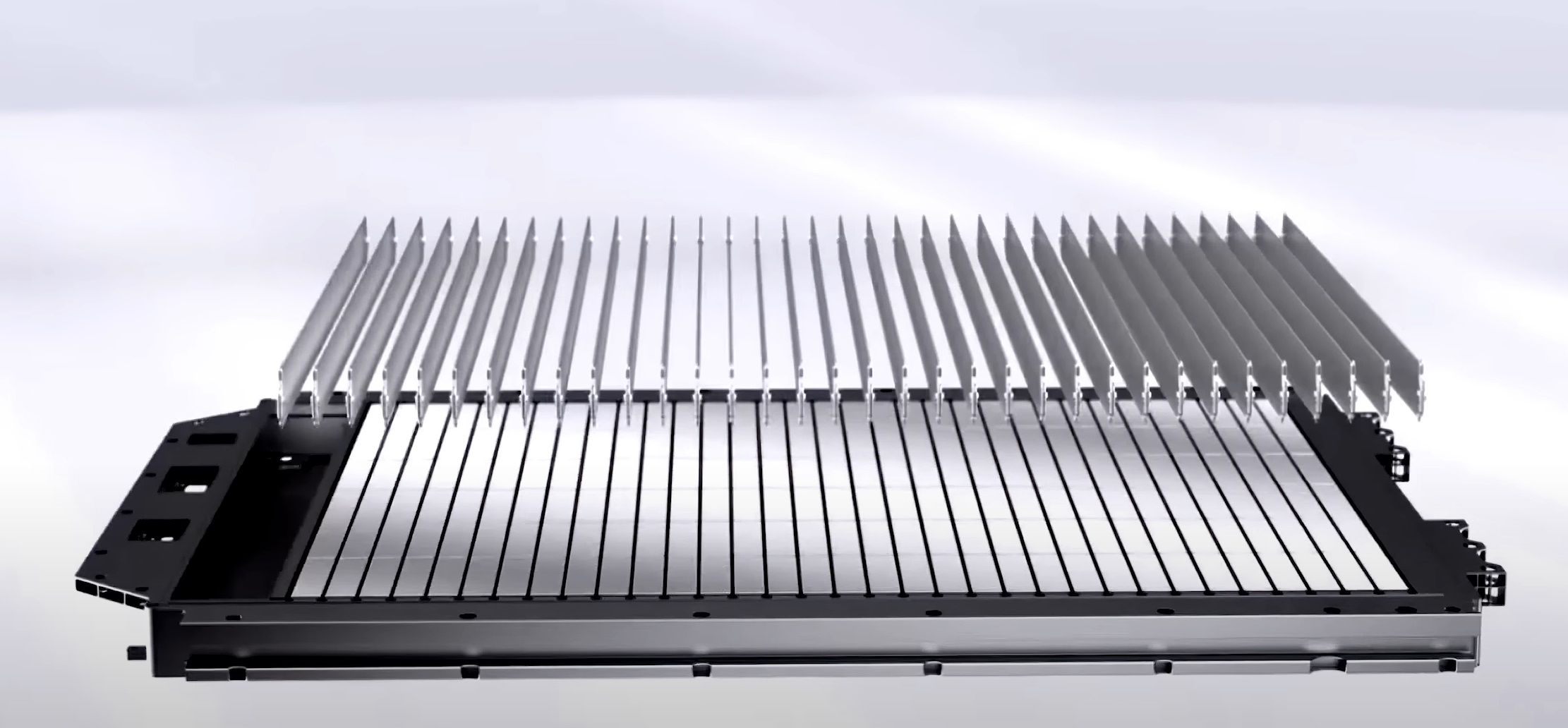
Cell-to-Pack, habitualmente abreviado como CTP, elimina ou reduz o invólucro intermédio convencional dos módulos.
Célula → Bateria → Veículo
As células podem continuar a ser dispostas em:
- Filas
- Grupos comprimidos
- Estruturas internas
- Bancos
- Matrizes estruturais
CTP não significa necessariamente que todas as células estejam soltas dentro de um único invólucro indiviso.
Vantagens do Cell-to-Pack
- Maior utilização do volume da bateria: As paredes e tampas dos módulos ocupam menos volume.
- Menor massa inativa: São necessários menos invólucros intermédios e elementos de fixação.
- Menos peças: As interfaces elétricas e estruturais podem ser consolidadas.
- Possível redução de custos: A eliminação de componentes repetidos pode simplificar a montagem.
- Integração mais estreita da refrigeração: As células podem contactar diretament…992 tokens truncated…is extensa
- Alterações da plataforma podem exigir uma nova bateria
- A vedação e a proteção contra corrosão tornam-se mais críticas
- As tolerâncias dimensionais tornam-se mais exigentes
Baterias estruturais e com funções integradas
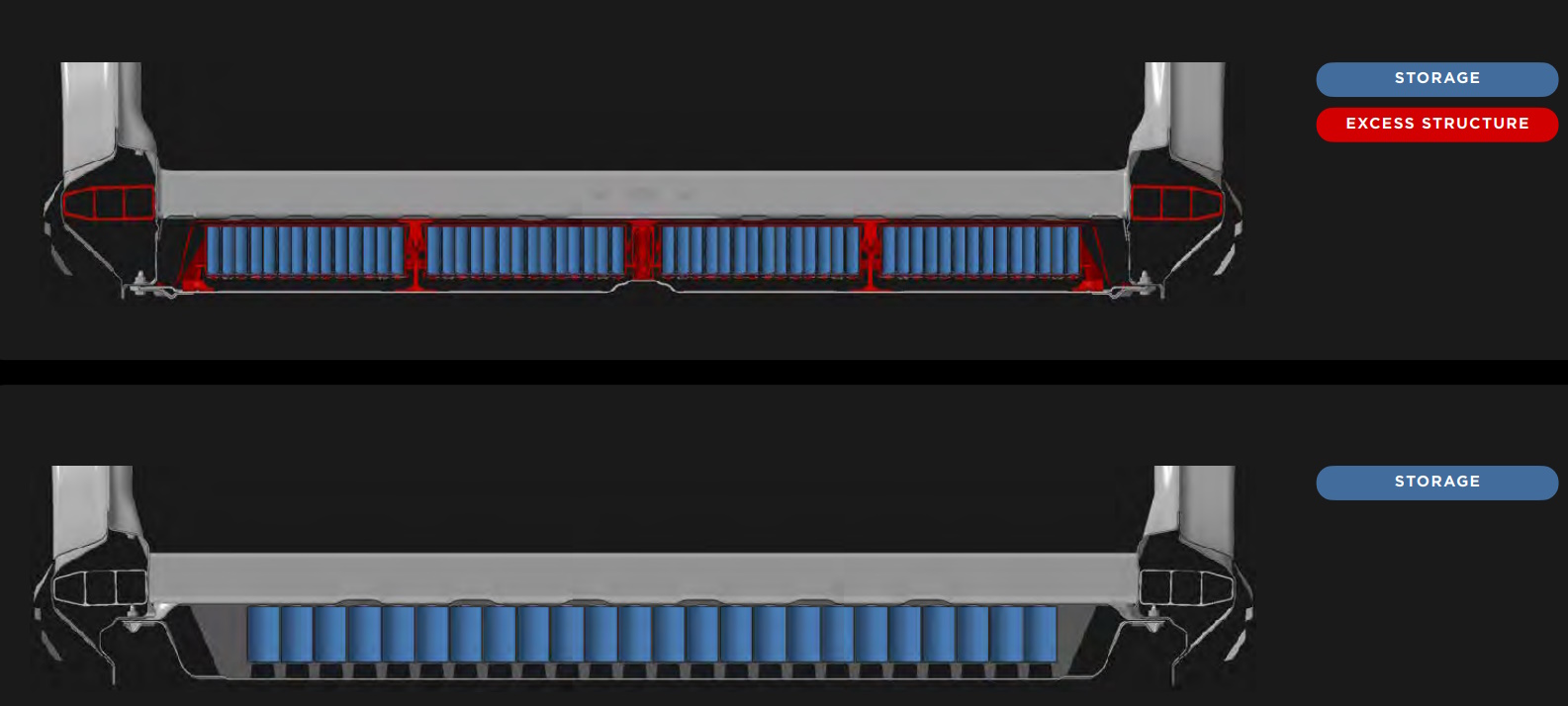
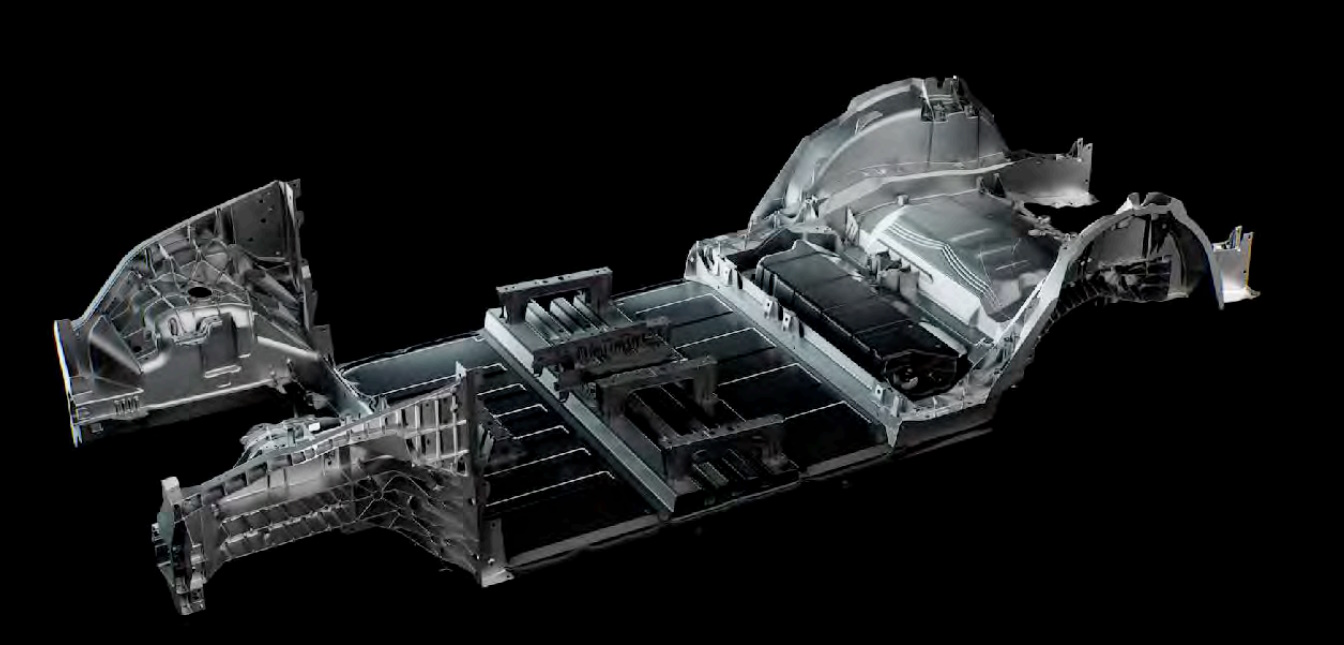
Uma bateria estrutural suporta cargas significativas do veículo, em vez de servir apenas como unidade de armazenamento de energia montada sob a carroçaria.
Uma bateria estrutural pode utilizar:
- Células coladas diretamente num invólucro estrutural
- Grandes matrizes estruturais de células
- Módulos instalados numa bateria integrada na carroçaria
- Uma tampa da bateria que também funciona como parte do piso do habitáculo
A integração estrutural e a utilização de módulos são escolhas de conceção separadas.
Bateria estrutural da Tesla
A Tesla começou a produzir determinados Model Y com células 4680 de fabrico próprio, grandes peças fundidas da carroçaria e uma bateria estrutural em 2022.
A Tesla também produziu versões do Model Y com baterias convencionais não estruturais e células 2170. A arquitetura da bateria depende, por isso, da versão do veículo e da fábrica.
Porsche Cayenne Electric
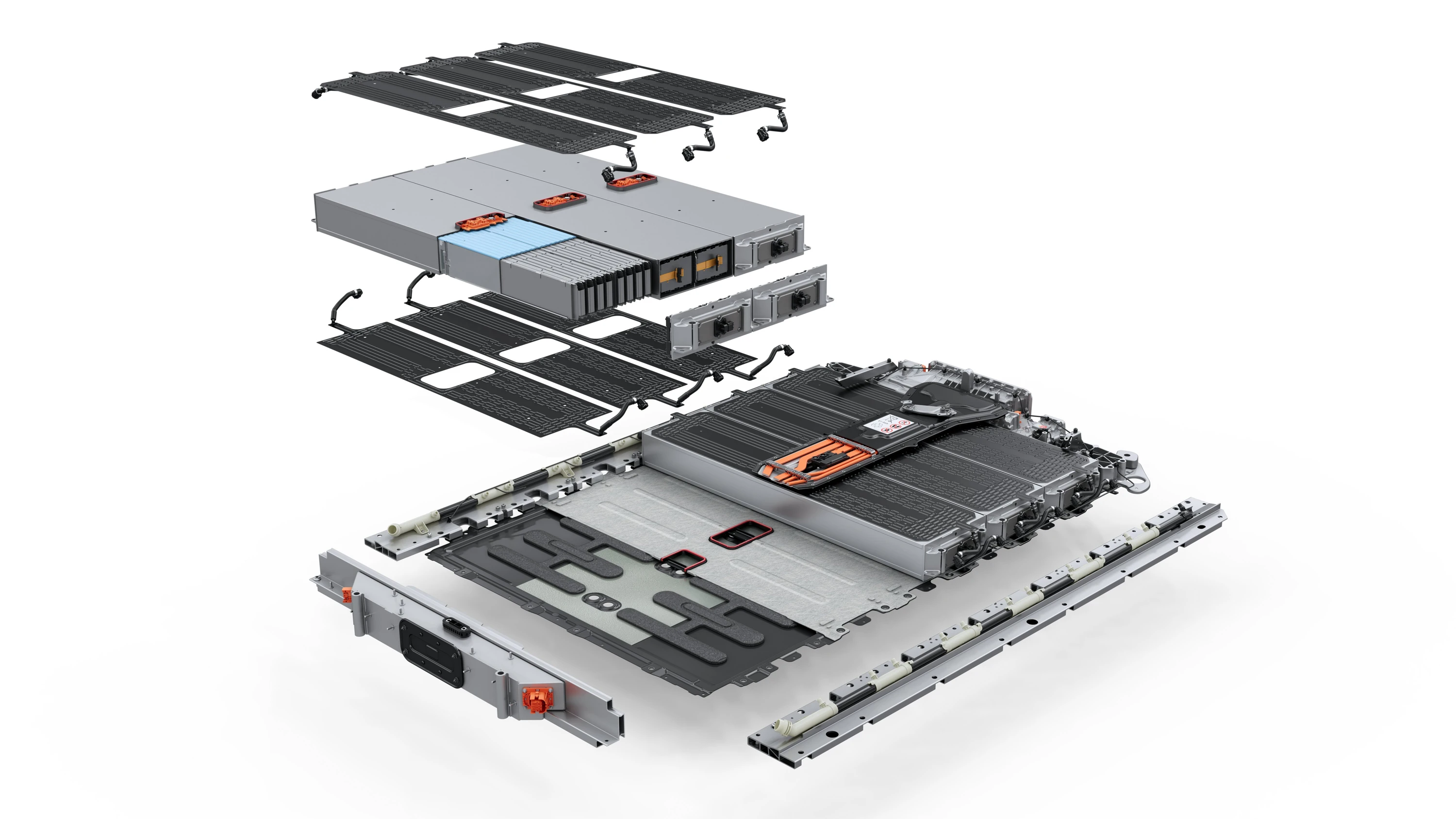
O Porsche Cayenne Electric utiliza aquilo a que a Porsche chama uma bateria de alta tensão com funções integradas.
A bateria:
- Está diretamente integrada na estrutura do veículo
- Contribui para a rigidez da carroçaria
- Contém seis módulos
- Contém 192 células de bolsa grandes
- Tem 113 kWh de capacidade bruta
- Utiliza refrigeração dos módulos nos dois lados
É um exemplo útil de uma bateria integrada estruturalmente que continua a ser modular, em vez de utilizar uma arquitetura CTP sem módulos. (Porsche Newsroom)
Vantagens das baterias estruturais
- Menor duplicação entre as estruturas da bateria e da carroçaria
- Possível redução da massa total do sistema
- Melhor utilização do espaço vertical
- Maior rigidez da carroçaria
- Centro de gravidade mais baixo
- Menos componentes grandes do veículo
Compromissos das baterias estruturais
- O desenvolvimento da bateria e do veículo torna-se inseparável
- Danos estruturais podem afetar o invólucro da bateria
- A remoção da bateria e a reparação da carroçaria podem ser mais complexas
- As tolerâncias de fabrico tornam-se mais exigentes
- A bateria pode ser difícil de reutilizar noutra plataforma
- A reparação exige procedimentos detalhados do fabricante
O vídeo abaixo apresenta uma análise detalhada da bateria estrutural da Tesla realizada pela Munro & Associates.
Arquitetura da bateria e reparabilidade
É tentador classificar as arquiteturas das baterias assim:
Módulos = reparável

Cell-to-Pack = difícil de reparar

Bateria estrutural = não reparável
A realidade é mais complexa.
A reparabilidade depende de:
- Se a tampa pode ser aberta sem a destruir
- Se os módulos ou grupos de células podem ser retirados
- Adesivos estruturais, espuma e compostos de encapsulamento
- Acesso às placas de refrigeração
- Ligações do líquido de refrigeração
- Disponibilidade de módulos e eletrónica
- Ferramentas de diagnóstico
- Programação do BMS e emparelhamento de componentes
- Procedimentos de reparação aprovados
- Danos no invólucro da bateria ou na estrutura do veículo
Uma bateria convencional baseada em módulos pode continuar a ser substituída apenas como unidade completa se o fabricante não fornecer módulos nem instruções de reparação.
Uma bateria integrada estruturalmente pode continuar a conter componentes substituíveis:
- Módulos
- Contactores
- Fusíveis
- Sensores
- Controladores
- Componentes do circuito de refrigeração
O Porsche Cayenne Electric demonstra que a integração estrutural e a construção modular podem coexistir.
A arquitetura da bateria influencia as possibilidades de reparação, mas não as determina por si só.
Densidade energética ao nível da bateria
A densidade energética ao nível da célula descreve a energia armazenada pelas células relativamente à massa ou ao volume.
A densidade energética ao nível da bateria inclui tudo o que é necessário para operar, ligar, arrefecer e proteger as células:
- Invólucros das células
- Estruturas dos módulos
- Invólucro da bateria
- Sistema de refrigeração
- Barramentos e cablagem
- Contactores e fusíveis
- Eletrónica de controlo
- Proteção em colisões
- Vedantes e elementos de fixação
- Materiais de interface térmica
A densidade energética gravimétrica da bateria é:
Densidade energética gravimétrica da bateria =
Energia da bateria em Wh ÷ Massa completa da bateria em kg
A densidade energética volumétrica da bateria é:
Densidade energética volumétrica da bateria =
Energia da bateria em Wh ÷ Volume exterior da bateria em litros
Uma célula com elevada densidade energética pode ainda produzir uma bateria relativamente pesada se necessitar de muita refrigeração, contenção ou equipamento estrutural.
Uma química de menor densidade, como o LFP, pode obter um resultado respeitável ao nível da bateria através de uma integração eficiente, mas a menor densidade ao nível da célula não desaparece completamente.
Evolução da densidade energética ao nível da bateria
A tabela utiliza energia bruta ou nominal do fabricante, e não energia útil.
Os valores devem ser considerados exemplos representativos, e não uma comparação laboratorial. Os fabricantes nem sempre definem a massa da bateria ou a energia nominal exatamente da mesma forma.
| Bateria | Ano ou geração | Capacidade bruta ou nominal | Massa da bateria | Densidade calculada |
|---|---|---|---|---|
| Mitsubishi i-MiEV, especificação dos EUA | 2012 | 16,3 kWh | 165 kg | 99 Wh/kg |
| Tesla Model S 85 | 2012 | 85 kWh | Aproximadamente 540 kg | Aproximadamente 157 Wh/kg |
| Volkswagen e-Golf | 2014 | 24,2 kWh | 318 kg | 76 Wh/kg |
| Audi e-tron 55 | 2018 | 95 kWh | Aproximadamente 699 kg | Aproximadamente 136 Wh/kg |
| Volkswagen e-Golf, geração de 35,8 kWh | 2017 | 35,8 kWh | 318 kg | 113 Wh/kg |
| Audi Q4 e-tron, bateria grande | 2021 | 82 kWh | Aproximadamente 500 kg | Aproximadamente 164 Wh/kg |
| BYD Seal Long Range, LFP | 2022 | 82,56 kWh | Aproximadamente 558 kg | Aproximadamente 148 Wh/kg |
| Audi Q6 e-tron / Porsche Macan Electric | 2024 | 100 kWh | Aproximadamente 570 kg | Aproximadamente 175 Wh/kg |
| Renault 5 E-Tech, versão de 52 kWh | 2024 | 55 kWh | 297 kg | 185 Wh/kg |
| Audi e-tron GT, bateria atualizada | 2024 | 105 kWh | 625 kg | 168 Wh/kg |
| Bateria permutável NIO de 100 kWh | Especificação atual publicada | 100 kWh nominais | 555 kg | 180 Wh/kg |
| NIO 150 kWh Ultra-Long Range Battery | 2024 | 150 kWh nominais | 575 kg | 261 Wh/kg |
Os valores do Mitsubishi i-MiEV provêm de um relatório de ensaio do US Department of Energy que indica 16,3 kWh de energia nominal e uma massa da bateria de 363 lb, equivalente a aproximadamente 165 kg. (US Department of Energy)
A Tesla especificou oficialmente o Model S original com uma bateria de 85 kWh. A massa aproximada de 540 kg é uma estimativa técnica amplamente comunicada, e não um valor indicado na especificação original do veículo pela Tesla, pelo que a densidade calculada deve ser considerada aproximada. (Tesla)
A Volkswagen indica oficialmente 318 kg para ambas as gerações da bateria do e-Golf. (VW Press)
Em 2018 a Audi utilizava no e-tron uma bateria de 95 kWh com cerca de 699 kg. O valor é um exemplo útil de uma bateria concebida em torno de boa refrigeração, proteção estrutural, carregamento repetível e construção modular, e não apenas da massa mínima.
O valor do BYD Seal utiliza uma massa aproximada de 558 kg para a Blade Battery LFP de 82,56 kWh. O resultado é cerca de 148 Wh/kg e constitui uma referência LFP moderna.
A Renault publica oficialmente 52 kWh de capacidade útil e 297 kg de massa para o Renault 5. A tabela utiliza 55 kWh como valor de trabalho da EVKX para a capacidade bruta, produzindo aproximadamente 185 Wh/kg. (Renault Ireland)
A Audi publica 105 kWh de capacidade bruta e 625 kg para a bateria atualizada do e-tron GT. (Audi)
A NIO publica 555 kg para as baterias de 100 kWh e 575 kg para a versão de 150 kWh. (NIO)
As primeiras baterias de veículos elétricos não eram todas iguais
A tabela não mostra um simples aumento ano após ano.
O Mitsubishi i-MiEV e o e-Golf original eram sistemas de bateria iniciais e conservadores, com:
- Capacidade modesta
- Baixa potência de carregamento
- Estrutura de suporte substancial
- Acondicionamento limitado por plataformas pequenas ou destinadas a várias cadeias cinemáticas
A primeira bateria do e-Golf atingiu apenas 76 Wh/kg ao nível da bateria.
O Tesla Model S original foi uma grande exceção. A sua grande bateria de piso, concebida de raiz, atingiu aproximadamente 157 Wh/kg em 2012, apesar de utilizar:
- 7,104 pequenas células cilíndricas
- 16 módulos
- Refrigeração líquida
- Milhares de ligações elétricas
- Um invólucro estrutural resistente
O Model S mostrou como uma célula de alta energia e um veículo concebido em torno de uma bateria grande e plana podiam superar muitas baterias menores dos primeiros veículos elétricos.
Duas gerações da bateria do e-Golf
As duas baterias do e-Golf proporcionam uma comparação invulgarmente clara, porque a massa publicada, a contagem de células, o número de módulos e a tensão nominal permaneceram iguais.
| Especificação | e-Golf de 24,2 kWh | e-Golf de 35,8 kWh |
|---|---|---|
| Capacidade nominal | 24,2 kWh | 35,8 kWh |
| Massa da bateria | 318 kg | 318 kg |
| Número de células | 264 | 264 |
| Número de módulos | 27 | 27 |
| Tensão nominal | 323 V | 323 V |
| Densidade calculada | 76 Wh/kg | 113 Wh/kg |
A bateria mais recente armazena aproximadamente 48% mais energia sem aumentar a massa publicada nem o número de células.
A melhoria resultou principalmente da maior capacidade das células, e não de um invólucro maior.
LFP moderno: BYD Seal Blade Battery
O BYD Seal é um exemplo útil de uma bateria LFP moderna.
A Blade Battery de 82,56 kWh pesa aproximadamente 558 kg, proporcionando uma densidade calculada de cerca de 148 Wh/kg.
O valor é inferior ao de várias baterias modernas à base de níquel, embora o Seal utilize uma arquitetura Cell-to-Body eficiente.
O resultado ilustra dois efeitos distintos:
- As células LFP armazenam normalmente menos energia por quilograma do que as melhores células ricas em níquel
- Uma integração eficiente reduz, mas não elimina, a desvantagem ao nível da célula
A bateria do Seal não é mal concebida. Dá prioridade a um equilíbrio diferente entre:
- Custo dos materiais
- Vida útil em ciclos
- Estabilidade térmica
- Integração da bateria
- Eficiência estrutural
A densidade da bateria não deve, por isso, ser considerada uma classificação completa da sua qualidade.
Renault 5: alta densidade numa bateria modular pequena
O Renault 5 E-Tech destaca-se porque a bateria compacta atinge aproximadamente 185 Wh/kg utilizando o valor de trabalho bruto de 55 kWh.
| Especificação | Renault 5 E-Tech |
|---|---|
| Capacidade bruta utilizada pela EVKX | 55 kWh |
| Capacidade útil oficial | 52 kWh |
| Massa da bateria | 297 kg |
| Densidade bruta calculada | 185 Wh/kg |
| Número de módulos | 4 |
O resultado é especialmente interessante porque o Renault 5 não utiliza uma conceção CTP sem módulos.
Os quatro grandes módulos reduzem os invólucros, conectores e componentes de suporte repetidos em comparação com baterias que utilizam muitos módulos pequenos.
O Renault demonstra, por isso, que uma boa densidade ao nível da bateria não exige a eliminação completa dos módulos.
Baterias permutáveis de 100 assim como de 150 kWh da NIO
As baterias de 100 assim como as de 150 kWh da NIO proporcionam outra comparação reveladora, porque ambas cabem na interface de troca de baterias da empresa.
| Especificação | NIO 100 kWh | NIO 150 kWh |
|---|---|---|
| Capacidade nominal | 100 kWh | 150 kWh |
| Massa da bateria | 555 kg | 575 kg |
| Densidade calculada | 180 Wh/kg | 261 Wh/kg |
| Diferença de massa | — | Mais 20 kg |
| Diferença de energia | — | Mais 50% |
A bateria de 150 kWh armazena mais 50% de energia nominal, acrescentando apenas 20 kg relativamente à especificação publicada da bateria de 100 kWh.
A densidade calculada de aproximadamente 261 Wh/kg é muito superior à dos exemplos generalistas da tabela.
Não deve ser considerada representativa do mercado geral dos veículos elétricos. A bateria utiliza uma conceção especializada de célula de alta energia e foi implementada através do sistema de atualização e troca de baterias da NIO.
Por que motivo os valores de densidade não são perfeitamente comparáveis
As comparações da densidade das baterias exigem cautela.
Os fabricantes podem diferir na forma como definem:
- Capacidade bruta
- Capacidade nominal
- Massa completa da bateria
- Massa do líquido de refrigeração
- Massa da caixa de junção
- Proteção da parte inferior
- Componentes estruturais partilhados
- Especificação de produção ou de protótipo
Os requisitos dos veículos também diferem.
Um veículo elétrico de alto desempenho pode necessitar de mais:
- Refrigeração
- Capacidade dos barramentos
- Equipamento para corrente elevada
- Proteção em colisões
Um SUV ou veículo todo-o-terreno pode necessitar de um invólucro mais pesado do que um utilitário compacto.
Uma bateria permutável necessita de interfaces estruturais e mecânicas que uma bateria instalada permanentemente não requer.
Uma bateria de menor densidade pode ainda proporcionar:
- Carregamento mais rápido e repetível
- Melhor refrigeração
- Maior proteção em colisões
- Substituição mais fácil dos módulos
- Maior potência sustentada
- Vida útil mais longa
- Menor custo de produção
A densidade ao nível da bateria é útil, mas não é uma medida completa da qualidade.
O que a arquitetura da bateria significa para o comprador
A configuração da bateria não é normalmente algo que um comprador precise de comparar diretamente.
Uma bateria 180s1p não é intrinsecamente melhor do que uma bateria 96s46p.
Na utilização diária, o que importa é o resultado da conceção completa:
- Capacidade útil da bateria
- Eficiência do veículo
- Curva de carregamento
- Carregamento com tempo frio
- Pré-condicionamento da bateria
- Potência contínua e de pico
- Degradação
- Gestão térmica
- Cobertura da garantia
- Proteção contra propagação térmica
- Opções de reparação da bateria e dos módulos
- Custo de substituição após danos
Uma tensão superior pode ajudar um veículo elétrico a alcançar elevadas potências de carregamento e da cadeia cinemática, mas a tensão, por si só, não determina a velocidade de carregamento.
O Cell-to-Pack e a integração estrutural podem reduzir o peso e melhorar o acondicionamento. Também podem alterar os procedimentos de reparação e aumentar as consequências de danos na parte inferior ou na estrutura.
Uma bateria modular pode proporcionar mais opções de reparação, mas apenas quando estão disponíveis peças, diagnóstico e procedimentos aprovados.
A melhor arquitetura é a que cumpre os objetivos do veículo em termos de:
- Desempenho
- Autonomia
- Carregamento
- Segurança
- Durabilidade
- Custo de produção
- Acondicionamento
- Reparabilidade
A sigla mais recente não corresponde automaticamente à melhor bateria.
Para conhecer as camadas de proteção em torno das células e da bateria completa, consulte Segurança e gestão de falhas em baterias de veículos elétricos.
Fontes
- Audi Q8 e-tron: capacidade da bateria e carregamento
- Porsche Macan: bateria e carregamento
- US Department of Energy: ensaio da bateria do Mitsubishi i-MiEV
- Dossier de imprensa do Volkswagen e-Golf
- Bateria de alta tensão Audi PPE
- Manual do utilizador do NIO ET7
- Sistema de alta tensão do Porsche Cayenne Electric
- Tecnologias de bateria e energia do Volkswagen Group
- Especificações do Tesla Model S
- Especificações do Renault 5 E-Tech
- Bateria de alta tensão do Audi e-tron GT