
Gestão térmica da bateria
A temperatura da bateria afeta o carregamento, potência fornecida, travagem regenerativa, eficiência e durabilidade, porque as células não conseguem aceitar ou fornecer energia com a mesma eficácia a todas as temperaturas.
Por isso, um sistema de gestão térmica da bateria (BTMS) aquece, arrefece e uniformiza a temperatura da bateria de acordo com a química, estado de carga, potência necessária e estratégia de controlo do fabricante.
Por que razão a temperatura da bateria é importante
As células da bateria são dispositivos eletroquímicos. A sua resistência, velocidade de reação, energia disponível e comportamento de envelhecimento mudam com a temperatura.
O sistema de gestão térmica tem de equilibrar várias prioridades:
- Disponibilizar potência suficiente para a condução
- Permitir elevada potência de carregamento e travagem regenerativa
- Limitar as perdas elétricas
- Manter as células dentro de limites seguros
- Reduzir a degradação a longo prazo
- Manter temperaturas semelhantes em toda a bateria
- Utilizar o mínimo de energia razoavelmente possível no aquecimento e arrefecimento
Uma bateria pode estar dentro do seu intervalo seguro de temperatura sem se encontrar à melhor temperatura para todas as tarefas.
Não existe uma única temperatura ideal da bateria. Uma temperatura adequada para uma condução eficiente pode ainda ser demasiado baixa para a potência máxima de carregamento rápido, enquanto uma bateria preparada para carregamento de alta potência pode estar mais quente do que o necessário para estacionar ou armazenar durante muito tempo. A Audi, por exemplo, descreve um intervalo preferencial de 30–35°C para a bateria do e-tron GT em condições exigentes de funcionamento e carregamento, mas este não é um objetivo universal para todos os veículos elétricos. (Audi)
O que acontece quando a bateria está fria
Uma temperatura baixa abranda o movimento dos iões através do eletrólito e dos materiais dos elétrodos. A resistência interna aumenta, provocando uma maior queda de tensão e mais geração de calor para uma determinada corrente.
O condutor pode notar:
- Menor aceleração
- Menor potência máxima e contínua
- Travagem regenerativa limitada
- Carregamento em CC mais lento
- Menos energia imediatamente disponível
- Maior consumo em viagens curtas de inverno
Por si só, o frio não danifica normalmente uma bateria. O maior risco surge quando uma célula fria é carregada com corrente elevada.
Nas células convencionais de iões de lítio com elétrodos negativos à base de grafite, os iões de lítio podem chegar à superfície do elétrodo mais depressa do que conseguem ser inseridos na grafite. Pode então formar-se lítio metálico na superfície através de um processo denominado deposição de lítio.
A deposição de lítio pode:
- Consumir lítio que, de outro modo, continuaria disponível para os ciclos
- Aumentar a perda de capacidade
- Elevar a resistência interna
- Formar depósitos irregulares
- Aumentar os riscos de segurança em casos graves
Por isso, o BMS limita o carregamento e a travagem regenerativa até as células estarem suficientemente quentes para aceitar mais corrente. O carregamento rápido sem deposição de lítio continua a ser um dos principais desafios de engenharia no carregamento a frio ou a taxas elevadas. (US Department of Energy)
O que acontece quando a bateria está quente
Inicialmente, uma bateria mais quente tem menor resistência e consegue frequentemente fornecer ou aceitar mais potência. Isto não significa que uma temperatura superior seja sempre melhor.
Uma temperatura elevada acelera reações indesejadas entre os elétrodos e o eletrólito. A exposição prolongada pode contribuir para:
- Envelhecimento cronológico mais rápido
- Perda de lítio ativo
- Crescimento de camadas superficiais como a SEI
- Decomposição do eletrólito
- Geração de gases
- Aumento da resistência interna
- Redução da vida útil em ciclos
A temperatura e o estado de carga interagem. Estacionar uma bateria durante muito tempo com temperatura e SOC elevados é, em geral, mais exigente do que aquecê-la brevemente antes de uma sessão de carregamento.
As temperaturas elevadas durante um carregamento extremamente rápido também são difíceis de controlar. A investigação do Departamento de Energia dos EUA identifica a geração de calor na bateria e temperaturas superiores a cerca de 45°C como obstáculos importantes ao desempenho sustentado do carregamento extremamente rápido e à vida útil da bateria. O limite exato continua a depender da química e da conceção. (US Department of Energy)
De onde vem o calor da bateria
Uma bateria gera calor sempre que passa corrente.
As fontes incluem:
- Resistência elétrica no interior das células
- Transporte de iões através do eletrólito e dos elétrodos
- Reações eletroquímicas
- Terminais das células e coletores de corrente
- Barramentos e ligações elétricas
- Contactores e junções da bateria
- Ineficiência no carregamento e descarga
- Calor transferido da eletrónica de potência próxima
O calor resistivo aumenta aproximadamente com o quadrado da corrente:
Calor resistivo ∝ Corrente² × Resistência
Por isso, duplicar a corrente pode gerar cerca de quatro vezes mais calor resistivo se a resistência não mudar.
Isto ajuda a explicar por que razão condições exigentes criam cargas térmicas elevadas:
- Carregamento CC de alta potência
- Acelerações fortes repetidas
- Condução prolongada a alta velocidade
- Subidas longas
- Reboque
- Utilização em pista
- Travagem regenerativa rápida
O calor nem sempre é gerado uniformemente. O centro de uma célula grande pode estar mais quente do que a superfície exterior, enquanto as células próximas das saídas do líquido de refrigeração ou das extremidades da bateria podem funcionar a temperaturas diferentes das restantes. A investigação do NREL associou a falta de uniformidade da temperatura a diferenças locais no estado de carga, deposição de lítio, crescimento da SEI e degradação. (US Department of Energy)
Não existe uma única temperatura ideal
A temperatura preferencial da bateria depende do que o veículo se prepara para fazer.
Condução normal
Numa condução moderada, o sistema pode dar prioridade ao baixo consumo dos sistemas auxiliares em vez de aquecer ou arrefecer a bateria até à temperatura pretendida para carregamento rápido.
Condução de alta potência
Acelerações repetidas, reboque, subidas ou condução a alta velocidade podem exigir arrefecimento adicional para manter a potência disponível.
Carregamento rápido em CC
A bateria precisa frequentemente de estar mais quente do que durante uma condução normal no inverno. A resistência das células tem de ser suficientemente baixa para aceitar corrente elevada sem uma subida excessiva da tensão nem deposição de lítio.
Estacionamento
Em geral, o automóvel não mantém a bateria à temperatura de carregamento rápido enquanto está estacionado. Fazê-lo desperdiçaria energia. Normalmente, permite-se que a bateria varie dentro de um intervalo protetor de temperatura mais amplo.
Armazenamento prolongado
Uma temperatura e um SOC elevados são indesejáveis no armazenamento prolongado, embora uma bateria temporariamente quente possa carregar ou fornecer potência com maior eficácia.
Por isso, a gestão térmica é um compromisso contínuo entre desempenho imediato, utilização de energia e envelhecimento.
Arquiteturas dos sistemas de gestão térmica
Os fabricantes de veículos elétricos utilizam vários métodos para transferir calor para a bateria e para fora dela.
As principais abordagens são:
- Gestão térmica passiva
- Arrefecimento a ar
- Arrefecimento indireto a líquido
- Arrefecimento direto por fluido refrigerante
- Sistemas integrados de líquido de refrigeração e bomba de calor
A maioria dos veículos elétricos modernos concebidos para elevada potência de carregamento utiliza arrefecimento ativo a líquido, frequentemente ligado ao circuito de fluido refrigerante do veículo através de um permutador de calor ou chiller.
Gestão térmica passiva
Uma bateria com gestão passiva depende sobretudo da transferência de calor através de:
- Invólucros das células
- Estruturas dos módulos
- Caixa da bateria
- Parte inferior da carroçaria
- Ar envolvente
Esta abordagem tem poucos componentes e consome pouca energia.
Vantagens
- Baixo custo
- Baixo peso
- Ausência de bombas ou líquido de refrigeração
- Poucos pontos de manutenção
- Baixo consumo em espera
Limitações
- Capacidade limitada para remover calor
- Forte dependência da temperatura ambiente
- Aquecimento e arrefecimento lentos
- Dificuldade em manter temperaturas uniformes nas células
- Pouca adequação a carregamentos repetidos de alta potência
A gestão térmica passiva pode ser suficiente para um veículo elétrico urbano de baixa potência, mas torna-se cada vez mais limitadora à medida que aumentam a velocidade de carregamento, dimensão da bateria e potência sustentada.
Arrefecimento a ar
Os sistemas refrigerados a ar fazem passar ar ambiente ou do habitáculo através ou em redor da bateria.
O fluxo de ar pode ser impulsionado por ventoinhas ou pelo movimento do veículo.
Vantagens
- Mais simples do que o arrefecimento a líquido
- Menor massa
- Ausência de um circuito de líquido de refrigeração da bateria
- Menor risco de fuga de líquido
Limitações
- O ar transporta muito menos calor do que um líquido de refrigeração
- O arrefecimento depende muito da temperatura do ar
- As condutas de ar ocupam espaço
- Pode ser difícil manter uma temperatura uniforme
- O ruído das ventoinhas e o consumo aumentam sob carga elevada
Uma bateria refrigerada a ar pode concluir com êxito uma sessão de carregamento rápido, mas ter dificuldade em remover calor suficiente em carregamentos repetidos. A Nissan documentou a diminuição da potência de carregamento a partir da segunda sessão de carregamento rápido nos ensaios da bateria com gestão a ar do LEAF e+. (Nissan)
Arrefecimento indireto a líquido
O arrefecimento indireto a líquido é a arquitetura mais comum nos atuais veículos elétricos de alta potência.
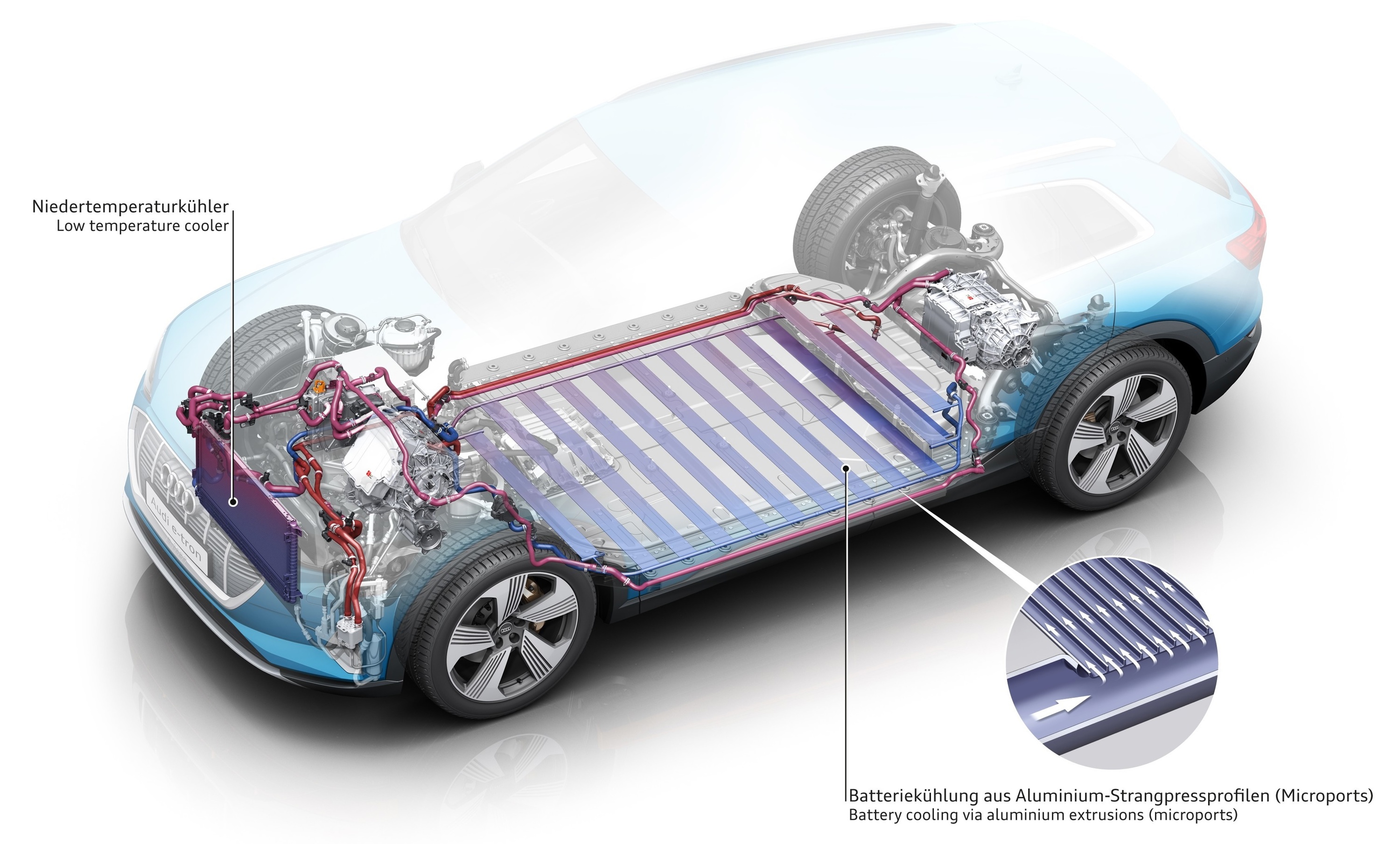
Um líquido de refrigeração à base de água e glicol circula por:
- Placas de arrefecimento sob as células
- Canais junto das filas de células
- Secções extrudidas no interior do piso da bateria
- Placas em contacto com as faces largas das células
- Estruturas de arrefecimento integradas nos módulos
Normalmente, o líquido de refrigeração não circula dentro das células. O calor tem de atravessar várias camadas:
- Interior da célula
- Invólucro da célula
- Material de interface térmica
- Placa de arrefecimento
- Líquido de refrigeração
O material de interface térmica pode ser uma almofada, pasta, adesivo, gel ou outra camada condutora utilizada para preencher pequenas folgas entre a célula ou módulo e a placa de arrefecimento.
O Audi Q4 e-tron utiliza um circuito dedicado de baixa temperatura para a bateria, com uma mistura de água e glicol a circular por canais planos sob os compartimentos das células. Uma pasta térmica liga as células à estrutura de arrefecimento, enquanto um aquecedor de alta tensão aquece o líquido em condições frias. (Audi)
Vantagens
- Elevada capacidade de transferência de calor
- Melhor uniformidade da temperatura do que no arrefecimento passivo ou a ar
- Aquecimento e arrefecimento eficazes através das mesmas placas
- Adequado para condução e carregamento de alta potência
- Pode ser ligado a um radiador, chiller ou bomba de calor
Compromissos
- Acrescenta líquido de refrigeração, bombas, válvulas, tubos e permutadores de calor
- Aumenta o peso e o custo
- Cria potenciais pontos de fuga e manutenção
- Exige vedação e controlo da corrosão cuidadosos
- O desempenho do arrefecimento depende do contacto entre as células e as placas
Arrefecimento por radiador
Quando o ar ambiente está suficientemente frio, o líquido de refrigeração da bateria pode libertar calor através de um radiador.
Este é frequentemente o modo de arrefecimento com maior eficiência energética, porque o sistema pode necessitar apenas de:
- Uma bomba de líquido de refrigeração
- Fluxo de ar através do radiador
- Uma ventoinha de arrefecimento quando a velocidade do veículo é insuficiente
O arrefecimento por radiador não consegue reduzir a temperatura da bateria abaixo da temperatura do ar ambiente. Pode também tornar-se insuficiente com tempo quente ou durante carregamento de alta potência.
Arrefecimento por chiller de fluido refrigerante
Quando o radiador não consegue remover calor suficiente, o líquido de refrigeração pode passar por um chiller ligado ao circuito de fluido refrigerante do ar condicionado do veículo.
O chiller transfere calor do líquido de refrigeração da bateria para o fluido refrigerante. O compressor elétrico transporta depois esse calor através do sistema de ar condicionado e rejeita-o no exterior do veículo.
Um percurso simplificado do calor é:
Células da bateria
    ↓
Placa de arrefecimento
    ↓
Líquido de refrigeração à base de água e glicol
    ↓
Chiller do fluido refrigerante
    ↓
Fluido refrigerante do ar condicionado
    ↓
Condensador e ar exterior
Isto permite ao veículo arrefecer a bateria abaixo da temperatura ambiente ou mantê-la sob uma carga térmica sustentada.
O Audi e-tron GT utiliza quatro circuitos de líquido de refrigeração interligados. Sob carga elevada de condução ou carregamento, as válvulas ligam o circuito da bateria ao circuito de fluido refrigerante do ar condicionado para um arrefecimento mais intenso. (Audi)
Arrefecimento direto por fluido refrigerante
Algumas conceções colocam canais de fluido refrigerante ou superfícies de evaporação diretamente contra a estrutura de arrefecimento da bateria, em vez de utilizarem primeiro um circuito separado de água e glicol.
Isto pode reduzir o número de etapas de transferência de calor e proporcionar um arrefecimento eficaz.
Entre os compromissos incluem-se:
- Distribuição mais difícil do fluido refrigerante
- Maior sensibilidade à pressão e vedação
- Procedimentos de manutenção mais complexos
- Risco de arrefecimento desigual se o fluxo de fluido refrigerante não for bem controlado
- Integração mais estreita entre a bateria e o sistema HVAC
O arrefecimento indireto a líquido continua a ser comum porque separa o circuito de líquido de refrigeração da bateria do circuito de alta pressão do fluido refrigerante.
Gestão térmica integrada
Os sistemas térmicos dos veículos elétricos modernos ligam cada vez mais a bateria, motores, eletrónica de potência, equipamento de carregamento e habitáculo.
Consoante as condições do momento, o calor pode ser:
- Removido da bateria
- Reutilizado para aquecer o habitáculo
- Transferido do grupo motopropulsor para a bateria
- Rejeitado através de um radiador
- Transferido através do circuito de fluido refrigerante
- Extraído do ar exterior por uma bomba de calor
O Audi Q6 e-tron utiliza permutadores de calor para o líquido de refrigeração e fluido refrigerante, enquanto o seu sistema de controlo preditivo coordena o aquecimento e arrefecimento da bateria. A Nissan descreve, de forma semelhante, um sistema integrado que reutiliza na bateria e no habitáculo o calor gerado durante a condução e o carregamento. (Audi)
Métodos de aquecimento da bateria
Aquecer uma bateria fria requer energia. Os fabricantes diferem na forma como essa energia é fornecida.
Aquecedor de alta tensão para o líquido de refrigeração
Um aquecedor elétrico dedicado pode aquecer o líquido que circula pelas placas de arrefecimento da bateria.
Os aquecedores com coeficiente de temperatura positivo, ou PTC, são utilizados com frequência porque a sua resistência elétrica aumenta à medida que aquecem, ajudando a limitar um aquecimento excessivo.
Vantagens
- Funciona em quase todas as condições ambientais
- Proporciona uma potência de aquecimento previsível
- Consegue aquecer a bateria sem condução
- Controlo relativamente simples
Compromissos
- A energia elétrica é convertida diretamente em calor
- Uma potência de aquecimento elevada pode reduzir a autonomia disponível
- Acrescenta equipamento, peso e custo
A Audi utiliza aquecedores de alta tensão em vários sistemas térmicos de veículos elétricos, incluindo o circuito de líquido de refrigeração do Q4 e-tron. (Audi)
Aquecimento por bomba de calor
Uma bomba de calor transfere calor em vez de o produzir totalmente através de resistência elétrica.
As possíveis fontes de calor incluem:
- Ar exterior
- Líquido de refrigeração do motor e inversor
- Equipamento de carregamento
- Ar extraído do habitáculo
- Circuito de fluido refrigerante
Em condições adequadas, uma bomba de calor consegue transferir mais energia térmica do que a energia elétrica consumida pelo compressor.
O seu desempenho diminui à medida que aumenta a diferença de temperatura. Por isso, muitos veículos combinam uma bomba de calor com aquecedores resistivos para aquecimento rápido ou condições muito frias.
Recuperação de calor residual
Os motores, inversores, carregadores de bordo e conversores CC-CC geram calor durante o funcionamento.
Um sistema térmico integrado pode redirecionar parte deste calor para:
- A bateria
- O habitáculo
- Outro circuito de líquido de refrigeração
A recuperação de calor residual é útil durante a condução e o carregamento, mas nem sempre consegue fornecer calor suficiente após um arranque a frio. A Nissan descreve a reutilização do calor do grupo motopropulsor e carregamento como parte da sua estratégia integrada de condicionamento térmico. (Nissan)
Calor gerado durante a condução
A própria condução aquece a bateria, porque o fluxo de corrente gera calor.
Uma bateria fria pode recuperar gradualmente a potência de carregamento e a travagem regenerativa após:
- Condução em autoestrada
- Subidas
- Aceleração forte
- Utilização sustentada de potência
Este aquecimento não é gratuito. O calor provém da energia perdida através da resistência e de outras ineficiências.
Alguns veículos podem criar deliberadamente carga elétrica adicional ou alterar o funcionamento do grupo motopropulsor antes do carregamento. A utilização desta técnica, e a sua intensidade, dependem da arquitetura térmica do veículo.
Posicionamento das placas de arrefecimento
A posição da superfície de arrefecimento influencia a eficácia com que o calor se desloca através da célula.
As configurações mais comuns incluem:
- Arrefecimento inferior
- Arrefecimento lateral
- Arrefecimento entre filas de células
- Arrefecimento das faces largas
- Arrefecimento dos terminais
- Arrefecimento…731 tokens truncated… bateria quente pode precisar de arrefecimento ativo antes da chegada a um carregador rápido.
Pré-condicionamento para carregamento rápido
Quando um carregador rápido CC é selecionado no sistema de navegação do veículo, este pode estimar o aquecimento ou arrefecimento necessário antes da chegada.
Os dados considerados podem incluir:
- Temperatura atual da bateria
- Temperatura ambiente
- Distância e tempo de condução
- SOC esperado à chegada
- Carga de condução recente
- Capacidade esperada do carregador
- Elevação e velocidade do percurso
O sistema ajusta então o aquecimento ou arrefecimento durante a viagem.
A gestão térmica do Audi e-tron GT pode intensificar o arrefecimento da bateria cerca de meia hora antes da chegada prevista a um carregador de alta potência, ou aquecer a bateria em condições frias.
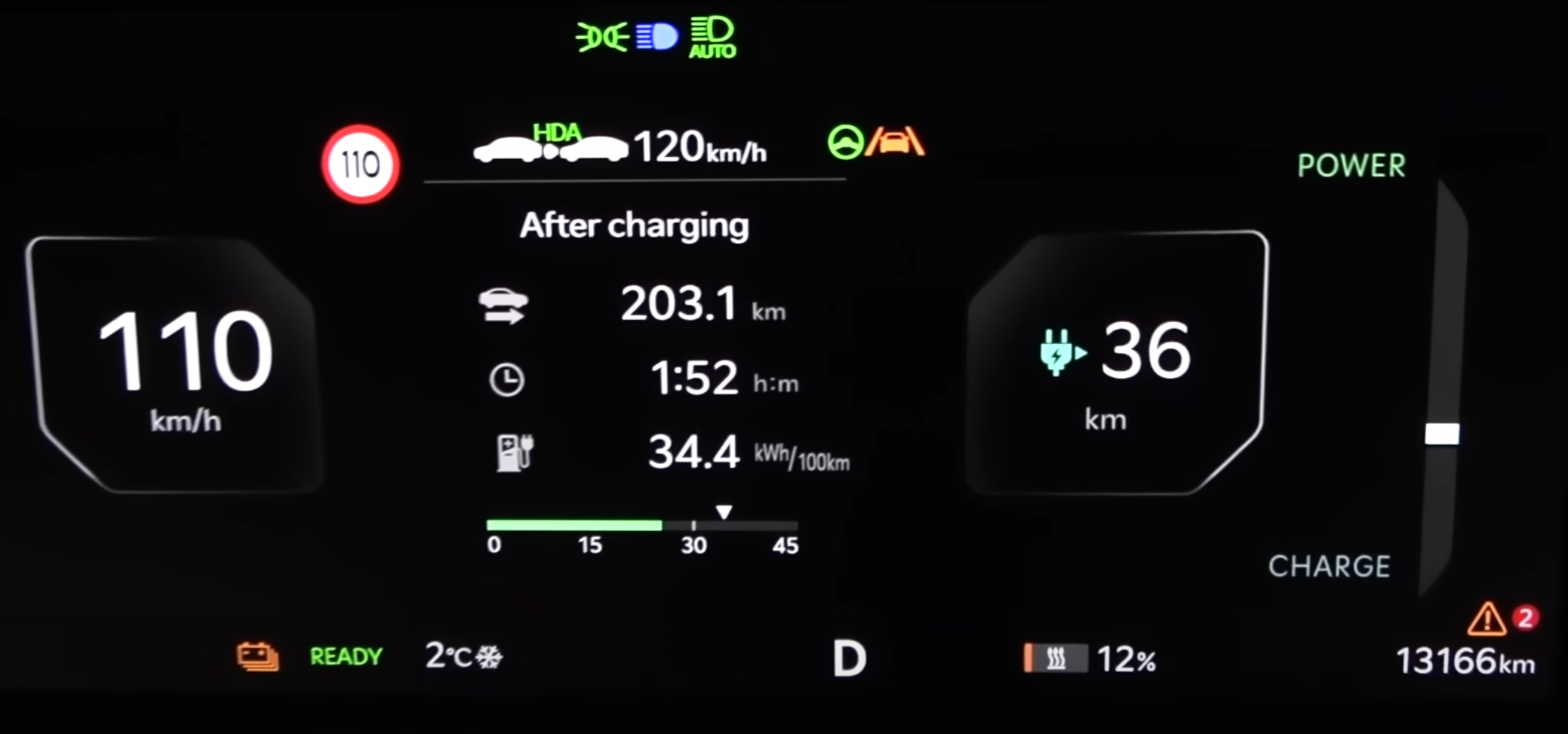
O pré-condicionamento não garante a potência máxima de carregamento. O carregamento continua a depender de:
- SOC à chegada
- Tensão e corrente do carregador
- Tensão das células
- Desequilíbrio entre células
- Temperatura da bateria
- Estado da bateria
- Curva de carregamento do veículo
- Partilha de potência no local de carregamento
Pré-condicionamento manual
Alguns veículos elétricos permitem ao condutor iniciar manualmente a preparação da bateria.
Isto é útil quando:
- Está a ser utilizado um telemóvel ou planeador de itinerários de terceiros
- O carregador não consta da base de dados do veículo
- A paragem de carregamento planeada mudou
- O condutor não está a utilizar orientação de percurso
- O veículo selecionou o tipo de carregador errado
- O carregamento é esperado mais cedo do que o sistema de navegação prevê
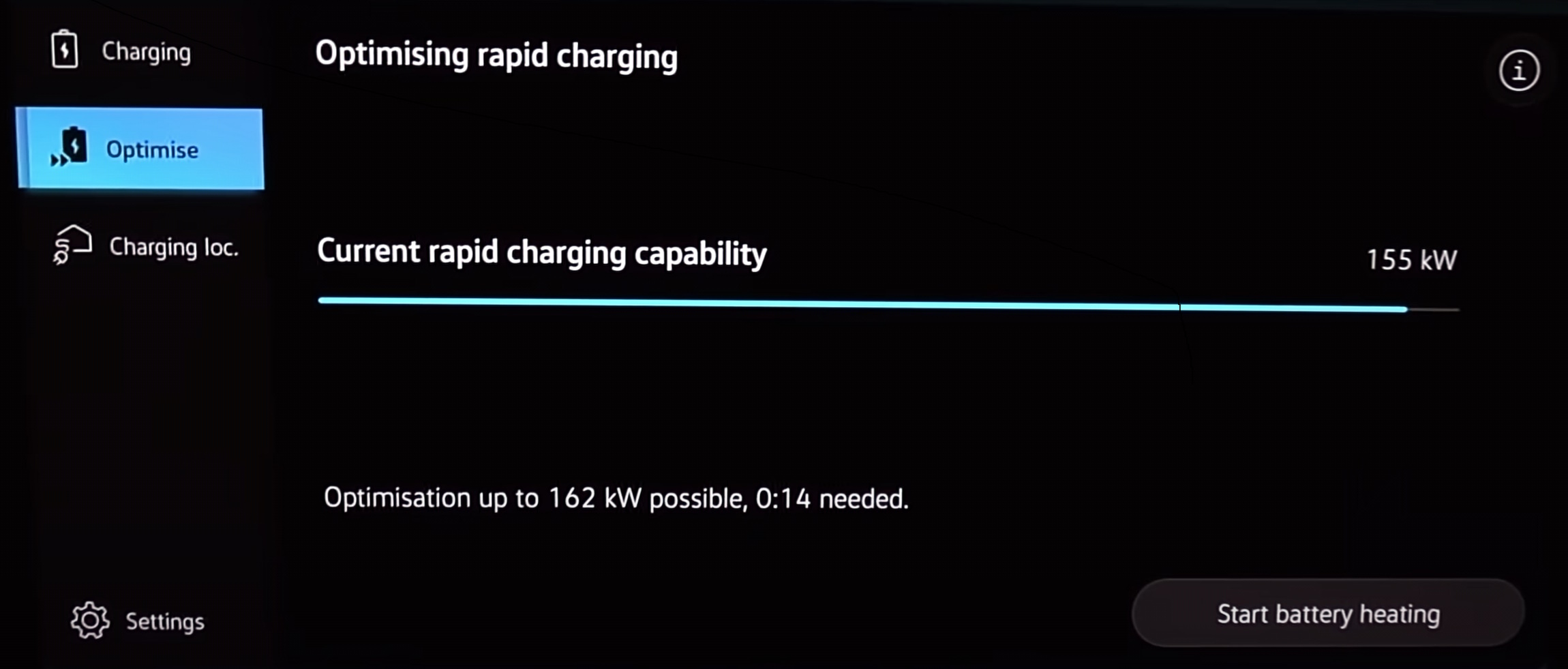
O pré-condicionamento manual pode continuar sujeito a restrições:
- Um SOC mínimo
- Disponibilidade dependente da temperatura
- Um tempo máximo de funcionamento fixo
- Desativação automática
- Menor potência de aquecimento com SOC baixo
- Cancelamento se o condutor mudar o modo de funcionamento
Iniciar o pré-condicionamento também não prova que a bateria atingiu a temperatura pretendida. O tempo de preparação disponível e a capacidade de aquecimento continuam a ser importantes.
Pré-condicionamento antes da partida
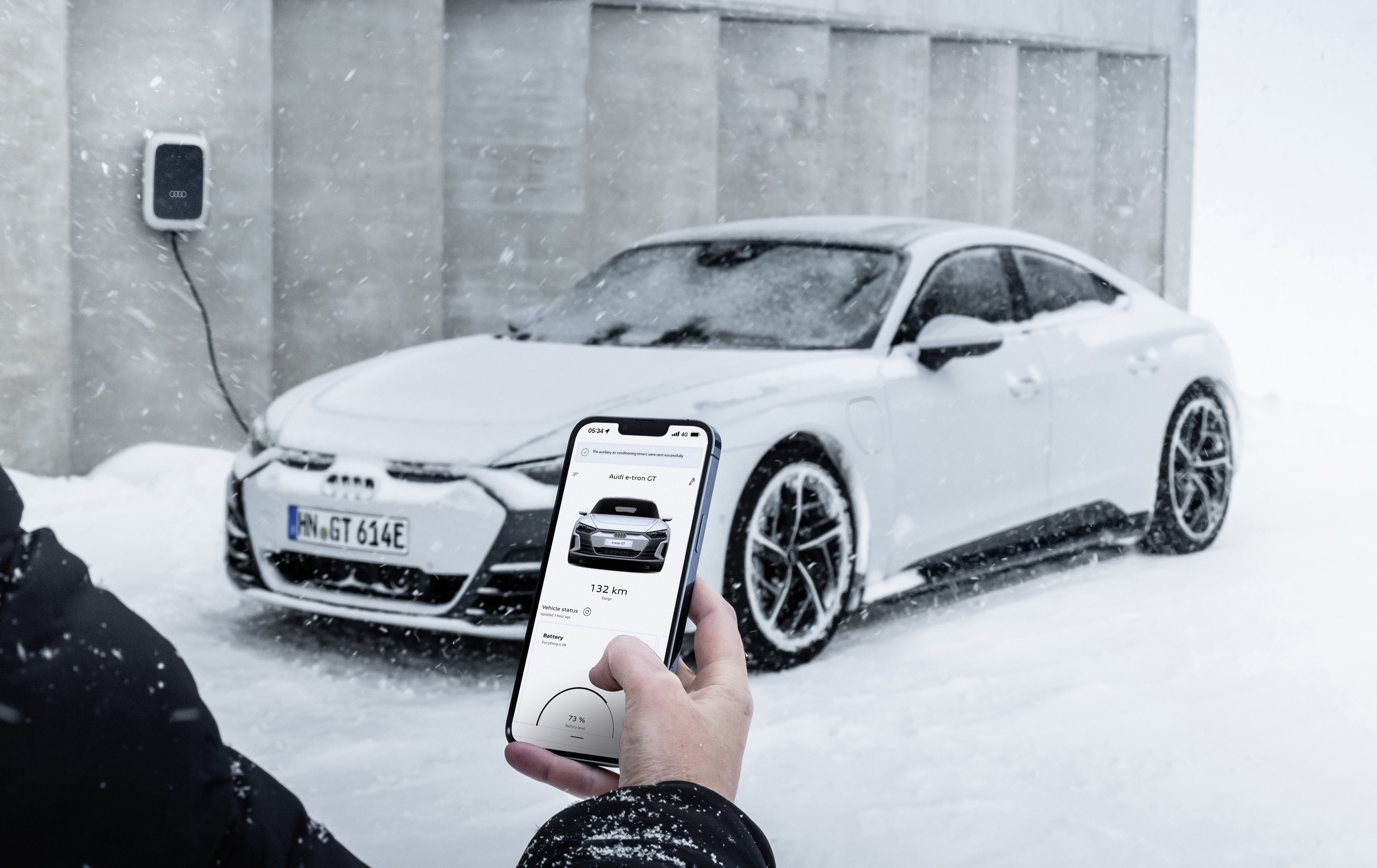
Quando o veículo elétrico está ligado ao carregamento doméstico, o pré-condicionamento programado pode utilizar energia da rede para aquecer o habitáculo e, em alguns veículos, a bateria.
Isto pode reduzir a quantidade de energia armazenada na bateria utilizada imediatamente após a partida.
Não se devem confundir três funções:
- Pré-condicionamento do habitáculo
- Pré-condicionamento da bateria
- Carregamento programado para terminar perto da partida
Alguns veículos elétricos executam as três. Outros aquecem apenas o habitáculo.
Terminar o carregamento pouco antes da partida também pode ajudar, porque o carregamento gera calor dentro das células. Uma bateria que terminou de carregar recentemente pode iniciar a viagem mais quente do que outra cujo carregamento terminou muitas horas antes.
Uma análise do Departamento de Energia dos EUA refere que o pré-condicionamento com o veículo ligado permite que a energia venha diretamente da rede e pode reduzir as perdas de energia de um arranque a frio em viagens curtas de inverno. (US Department of Energy)
Arrefecimento antes do carregamento rápido
Com tempo quente ou após uma utilização exigente, a bateria pode estar demasiado quente em vez de demasiado fria.
Isto pode ocorrer após:
- Condução prolongada a alta velocidade
- Reboque
- Condução em montanha
- Utilização em pista
- Uma sessão anterior de carregamento rápido
- Estacionamento sob luz solar intensa
- Acelerações repetidas
O veículo pode iniciar o arrefecimento ativo muito antes da paragem de carregamento. Uma bateria grande tem uma massa térmica considerável e não muda de temperatura instantaneamente.
Por isso, o pré-condicionamento precisa de tempo de viagem suficiente para remover calor do interior das células, e não apenas para arrefecer as superfícies medidas.
Por que razão o pré-condicionamento pode parar com SOC baixo
O aquecimento e arrefecimento da bateria consomem energia.
Com SOC baixo, o fabricante tem de equilibrar:
- Chegar ao carregador
- Preparar a bateria
- Preservar uma reserva
- Evitar uma descarga excessiva das células
- Manter o aquecimento do habitáculo
O sistema pode reduzir ou interromper o pré-condicionamento da bateria quando o SOC desce abaixo de um limiar definido.
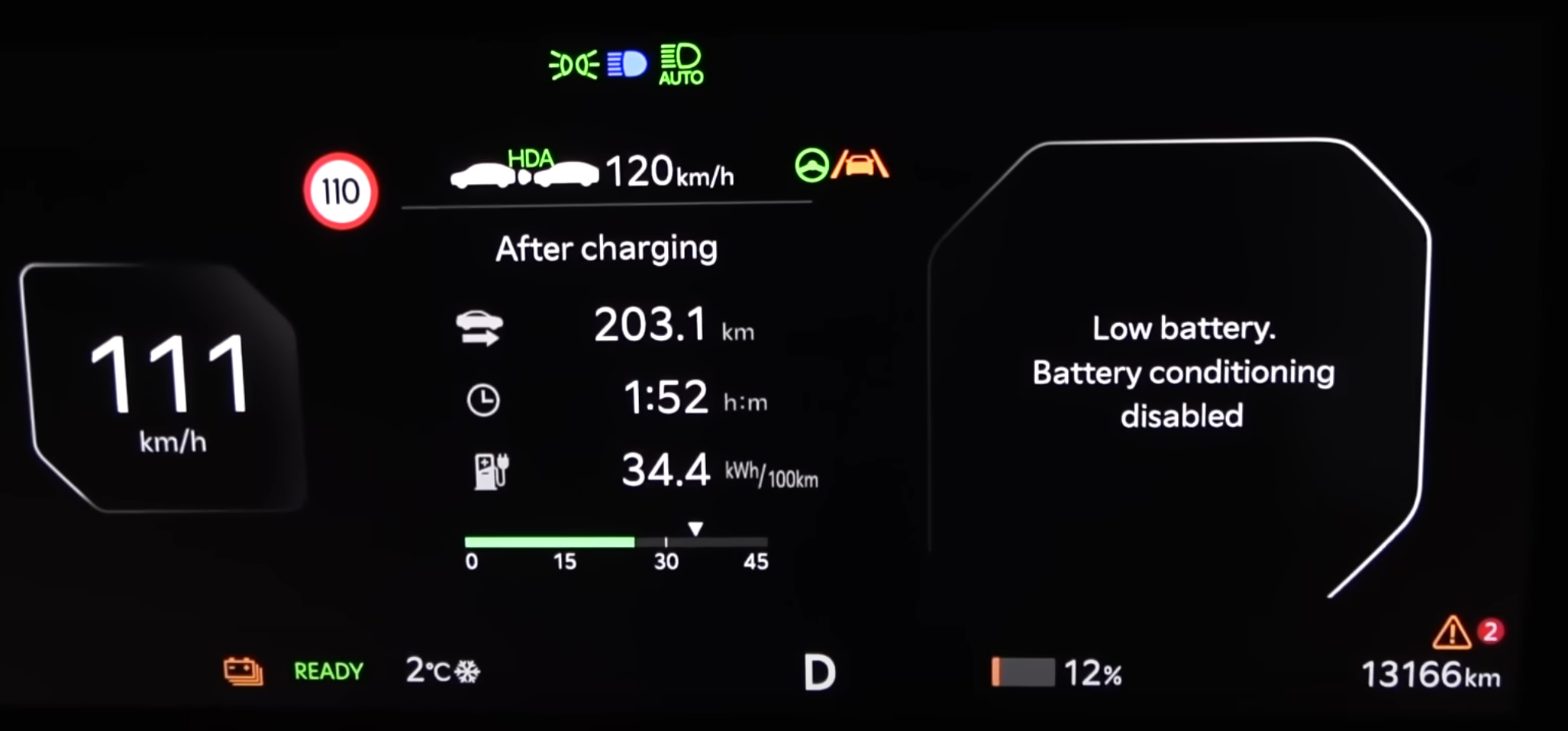
O limiar difere entre veículos e pode mudar com o software. O exemplo do Kia EV9 acima mostra uma implementação e não deve ser interpretado como uma regra geral dos 12%.
Consumo de energia e autonomia
O pré-condicionamento da bateria utiliza energia. Quando o veículo não está ligado à corrente, essa energia provém da bateria de tração e reduz a quantidade disponível para a propulsão.
Os principais benefícios são:
- Paragens de carregamento mais curtas
- Mais potência de tração disponível
- Mais travagem regenerativa
- Menor risco de danos por carregamento a frio
- Desempenho mais previsível
Uma bateria mais quente pode ter menor resistência, mas isto não significa que o pré-condicionamento aumente sempre a autonomia total. A energia poupada através da redução das perdas pode ser inferior à utilizada no aquecimento.
Numa viagem longa com uma paragem de carregamento rápido, utilizar energia da bateria no pré-condicionamento pode, ainda assim, reduzir substancialmente o tempo total de viagem.
Quando o veículo está ligado, o pré-condicionamento alimentado pela rede proporciona normalmente o benefício mais claro para a autonomia, porque é consumida menos energia armazenada antes da partida.
Carregamentos rápidos repetidos e saturação térmica
A potência máxima de carregamento descreve apenas uma parte do desempenho em viagem.
Após uma sessão de carregamento, permanece calor em:
- Interior das células
- Estruturas dos módulos
- Placas de arrefecimento
- Líquido de refrigeração
- Barramentos e terminais
- Caixa da bateria
Este calor acumulado é frequentemente denominado saturação térmica.
A paragem de carregamento seguinte pode começar com uma bateria mais quente, mesmo que o painel não apresente qualquer aviso. O sistema térmico tem de remover calor durante a viagem e manter uma temperatura suficientemente uniforme antes de um novo carregamento.
Um bom sistema para longas distâncias precisa de:
- Preparar a bateria antes da primeira paragem
- Remover calor durante o carregamento
- Continuar a arrefecer após a partida
- Evitar uma subida excessiva da temperatura na paragem seguinte
- Manter uma potência de carregamento repetível
- Limitar o consumo desnecessário do compressor e das ventoinhas
O Audi e-tron GT utiliza circuitos interligados de líquido de refrigeração e fluido refrigerante para suportar repetidamente uma potência elevada e carregamento rápido. A sua estratégia térmica baseada no itinerário consegue aquecer ou arrefecer a bateria antes da paragem de carregamento. (Audi)
Por isso, dois veículos elétricos com a mesma potência máxima declarada podem ter desempenhos diferentes ao longo de várias sessões de carregamento.
Desempenho sustentado
A gestão térmica também determina durante quanto tempo um veículo elétrico consegue manter uma elevada potência de tração.
Uma bateria pode suportar uma potência muito elevada durante vários segundos, mas exigir uma potência contínua inferior devido a:
- Geração de calor nas células
- Temperatura do inversor ou motor
- Temperatura do líquido de refrigeração
- Capacidade do radiador
- Capacidade do sistema de fluido refrigerante
- Condições ambientais
Isto é importante durante:
- Condução em Autobahn
- Reboque
- Subidas longas em montanha
- Condução em pista
- Acelerações repetidas
Um motor potente não garante um desempenho repetível se a bateria e o sistema térmico não o conseguirem suportar.
Gestão térmica durante o estacionamento
A bateria pode continuar a aquecer ou arrefecer após:
- Carregamento rápido
- Uma condução exigente
- Estacionamento sob calor extremo
- Ligação ao carregamento CA
- Conclusão de uma viagem programada
Os condutores podem ouvir:
- Bombas do líquido de refrigeração
- Ventoinhas
- Válvulas
- Compressor do ar condicionado
- Aquecedores elétricos
Isto pode ser normal mesmo depois de o automóvel estar trancado.
Normalmente, o veículo não mantém indefinidamente a bateria à temperatura ideal para carregamento rápido. Em vez disso, permite um intervalo de temperatura mais amplo durante o estacionamento e intervém quando necessário para proteção, carregamento ou uma partida planeada.
As estratégias variam entre veículos. Alguns automóveis condicionam ativamente a bateria apenas enquanto estão ligados à corrente, enquanto outros podem utilizar energia da bateria de tração quando as temperaturas se aproximam dos limites de proteção.
Comportamento térmico específico da química
Os requisitos de gestão térmica dependem em parte da química das células, mas a conceção integral do veículo continua a ser decisiva.
Iões de lítio ricos em níquel
As células NMC, NCA e NCMA podem proporcionar elevada densidade energética e potência.
O seu desempenho depende do controlo cuidadoso de:
- Temperatura elevada
- Tensão elevada das células
- Corrente de carregamento
- Uniformidade do arrefecimento
- Tempo com SOC elevado
As células ricas em níquel são muito utilizadas em veículos que exigem grande autonomia e potência elevada, mas impõem exigências consideráveis ao arrefecimento e controlo.
Fosfato de ferro-lítio
A LFP oferece elevada estabilidade térmica e uma longa vida útil em ciclos.
A sua principal limitação térmica é o funcionamento a frio. As células LFP frias podem apresentar:
- Maior limitação do carregamento
- Menor travagem regenerativa
- Menor potência
- Estimativa do SOC mais difícil
- Maior dependência do aquecimento ativo
Uma bateria LFP bem aquecida pode continuar a proporcionar um bom desempenho de carregamento no inverno. A química, por si só, não determina o resultado.
Iões de sódio
Algumas conceções de iões de sódio estão a ser desenvolvidas especificamente para funcionar num amplo intervalo de temperaturas.
A CATL afirma que a sua célula de iões de sódio Naxtra para veículos de passageiros conserva 90% da potência utilizável a −40°C. Esta é uma especificação do fabricante para esse produto específico, não uma propriedade universal de todas as células de iões de sódio. (CATL)
As baterias de iões de sódio continuam a necessitar de gestão térmica porque:
- O carregamento gera calor
- O envelhecimento das células continua a depender da temperatura
- A uniformidade da temperatura é importante
- Os limites de potência e carregamento continuam a mudar com a temperatura
- O habitáculo e o grupo motopropulsor partilham recursos térmicos
Gestão térmica e envelhecimento da bateria
A gestão térmica afeta tanto o envelhecimento por ciclos como o envelhecimento cronológico.
Um bom sistema limita:
- Períodos longos a temperatura excessiva
- Carregamento rápido quando as células estão demasiado frias
- Grandes diferenças entre as temperaturas das células
- Utilização repetida de alta potência sem arrefecimento suficiente
- Pontos quentes localizados
- Exposição prolongada a temperatura e SOC elevados
O objetivo não é manter permanentemente a bateria a uma única temperatura. Isso consumiria demasiada energia.
Em vez disso, o sistema utiliza diferentes temperaturas-alvo para:
- Condução
- Carregamento rápido
- Estacionamento
- Carregamento em CA
- Potência elevada
- Proteção da bateria
Um veículo com um arrefecimento eficaz pode permitir deliberadamente que as células aqueçam durante o carregamento rápido e remover depois esse calor. Um aquecimento breve e controlado é diferente da exposição prolongada ao calor.
O arrefecimento normal não é proteção contra fuga térmica
A gestão térmica normal remove o calor criado durante o carregamento e a condução comuns.
A fuga térmica é uma condição diferente. Envolve reações internas autoaceleradas que podem libertar calor mais depressa do que o sistema de arrefecimento normal consegue removê-lo.
Se a fuga térmica começar dentro de uma célula, abrir os contactores e acionar as bombas de líquido de refrigeração pode não interromper a reação. A energia já está armazenada quimicamente no interior da célula.
A proteção também depende de:
- Química das células
- Qualidade de fabrico
- Espaçamento entre células
- Barreiras térmicas
- Direção da ventilação
- Percursos de gestão dos gases
- Alívio da pressão da bateria
- Deteção de avarias
- Proteção contra colisões
- Prevenção da propagação às células vizinhas
A gestão térmica ajuda a impedir que as células atinjam condições abusivas durante a utilização normal, mas não substitui a proteção específica contra a propagação térmica. O NREL considera o controlo térmico normal da bateria e a contenção de abusos térmicos problemas de engenharia relacionados, mas distintos. (NREL)
Compromissos do sistema térmico
Um sistema térmico mais capaz não é gratuito.
Acrescenta:
- Peso
- Custo
- Líquido de refrigeração
- Bombas
- Válvulas
- Permutadores de calor
- Componentes do fluido refrigerante
- Sensores
- Complexidade do software
- Consumo elétrico
- Pontos de manutenção e fuga
Um chiller e compressor de grandes dimensões podem suportar carregamentos repetidos de alta potência, mas ocupam mais espaço e consomem mais energia.
Um sistema mais simples pode ser perfeitamente adequado para um veículo elétrico urbano de baixo custo que raramente utilize carregamento rápido. O mesmo sistema pode ser inadequado num veículo de grande autonomia destinado a carregamentos repetidos, reboque ou utilização prolongada a alta velocidade.
Por isso, as tecnologias de gestão térmica envolvem compromissos entre desempenho, custo, eficiência, espaço de instalação e durabilidade. Os roteiros tecnológicos do DOE também identificam o peso, custo e complexidade adicionais como condicionantes centrais da gestão térmica. (US Department of Energy)
O que os compradores de veículos elétricos devem comparar
Os fabricantes raramente publicam pormenores técnicos suficientes para comparar diretamente o equipamento dos sistemas de arrefecimento. O comportamento em condições reais fornece melhores provas.
Entre as perguntas úteis incluem-se:
- O automóvel pré-condiciona automaticamente a bateria ao navegar até um carregador?
- O pré-condicionamento também pode ser iniciado manualmente?
- Uma partida programada aquece a bateria ou apenas o habitáculo?
- Quanto tempo precisa a bateria para se preparar no inverno?
- Com que SOC para o pré-condicionamento?
- O automóvel consegue manter a velocidade de carregamento em paragens repetidas?
- Como se comporta o carregamento com tempo quente?
- A travagem regenerativa é fortemente limitada quando a bateria está fria ou cheia?
- O automóvel mantém a potência de tração durante o reboque ou condução prolongada a alta velocidade?
- A temperatura da bateria pode ser apresentada ao condutor?
- O veículo continua a arrefecer depois do carregamento?
- A bomba de calor é de série, opcional ou indisponível?
A potência máxima de carregamento, por si só, diz pouco sobre o desempenho térmico. A medida mais útil é saber se o veículo elétrico consegue chegar a um carregador com a bateria preparada, manter uma curva de carregamento forte e repetir esse desempenho durante toda a viagem.
Para conhecer comportamentos relacionados da bateria, consulte Carregamento da bateria e desempenho de carregamento, Degradação da bateria e Segurança e gestão de falhas da bateria de veículos elétricos.
Fontes
- Bateria e gestão térmica do Audi e-tron GT
- Avaliação do Departamento de Energia dos EUA sobre tecnologia de carregamento extremamente rápido
- Departamento de Energia dos EUA — geração de calor no carregamento extremamente rápido
- Nissan Technical Review 2022
- Gestão térmica da bateria do Audi Q4 e-tron
- Bateria e carregamento do Audi Q6 e-tron
- Condicionamento térmico de veículos elétricos da Nissan
- Sistema de alta tensão do Porsche Cayenne Electric
- Estudo do Departamento de Energia dos EUA sobre o desempenho dos veículos elétricos com tempo frio
- Bateria Naxtra e arquitetura de alimentação dupla da CATL
- Estudo do NREL sobre a integração de células em baterias
- Roteiro do Departamento de Energia dos EUA para o armazenamento eletroquímico de energia