
Sistema de gestão da bateria
O sistema de gestão da bateria (BMS) de um veículo elétrico é a camada eletrónica e de software que mantém a bateria de tração dentro dos limites de funcionamento permitidos, medindo o conjunto, estimando condições que não podem ser detetadas diretamente e controlando a forma como este se liga ao veículo. Comunica os limites de carregamento, travagem regenerativa e potência de propulsão ao carregador, inversor e sistema de gestão térmica, que efetuam a conversão de energia e o controlo da temperatura.
O que o BMS mede, estima e controla
Uma bateria de alta tensão pode conter centenas ou milhares de células físicas. As células ligadas em paralelo partilham a tensão nos terminais, pelo que o BMS monitoriza normalmente cada grupo em paralelo como um único ponto de tensão. Uma bateria descrita como 108s4p, por exemplo, tem geralmente 108 pontos de tensão monitorizados para os grupos em série, em vez de 432 medições independentes da tensão das células.
As medições diretas mais importantes incluem normalmente:
- Tensão de cada grupo de células monitorizado
- Tensão total da bateria e tensões em pontos importantes em torno dos contactores
- Corrente que entra ou sai da bateria
- Temperaturas em células, módulos, placas de refrigeração, barramentos e componentes elétricos selecionados
- Isolamento elétrico entre o sistema de alta tensão e o chassis do veículo
- Estado do interbloqueio de alta tensão, dos contactores, do fusível e do circuito de pré-carga
A tensão da bateria, por si só, não é suficiente. Dois grupos de células podem desviar-se em sentidos opostos enquanto a tensão combinada continua a parecer normal. O grupo de tensão mais elevada pode terminar um carregamento e o grupo de tensão mais baixa pode limitar a descarga, mesmo quando a média da bateria parece aceitável.
Vários valores utilizados pelos condutores e pelas ferramentas de assistência não são leituras diretas dos sensores. O BMS estima-os a partir da tensão, corrente, temperatura, tempo, modelos da bateria e histórico armazenado. Estas estimativas incluem:
- Estado de carga (SOC)
- Estado de energia (SOE)
- Estado de potência (SOP)
- Estado de saúde (SOH)
- Capacidade útil e resistência interna
- Corrente máxima permitida de carga e descarga
O BMS atua depois com base nessa informação. Pode operar os contactores e os circuitos de equilíbrio da bateria, gerir a sequência de pré-carga, solicitar aquecimento ou refrigeração e comunicar limites de carga, descarga e potência regenerativa a outros controladores. As plataformas BMS automóveis combinam, por isso, monitorização das células, deteção da tensão e corrente ao nível da bateria, monitorização do isolamento, controlo dos contactores e funções de interbloqueio de alta tensão. (Texas Instruments)
Como está organizado o equipamento do BMS
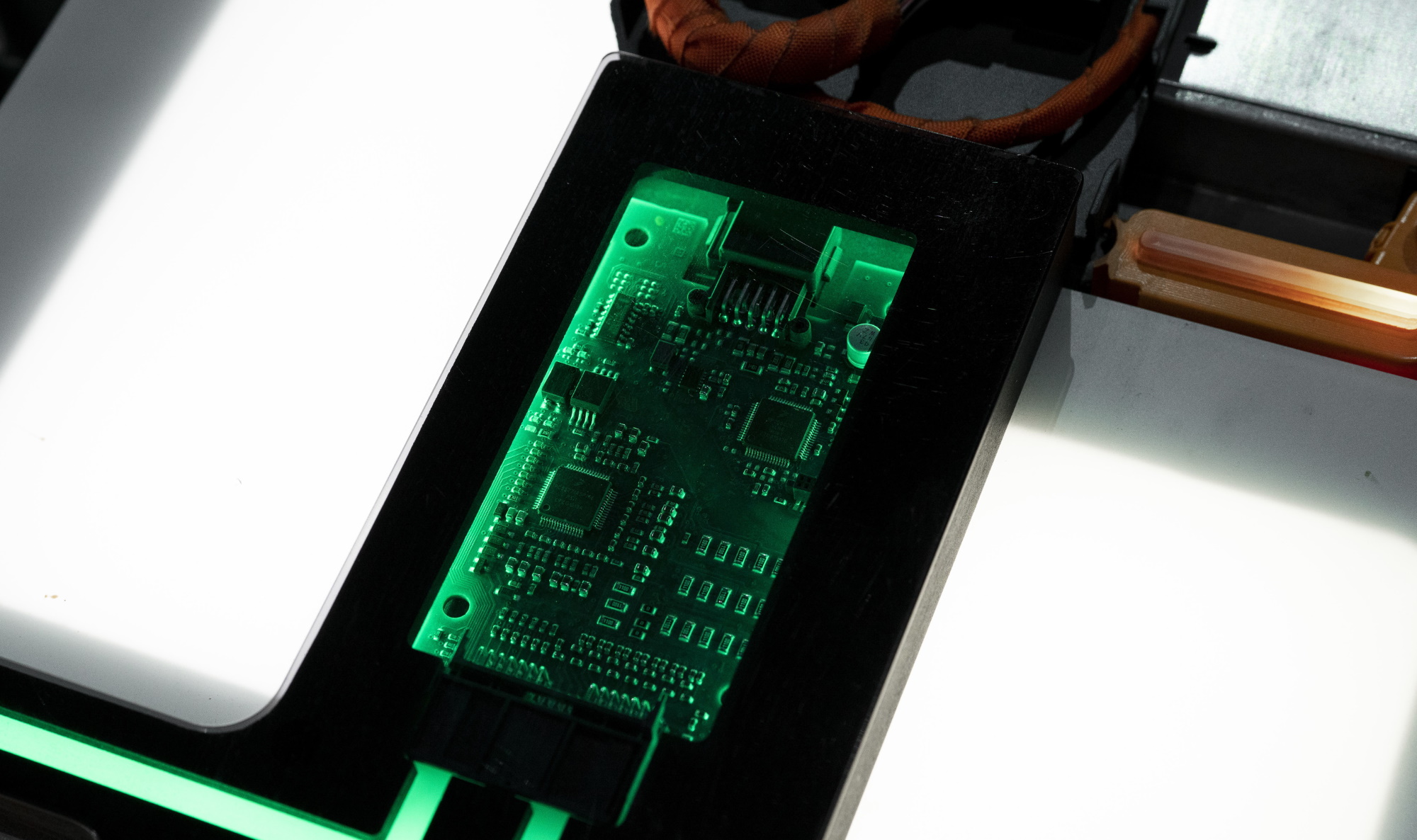
Um BMS moderno encontra-se distribuído pela bateria, em vez de estar contido numa única placa de circuito. As designações dos componentes variam, mas muitos sistemas dividem o trabalho entre unidades de monitorização das células, um controlador central da bateria e uma caixa de junção da bateria. A arquitetura de referência de 800-volts da NXP utiliza as designações CMU, BMU e BJB para estas três camadas. (NXP)
Unidades de monitorização das células
Uma unidade de monitorização das células (CMU) fica perto de um grupo de células ou módulos. Os seus circuitos analógicos de entrada medem as tensões dos grupos de células e as entradas dos sensores de temperatura. Também podem efetuar equilíbrio passivo e monitorizar ligações ou outros sensores locais.
Várias CMU podem ser ligadas numa cadeia isolada, num anel, através de CAN FD ou de outra rede de comunicação automóvel. As medições têm de chegar com fiabilidade apesar do ruído elétrico e das grandes diferenças de tensão entre secções da bateria.
Unidade de gestão da bateria
A unidade de gestão da bateria (BMU) é o controlador central. Recolhe as medições, verifica se são plausíveis, executa algoritmos de estimativa do estado, calcula limites de funcionamento, armazena informação de diagnóstico e troca dados com o controlador do veículo, o carregador, o inversor e o controlador térmico.
Caixa de junção da bateria
A caixa de junção da bateria (BJB) contém o equipamento de deteção ao nível da bateria e de comutação de corrente elevada. Consoante a conceção, pode incluir:
- Contactores principais positivo e negativo
- Um contactor e uma resistência de pré-carga
- Sensores de corrente da bateria e de alta tensão
- O fusível principal e, quando instalado, um dispositivo de corte pirotécnico
- Equipamento de monitorização do isolamento
- Ligações de alta tensão ao inversor, ao sistema de carregamento e a outras cargas
A comparação das tensões nos lados da bateria e do veículo em relação aos contactores permite ao controlador verificar se a comutação comandada ocorreu efetivamente. As medições de corrente e tensão também necessitam de uma sincronização precisa, porque são utilizadas em conjunto nos cálculos de potência, resistência, SOC e SOH. (Texas Instruments)
Comunicação com e sem fios
A maioria das baterias utiliza comunicação com fios entre as unidades de monitorização. As ligações redundantes ou em anel podem permitir que as mensagens sigam outro caminho se uma ligação falhar.
Um BMS sem fios substitui parte desta cablagem interna de sinais por uma rede de rádio concebida para esse fim. Pode reduzir os conectores, o encaminhamento de cabos e a complexidade da montagem, mas não elimina a eletrónica de monitorização das células, as ligações de deteção da tensão, os sensores de temperatura, os circuitos de equilíbrio, as fontes de alimentação, o diagnóstico nem a necessidade de uma comunicação fiável e segura. O equipamento de BMS automóvel sem fios liga os dispositivos de monitorização das células ao controlador central do BMS; não é uma ligação sem fios às próprias células da bateria. (Analog Devices)
Ligação da bateria de alta tensão
Desligar um veículo elétrico não retira a tensão das células nem dos barramentos internos. Em vez disso, grandes interruptores acionados eletricamente, chamados contactores, desligam normalmente os terminais externos positivo e negativo da bateria do resto do veículo.
Antes de fechar esses contactores, o BMS verifica as tensões e temperaturas relevantes das células, a resistência de isolamento, o estado do interbloqueio, as comunicações e as falhas armazenadas. Em seguida, efetua a pré-carga.
O inversor, o carregador de bordo, o conversor DC-DC e outros equipamentos eletrónicos de alta tensão contêm condensadores. Ligar diretamente à bateria um condensador sem carga criaria uma grande corrente de arranque que poderia picar ou soldar as superfícies dos contactores e sujeitar cabos, conectores e fusíveis a esforços. Um circuito de pré-carga convencional liga primeiro o barramento de alta tensão do veículo através de uma resistência. Quando a tensão do barramento se aproxima suficientemente da tensão da bateria, os contactores principais podem fechar e contornar a resistência. (Texas Instruments)
Uma sequência de arranque simplificada é:
- O sistema elétrico de baixa tensão ativa o BMS e os outros controladores necessários.
- O BMS verifica as condições monitorizadas da bateria e do sistema de alta tensão.
- O percurso de pré-carga e o contactor principal necessário são fechados.
- O barramento externo de alta tensão carrega através da resistência de pré-carga.
- O BMS compara a tensão da bateria com a tensão do outro lado dos contactores.
- Quando a diferença se encontra dentro do intervalo permitido, o outro contactor principal fecha e o percurso de pré-carga abre.
A ordem exata da comutação varia consoante a conceção. O objetivo é sempre estabelecer a ligação de alta tensão sem uma corrente de arranque descontrolada.
Monitorização do isolamento e interbloqueio de alta tensão
O circuito de tração está normalmente isolado da carroçaria do veículo. Um monitor de isolamento mede a resistência elétrica entre o sistema de alta tensão e o chassis. Uma redução do isolamento pode resultar de isolamento danificado, entrada de água ou líquido de refrigeração, contaminação, um problema num conector ou uma falha na bateria, no inversor, no motor, no carregador ou na cablagem de alta tensão.
O circuito de interbloqueio de alta tensão (HVIL) é um circuito separado de monitorização de baixa tensão que passa por determinados conectores, tampas e componentes de alta tensão. A interrupção do circuito informa o veículo de que parte do sistema de alta tensão pode estar desligada ou aberta. Consoante a condição, o veículo pode parar de carregar, abrir os contactores ou impedi-los de fechar.
É também por este motivo que uma bateria de 12-volts ou 48-volts fraca pode imobilizar um veículo elétrico cuja bateria de tração ainda contém muita energia. O BMS, a eletrónica dos controladores e as bobinas dos contactores necessitam de alimentação de baixa tensão antes de a bateria de alta tensão poder ser ligada ao veículo.
Estimar carga, energia, potência e saúde
A percentagem da bateria, a energia restante, a potência disponível e o estado da bateria respondem a perguntas diferentes. Tratá-los como um único valor está na origem de muita da confusão em torno do diagnóstico de baterias.
Estado de carga
O estado de carga (SOC) é o nível de carga estimado dentro da janela de funcionamento definida da bateria. A percentagem apresentada ao condutor corresponde normalmente à janela útil, e não ao intervalo eletroquímico completo das células. Pode existir capacidade reservada acima dos 100% apresentados e abaixo dos 0% apresentados, como se explica em Reserva da bateria e capacidade útil.
O SOC não pode ser medido por um único sensor. O BMS combina vários métodos:
- A contagem de coulombs integra a corrente ao longo do tempo para acompanhar a carga que entra e sai da bateria.
- A correção baseada na tensão compara a tensão de circuito aberto medida ou modelada com dados de referência específicos da química.
- Os modelos da bateria preveem a resposta da tensão utilizando o SOC, a corrente, a temperatura, a resistência, o histórico recente e parâmetros relacionados com o envelhecimento.
- Os algoritmos de observação, incluindo variantes do filtro de Kalman, comparam as previsões do modelo com as medições e corrigem a estimativa.
A contagem de coulombs reage imediatamente ao fluxo de energia, mas um pequeno desvio do sensor de corrente acumula-se num erro maior ao longo do tempo. A tensão fornece uma referência, mas a tensão nos terminais também varia com a carga, a temperatura, a resistência, a histerese e o tempo decorrido desde o carregamento ou a descarga. Por isso, os algoritmos de produção combinam medições e modelos em vez de confiarem num único método. (Analog Devices)
A estimativa do SOC é especialmente exigente para células LFP na zona intermédia do intervalo de funcionamento, porque a curva da tensão em circuito aberto é comparativamente plana e afetada pela histerese. Um pequeno erro de tensão pode representar um erro de SOC muito maior do que numa parte inclinada da curva. Uma estimativa LFP rigorosa depende, por isso, em grande medida de uma medição precisa da corrente, de um modelo específico da química, da compensação da temperatura e de oportunidades para corrigir a estimativa em pontos de funcionamento informativos. (ACS Energy Letters)
A percentagem apresentada é normalmente filtrada para não saltar sempre que a estimativa varia ligeiramente. Ainda assim, pode ser corrigida após um longo repouso, um carregamento quase completo, uma descarga profunda, uma grande alteração de temperatura ou novos dados de capacidade aprendidos. A energia não apareceu nem desapareceu subitamente; a estimativa foi recalibrada.
Estado de energia
O estado de energia (SOE) estima a energia útil restante, normalmente em kWh. Está relacionado com o SOC, mas também depende da capacidade útil, da tensão, da temperatura, das perdas e das condições de descarga.
Duas baterias com 50% de SOC não têm necessariamente a mesma energia restante. Até a mesma bateria pode tornar imediatamente acessível menos energia quando está muito fria. A autonomia prevista pelo veículo acrescenta fatores externos ao BMS, incluindo o consumo recente, a velocidade, o percurso, as condições meteorológicas e a utilização de energia no habitáculo.
Estado de potência
O estado de potência (SOP) é a potência estimada que a bateria consegue aceitar ou fornecer sem ultrapassar os limites de tensão, corrente, SOC e temperatura durante um período definido. Os limites de carga e descarga são calculados separadamente, e um limite de pico breve pode ser muito superior a um limite contínuo.
O cálculo considera a resposta prevista dos grupos de células limitadores, e não apenas a média da bateria. O SOC, a temperatura, a resistência, a margem da tensão das células, a duração e os limites de corrente da bateria são todos importantes. Por isso, os modelos de potência da bateria calculam diferentes valores máximos de carga e descarga para um período de previsão especificado. (MathWorks)
Estado de saúde
O estado de saúde (SOH) descreve como a capacidade da bateria mudou relativamente a uma condição de referência, normalmente quando era nova. Não existe uma definição universal única de SOH.
Um SOH baseado na capacidade compara a capacidade útil atual com a referência escolhida para uma bateria nova. Uma avaliação baseada na potência considera a resistência e a capacidade de carregar ou descarregar à taxa necessária. Um modelo de saúde completo também pode utilizar o desequilíbrio das células, a autodescarga, a energia processada, a exposição à temperatura, o histórico de falhas e a idade cronológica.
Uma bateria pode conservar a maior parte da capacidade energética e perder alguma capacidade de potência máxima à medida que a resistência aumenta. Outra pode perder capacidade mensurável e continuar a cumprir todos os requisitos de desempenho do veículo. Por esse motivo, as percentagens de SOH de diferentes fabricantes, aplicações de diagnóstico e procedimentos de garantia não são automaticamente comparáveis. Os métodos de medição e os efeitos a longo prazo são abordados em Degradação da bateria.
Como o BMS controla o carregamento e a condução
O BMS calcula continuamente os limites máximos permitidos de carga e descarga. Os outros controladores têm de manter os pedidos dentro desses limites.
Durante o carregamento rápido em corrente contínua, o veículo comunica ao posto de carregamento a tensão e a corrente permitidas para a bateria. O posto pode conseguir fornecer mais potência do que a bateria solicita. O BMS pode reduzir o pedido devido a:
- Tensão elevada de um grupo de células
- Temperatura baixa ou elevada da bateria
- SOC elevado
- Aumento da resistência
- Desequilíbrio das células
- Refrigeração insuficiente
- Uma falha de sensor ou comunicação
O facto de um grupo atingir o limite superior de tensão pode obrigar a corrente de carregamento a diminuir, mesmo quando o SOC médio da bateria parece deixar margem. A curva de carregamento completa também depende dos limites de tensão e corrente do carregador, do equipamento de conversão do veículo e da estratégia de carregamento do fabricante. Estas interações são abordadas em Carregamento da bateria e desempenho de carregamento.
O limite de descarga funciona no sentido oposto. Com SOC baixo, uma temperatura extrema ou resistência elevada, o grupo de menor tensão pode aproximar-se do seu limite inferior sob carga. O BMS reduz então a potência disponível para o inversor. Isto pode provocar uma aceleração reduzida ou um aviso de potência baixa, embora os próprios motores pudessem fornecer mais.
A travagem regenerativa é um acontecimento de carregamento. Uma bateria quase cheia, fria, quente, desequilibrada ou limitada de outra forma no carregamento não consegue aceitar toda a potência regenerativa solicitada. O controlador da travagem reduz então a regeneração do motor e proporciona a desaceleração restante com os travões de fricção.
Os limites de temperatura são igualmente importantes. O BMS interpreta os sensores da bateria e solicita aquecimento ou refrigeração; bombas, válvulas, ventoinhas, aquecedores, circuitos de refrigerante e outros equipamentos térmicos realizam o trabalho. Uma bateria suficientemente quente para a condução normal pode ainda estar demasiado fria para a potência máxima de carregamento rápido. A conceção do sistema e as estratégias de pré-condicionamento são explicadas em Gestão térmica da bateria.
Proteção, gestão de falhas e segurança funcional
O BMS procura manter cada parte monitorizada da bateria dentro de uma área de funcionamento permitida. Vigia sobretensão, subtensão, corrente excessiva, temperatura inadequada, dispersão anormal da temperatura, perda de isolamento, interrupção do HVIL, desequilíbrio das células, discordância entre sensores, falhas dos contactores e perda de comunicação.
A proteção é normalmente faseada, em vez de provocar uma desconexão imediata:
- Registar um acontecimento de diagnóstico ou aumentar a monitorização.
- Solicitar aquecimento ou refrigeração.
- Reduzir a potência regenerativa, de carregamento ou de propulsão.
- Parar o carregamento ou ordenar ao inversor que retire a carga.
- Avisar o condutor.
- Abrir os contactores ou impedir a reconexão do sistema de alta tensão.
Abrir os contactores enquanto circula uma corrente elevada pode criar o seu próprio esforço elétrico. Quando as condições o permitem, o veículo reduz primeiro a corrente e desliga-se em seguida. O isolamento imediato fica reservado para falhas em que permanecer ligado representa o maior risco.
O BMS também tem de detetar falhas nos seus próprios sensores, comunicações e equipamento de comutação. Pode comparar medições redundantes, verificar se as relações entre tensão e corrente são fisicamente plausíveis, confirmar que um movimento comandado do contactor alterou a tensão medida e utilizar percursos de proteção independentes para falhas críticas. A ISO/TR 9968 aplica aos sistemas recarregáveis de armazenamento de energia o quadro de segurança funcional ISO 26262 e inclui explicitamente o BMS, as células, as cablagens e a conectividade no âmbito do sistema. (ISO)
O que o BMS não consegue impedir
O BMS consegue reduzir a corrente, solicitar refrigeração, parar o carregamento, desligar o circuito externo de alta tensão e registar o acontecimento. Não consegue remover a energia química já armazenada dentro das células.
Se um curto-circuito interno tiver evoluído para uma fuga térmica autossustentada, a abertura dos contactores interrompe o fluxo de corrente externo, mas pode não parar as reações no interior da célula afetada. A conceção das células, a qualidade de fabrico, a refrigeração, a proteção elétrica, a ventilação, as barreiras da bateria, a gestão da pressão, a estrutura de colisão e a resistência à propagação continuam a ser essenciais. A investigação sobre fuga térmica em células de iões de lítio mostra que a libertação de calor, a propagação interna e o material ejetado dependem da geometria da célula e do mecanismo que inicia a falha. (NREL)
Equilíbrio, diagnóstico e histórico da bateria
Pequenas diferenças de capacidade, resistência, autodescarga e temperatura fazem os grupos de células ligados em série divergir. O BMS compara o seu comportamento e utiliza circuitos de equilíbrio para reduzir as diferenças no nível de carga.
O equilíbrio pode ajudar os grupos a atingir de forma mais uniforme os limites superior e inferior, tornando utilizável uma parcela maior da capacidade existente da bateria. Não consegue reparar uma célula danificada nem recuperar capacidade perdida. Os métodos, o momento e as limitações são abordados em Equilíbrio das células.
O BMS também armazena informação utilizada na assistência e nas estimativas a longo prazo. Consoante o fabricante, pode incluir:
- Tensões mínimas e máximas dos grupos de células
- Extremos de temperatura e acontecimentos de temperatura excessiva
- Histórico de carga, energia e tempo de funcionamento
- Tendências estimadas de capacidade e resistência
- Falhas de isolamento, contactores, sensores e comunicação
- Desequilíbrio das células e autodescarga anormal
- Códigos de avaria e interrupções de carregamento
Nem todos os valores internos estão disponíveis através de uma interface de diagnóstico genérica. Uma aplicação de terceiros pode apresentar apenas um subconjunto, e um valor apresentado pode ser filtrado, escalado ou interpretado de forma diferente dos dados de engenharia ou garantia do fabricante.
O que o condutor nota
A maior parte do trabalho do BMS é invisível, mas as suas decisões explicam vários comportamentos conhecidos dos veículos elétricos:
- A potência de carregamento muda: A bateria pode solicitar menos potência do que o carregador consegue fornecer devido ao SOC, à temperatura, à dispersão de tensão, à resistência ou a um limite de proteção.
- A travagem regenerativa é reduzida: A bateria não tem margem suficiente para a potência de carregamento, pelo que o veículo utiliza mais os travões de fricção.
- A aceleração é limitada: Um SOC baixo, uma temperatura inadequada, uma queda de tensão ou uma falha reduziram a potência de descarga permitida.
- A percentagem muda após um repouso ou um carregamento completo: O algoritmo de SOC corrigiu a sua estimativa.
- O carregamento rápido melhora após o pré-condicionamento: As células mais quentes têm menor resistência e conseguem frequentemente aceitar uma corrente superior aprovada pelo BMS.
- O veículo não entra no modo de condução: Um problema na alimentação de baixa tensão, uma falha de isolamento, uma interrupção do interbloqueio, uma falha dos contactores ou a perda de comunicação com o BMS podem impedir a ligação do sistema de alta tensão.
Para quem compra um veículo elétrico usado, uma percentagem de SOH comunicada pelo BMS só é útil quando a sua definição e método de medição são conhecidos. Uma avaliação sólida considera a energia útil, a capacidade de potência, o equilíbrio das células, o histórico de diagnóstico, o comportamento de carregamento e o método de garantia do fabricante, e não um único número sem explicação.
O BMS é, portanto, mais do que um indicador da bateria ou um interruptor de emergência. As suas medições, modelos, calibração e estratégia de proteção definem a parte da capacidade física das células que o veículo pode utilizar em cada momento.
Fontes
- Texas Instruments — Recursos para a conceção de sistemas de gestão de baterias de HEV/EV
- NXP — Guia do utilizador da conceção de referência de BMS de alta tensão de 800 V
- Texas Instruments — Medições e sincronização numa caixa de junção inteligente da bateria
- Analog Devices — Sistema de gestão da bateria sem fios
- Texas Instruments — Por que motivo os circuitos de pré-carga são necessários em sistemas de alta tensão
- Analog Devices — Técnicas de estimativa de SOC e SOH
- ACS Energy Letters — Estimativa de SOC melhorada para baterias LFP
- MathWorks — Estimador de potência da bateria
- ISO — Segurança funcional ISO/TR 9968:2023 para sistemas recarregáveis de armazenamento de energia
- NREL — Fuga térmica de células de iões de lítio