
Bidirectional EV Charging
Bidirectional charging allows an EV to export electrical energy as well as receive it. The useful capability depends on where that energy goes: a portable load, another vehicle, an isolated building, or the public grid.
The names define different systems
“V2X” is an umbrella term. The common use cases are not interchangeable:
- V2L — vehicle to load: the vehicle powers appliances or tools through an onboard socket or adapter.
- V2V — vehicle to vehicle: one vehicle supplies energy to another, usually at limited power.
- V2H — vehicle to home: the vehicle powers a home, normally through transfer and isolation equipment.
- V2B — vehicle to building: the vehicle supports a larger site or selected building circuits.
- V2G — vehicle to grid: the vehicle exports while synchronized with the public grid under utility and market control.
- V1G or managed charging: power still flows only into the vehicle, but timing or rate is controlled to support the site or grid.
V2L may need no fixed installation beyond the vehicle's approved outlet. V2H and V2B need safe building integration. V2G adds grid interconnection, permission, telemetry, and a viable service or tariff.
Two main conversion architectures
The traction battery stores DC energy. Exported power can be converted in the vehicle or outside it.
Onboard AC export
An onboard bidirectional inverter creates AC in the vehicle. That AC may feed:
- A factory socket
- A connector adapter with one or more receptacles
- A compatible AC charge port
- A fixed home-integration system
This can reduce the amount of power electronics in the external equipment, but the vehicle must provide grid-quality voltage and frequency, protection, current limiting, and the intended operating mode.
Off-board DC conversion
A bidirectional DC charger connects to the traction battery through the vehicle's DC interface and contains the inverter that produces AC. This can serve a home, building, or grid while keeping more conversion hardware stationary.
The vehicle, charger, communication protocol, and installation must support the same export implementation. A car advertised with V2L is not automatically compatible with a bidirectional DC wallbox, and a standards-capable inlet does not prove that the vehicle software enables V2G.
V2L: portable power
V2L is the least complex export use case because it supplies local loads rather than paralleling with the grid. Common implementations provide a household-style receptacle inside the cabin, in a cargo area, or through an adapter at the charge inlet.
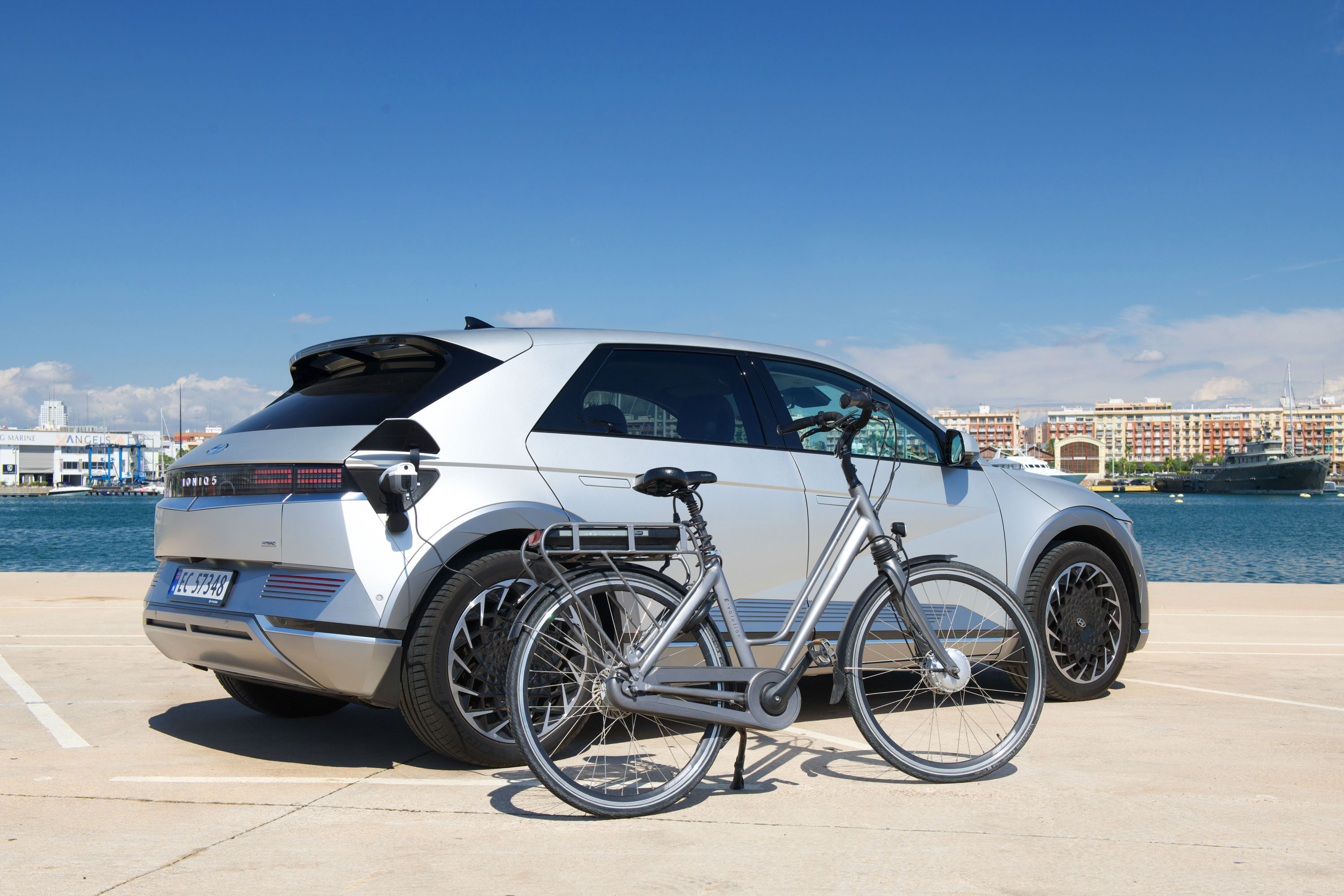
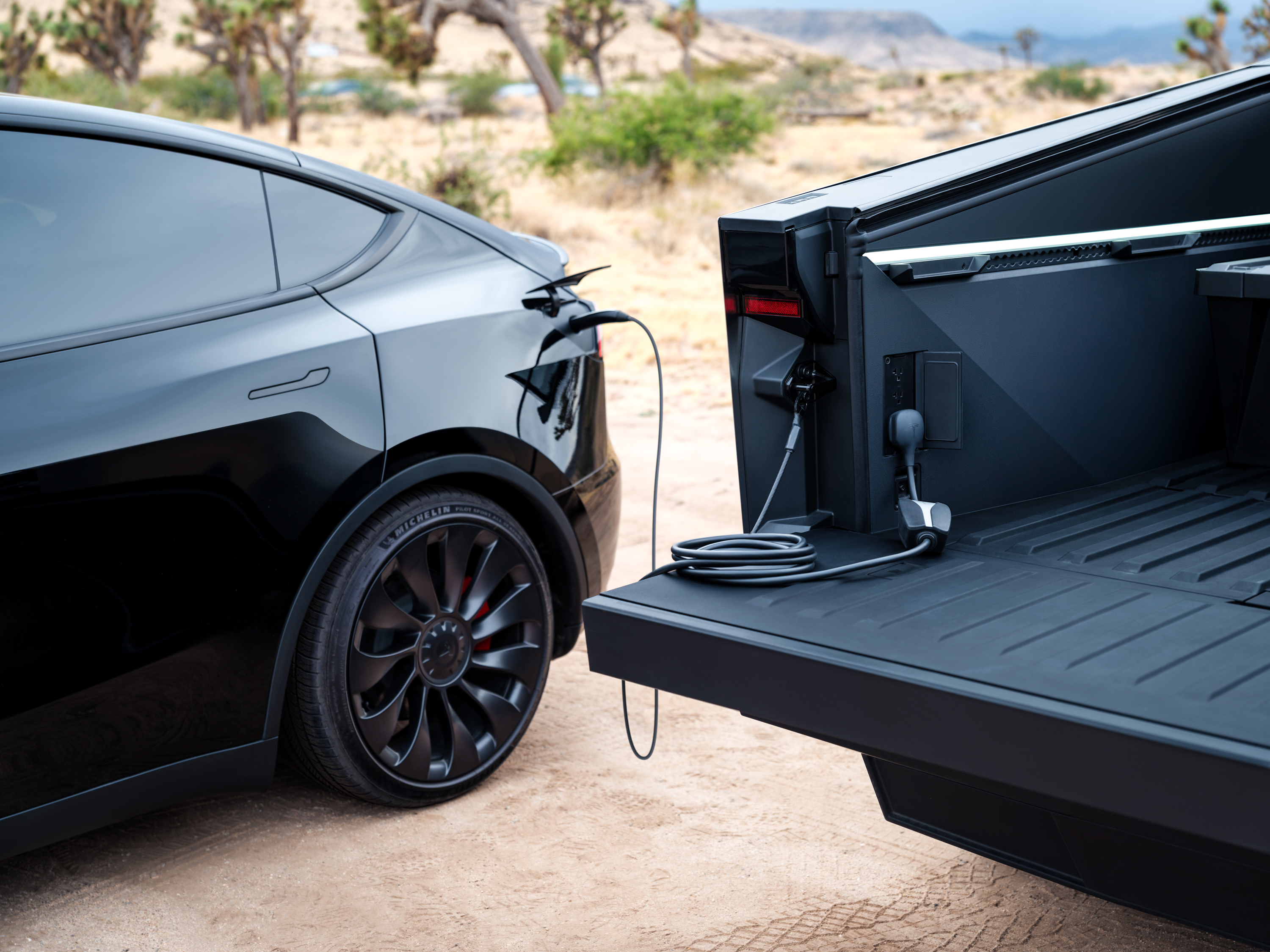
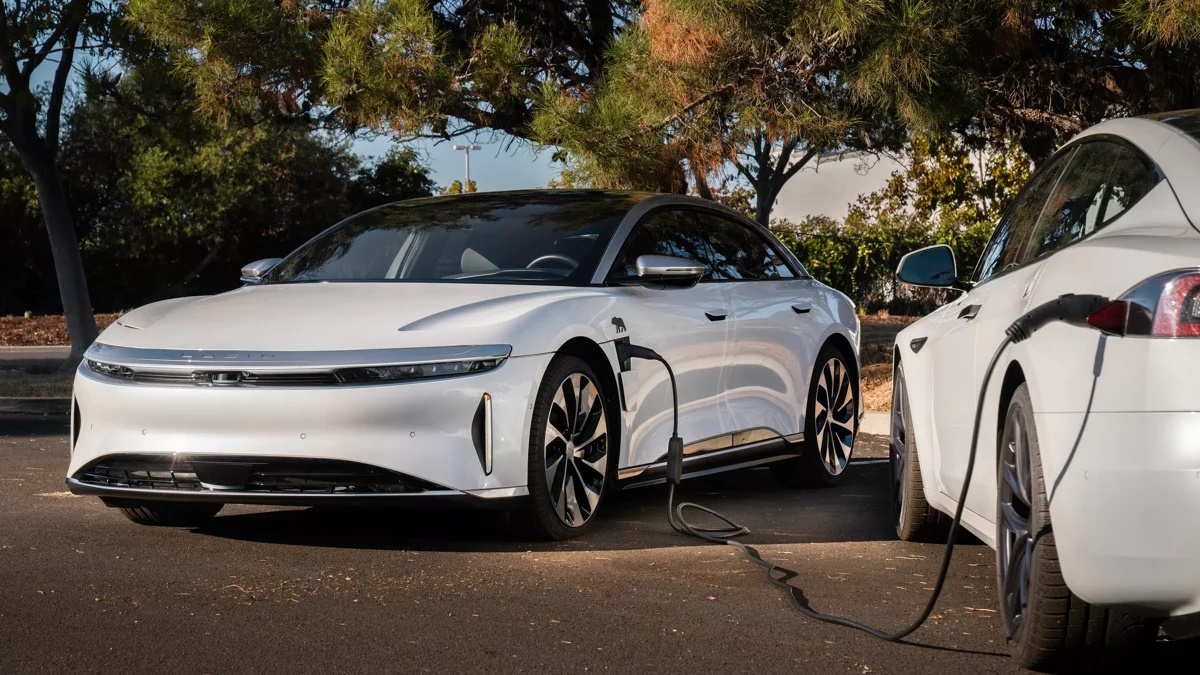
V2L power is limited by the vehicle's inverter, outlet voltage, and current. Motor starting current, compressors, pumps, heaters, and power tools can exceed their running load. The stated continuous and short-duration limits both matter.
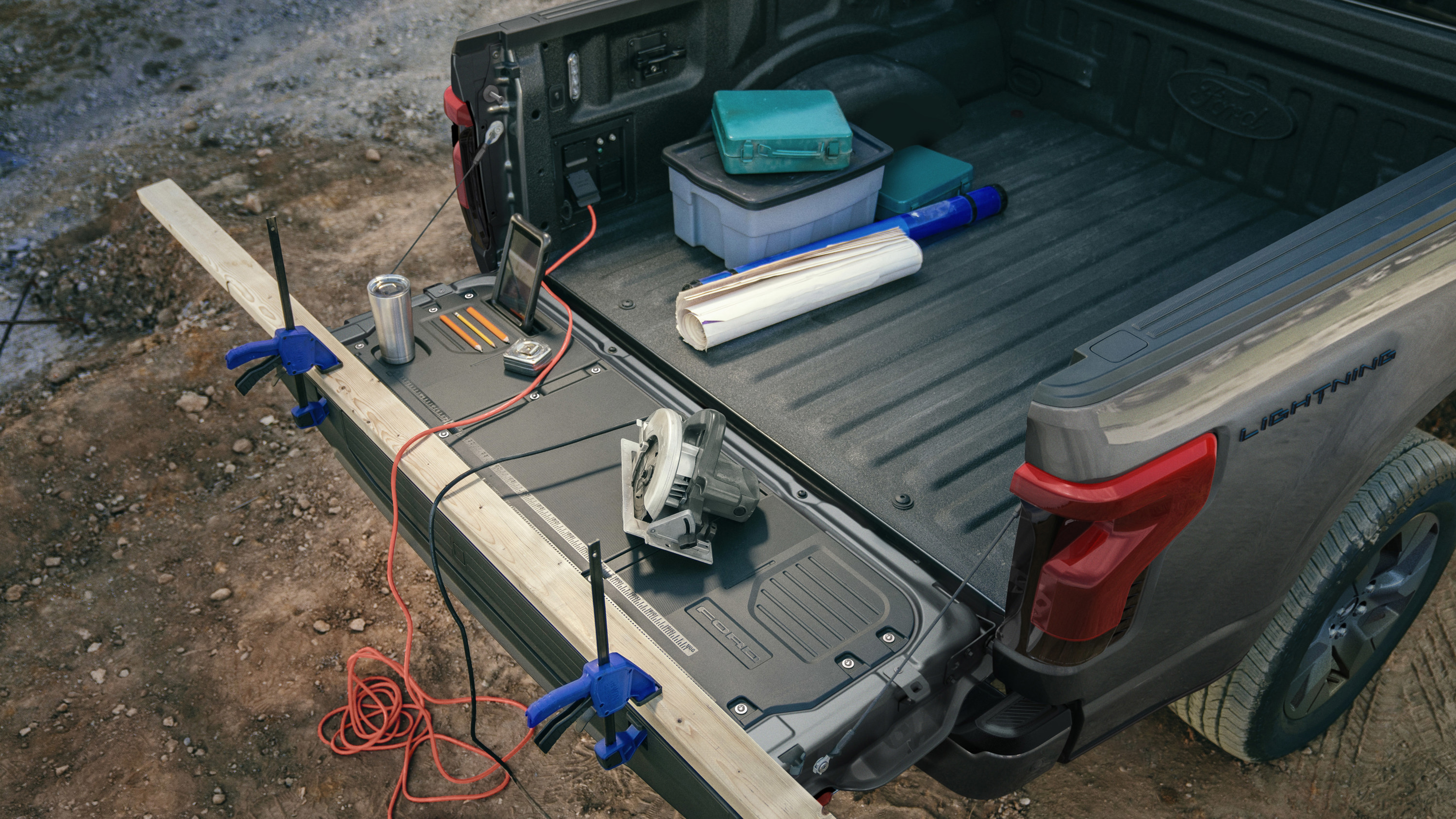
Do not back-feed a home through an ordinary wall receptacle. An approved V2H system must prevent the vehicle from energizing utility lines during an outage and must manage neutral, earthing, fault protection, and transfer between grid-connected and islanded operation.
V2H and V2B: a mobile backup battery
A building system normally includes:
- A compatible bidirectional vehicle
- A compatible EVSE or power-conversion unit
- A transfer switch or grid-isolation gateway
- Protected critical-load circuits or whole-building connection
- Metering and energy controls
- A reserve state-of-charge setting
- Commissioning under local electrical and interconnection rules
When the grid fails, the system must disconnect the building from the utility before forming a local electrical island. This anti-islanding boundary protects line workers and prevents uncontrolled reconnection. When grid power returns, voltage, frequency, and transfer must be managed before normal operation resumes.
Backup power and backup energy answer different questions. Power determines which loads can run simultaneously; energy determines how long they can run.
Consider an illustrative 75 kWh battery with the driver reserving 30% for mobility and allowing another 10% for conversion losses and operating margin. About 45 kWh remains for loads. At an average 1 kW, that is roughly 45 hours; at 5 kW, roughly 9 hours. Real results vary with inverter efficiency, standby power, temperature, vehicle limits, and changing household demand.
Large loads can exceed the export power even when plenty of energy remains. A home may need load shedding for resistance heating, electric water heating, cooking, air conditioning, or multiple motors.
V2G: exporting while connected to the grid
V2G is not simply V2H with the transfer switch left closed. Grid-parallel export must synchronize with the power system and follow local requirements for voltage, frequency, power factor, anti-islanding, fault response, and remote control.
The full stack can involve:
- Vehicle and bidirectional charger certification
- Utility interconnection review and permission to operate
- A tariff or market program that permits export
- An aggregator coordinating many vehicles
- Driver schedules, minimum reserve, and departure needs
- Secure communications and metering
- Compensation for energy, capacity, demand response, or grid services
The California Energy Commission's equipment list illustrates the distinction between technical capability and permission: listed equipment can support bidirectional operation, but the customer still needs the utility's interconnection process and permission before exporting.
V2G can respond faster than a human driver and can aggregate many parked vehicles. Its availability is uncertain, however, because cars move. A grid service must respect the primary transport mission and cannot assume every enrolled battery is plugged in.
The standards stack
No single standard makes a complete bidirectional system.
- ISO 15118-20 defines vehicle-to-EVSE communication messages and sequences for bidirectional power transfer.
- OCPP 2.1 adds charger-to-management-system functions for bidirectional charging and distributed-energy-resource control.
- UL 9741/CSA 348 covers bidirectional EV power-export equipment in North America.
- UL 1741 and local grid codes address inverter and interconnection behaviour in relevant North American applications.
- National wiring rules, utility procedures, tariffs, cybersecurity requirements, and product approvals complete the installation boundary.
Standards compatibility reduces integration risk; it does not prove end-to-end interoperability. Vehicle software, charger firmware, certificate ecosystems, backend implementation, and utility rules must also align.
Efficiency, cost, and battery use
Every round trip loses energy. Grid AC may be converted to battery DC during charging and back to AC during export, with additional vehicle, cable, thermal, and standby loads. A price arbitrage calculation must include:
- Import price and export compensation
- Round-trip efficiency
- Network and demand charges
- Required hardware and installation
- Program availability payments
- The value of backup power
- Battery-energy throughput
Battery degradation cannot be reduced to “V2G is harmful” or “V2G is free.” Extra energy throughput consumes part of a battery's cycle life, while temperature, state-of-charge window, current, time at high charge, and cell chemistry affect the result. Managed export can sometimes avoid long high-SOC storage, but the outcome depends on the control strategy.
Drivers should set a mobility reserve and inspect the vehicle warranty and V2X terms. Battery aging, repair, second life, and recycling are covered in EV Battery Lifecycle; warranty limits are covered in EV Battery Warranty.
What buyers should verify
“Bidirectional-ready” is not enough. Ask for the exact supported use case and market:
- V2L, V2H, V2B, V2G, or only managed one-way charging?
- AC export or DC export?
- Continuous and surge power at the local voltage?
- Approved vehicle, EVSE, gateway, and software combination?
- Whole-home operation or selected critical loads?
- Manual backup, automatic transfer, or grid-parallel service?
- Minimum reserve and departure-time controls?
- Black-start capability after the grid fails?
- Operation during loss of internet or vendor cloud?
- Local installer, product certification, utility permission, and tariff?
- Warranty treatment of exported energy?
The connector is only one part of the answer; see EV Charging Connectors and Inlets. The complete charging-system boundary is covered in EV Charging: The Complete System.
Sources
- U.S. Department of Energy — Bidirectional charging and mobile storage
- ISO 15118-20 — Bidirectional vehicle-to-grid communication
- UL Solutions — Bidirectional EV charging and power-export standards
- California Energy Commission — Vehicle-to-grid equipment list
- Open Charge Alliance — OCPP 2.1 bidirectional and DER support