
Home EV Charging
Home charging is an energy-planning and electrical-installation problem. The best system safely replaces the energy used each day, fits the building's available capacity, and is ready when the car must leave.
Start with energy, not maximum power
A large battery does not automatically require a high-power home charger. What matters is the energy used between parking periods.
For an illustrative driver covering 60 km per day in an EV that consumes 20 kWh/100 km:
Energy used by the vehicle = 60 km × 20 kWh/100 km
                           = 12 kWh
If the complete wall-to-battery process were 90% efficient, replacing 12 kWh in the battery would draw about 13.3 kWh from the meter. Spread across ten parked hours, that requires only about 1.3 kW on average. Actual consumption, losses, temperature, and tariffs vary, but the example shows why overnight dwell time can matter more than the battery's total capacity.
Add margin for winter consumption, irregular long days, charging-time restrictions, and the desired recovery after a trip. A household with two EVs may need load sharing more than two maximum-power circuits.
The usable charging power is the lowest of:
- The building connection and available spare capacity
- The branch circuit
- The EVSE setting
- The cable and connector
- The vehicle's onboard AC charger
- Any dynamic load-management limit
An 11 kW wallbox cannot deliver 11 kW to a car limited to 7.4 kW, and a three-phase wallbox does not make a single-phase vehicle charge on three phases.
Have the installation designed for continuous load
EV charging can hold a substantial current for many hours. That is different from an appliance that reaches its rated power only briefly.
A qualified installer should assess:
- Service and panel capacity
- Existing peak loads and future electrification
- Cable route, conductor size, voltage drop, and ambient temperature
- Dedicated circuit and overcurrent protection
- Ground-fault or residual-current protection
- DC leakage detection where required
- Earthing or grounding arrangement
- Surge protection and local utility requirements
- Outdoor exposure, impact risk, drainage, and enclosure rating
- Permits, inspection, notification, and grid-connection rules
The exact protective devices and earthing solution are jurisdiction-specific. IEC 61851 defines EVSE requirements, but national wiring rules and the actual building installation remain decisive. In the United States, official guidance points to a dedicated branch circuit for EVSE; other markets apply their own circuit, residual-current, and supply rules.
Homeowners should receive the circuit rating, EVSE configuration, test results, commissioning record, and instructions for safely isolating the equipment.
Hardwired, receptacle, or portable EVSE
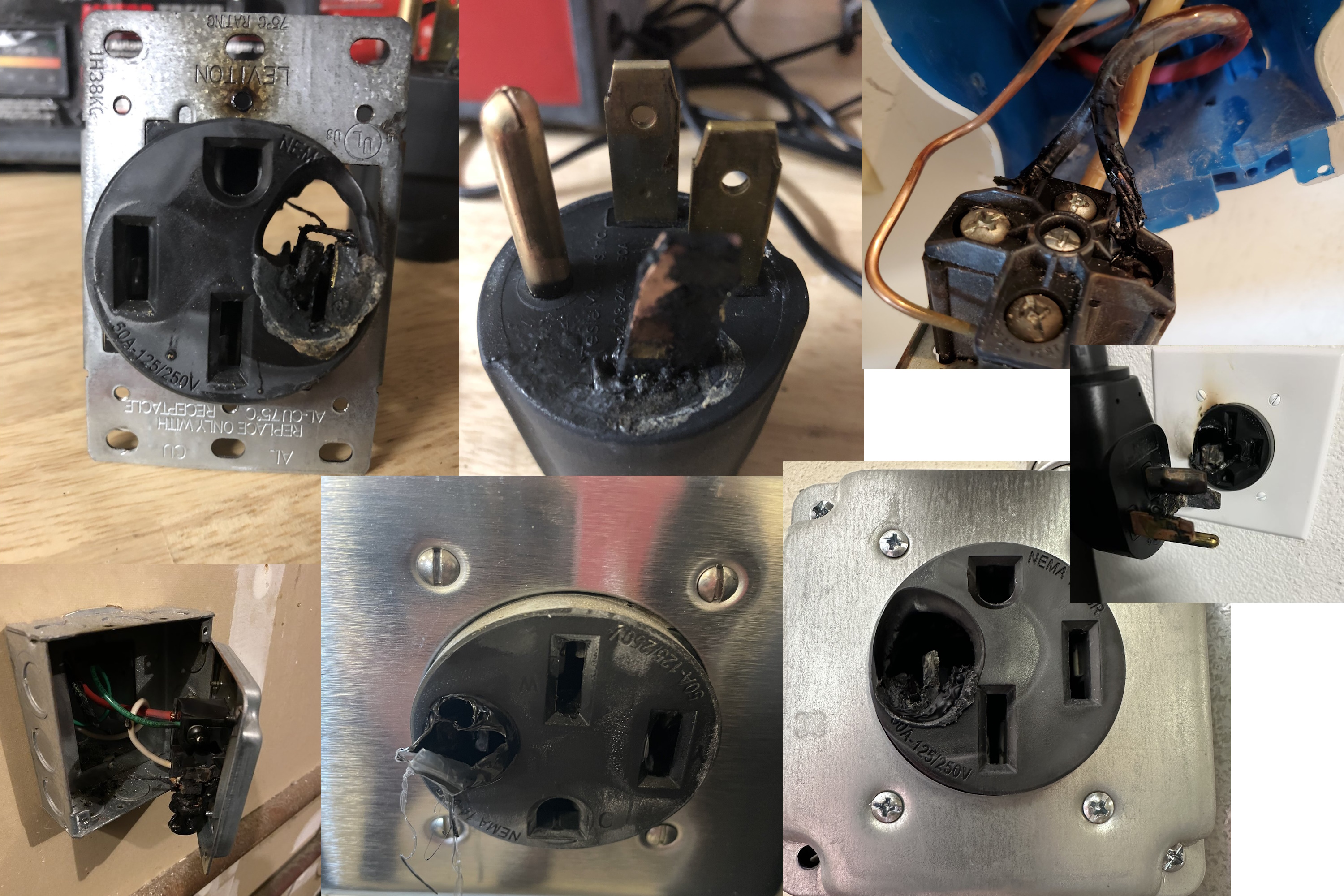
A properly specified plug-in EVSE is not inherently unsafe. The issue is that a receptacle adds contacts that can loosen, wear, corrode, or be poorly installed. Resistance at a degraded contact creates heat during a long high-current session.
A hardwired wallbox removes the plug-and-receptacle connection, discourages casual relocation, and is often the simpler choice for a permanent higher-current installation. A plug-in wallbox can ease replacement or seasonal removal, but the receptacle, enclosure, circuit, and duty rating must all be suitable for sustained EV charging. Local rules may restrict which arrangement is permitted.
The following image shows the consequence of overheated receptacle connections. It should not be read as proof that every plug-in EVSE will fail; it illustrates why contact quality, torque, wear, temperature, and inspection matter.
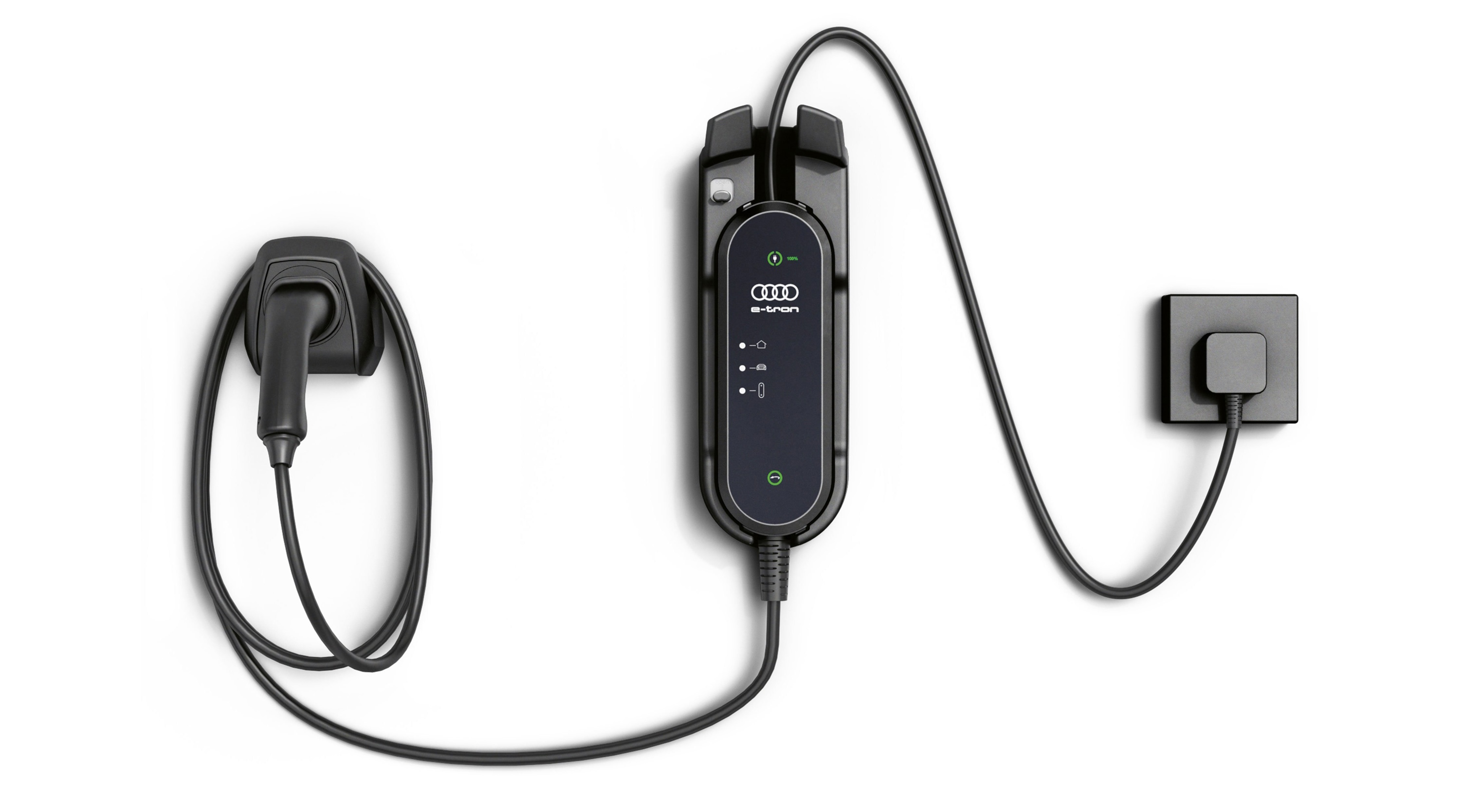
A portable Mode 2 cordset can be useful for travel or contingency charging when the outlet and circuit are suitable. It should not be paired with an ordinary extension lead, travel adapter, damaged socket, or unknown circuit. Repeated nuisance trips, discoloration, smell, crackling, or a hot plug are reasons to stop charging and have the installation inspected.
Choose power around the parking window
Higher power is valuable when the car returns nearly empty late at night and must leave early, or when several vehicles share the same equipment. It is less valuable when the car routinely stands for twelve hours after a short commute.
Useful questions include:
- How many kilowatt-hours must normally be replaced before departure?
- What is the shortest regular parking window?
- What AC power and phase arrangement can the car accept?
- Will a second EV, heat pump, induction cooker, water heater, or solar inverter share the service?
- Can the EVSE dynamically reduce current when the building load rises?
- Is a future cable and panel upgrade cheaper to prepare during the first installation?
Very high residential AC power can add cost without shortening normal overnight charging. It may also increase demand charges or trigger a service upgrade. Dynamic load management can often preserve useful charging speed while keeping the site's total current below a configured limit.
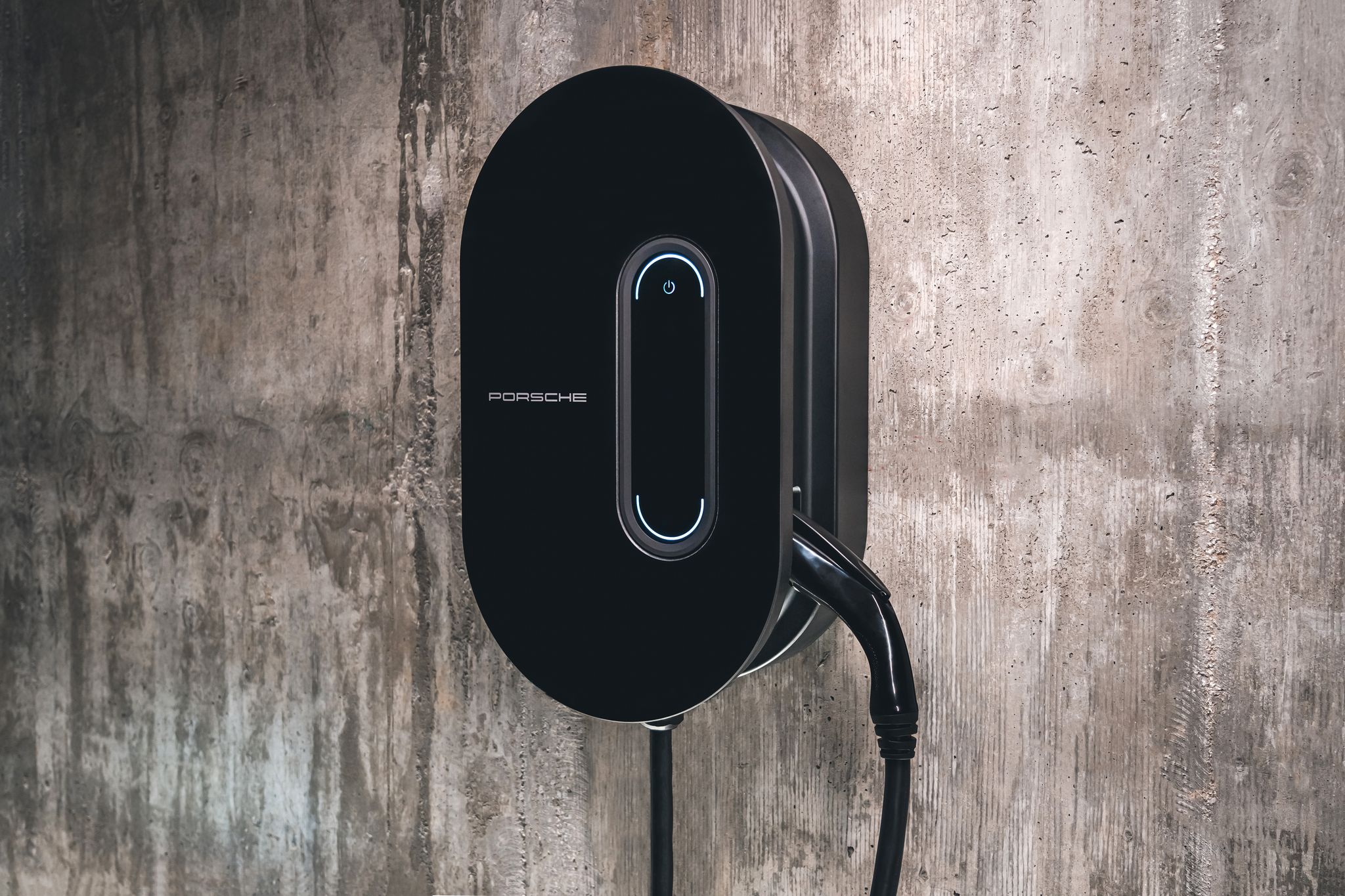
Tethered cables, sockets, and daily usability
A tethered EVSE keeps its vehicle cable attached. It is quick to use and ensures the cable rating matches the equipment, but the cable is exposed to weather and damage and may be more expensive to replace.
An untethered EVSE has a socket. The driver supplies a cable, which can be replaced independently and stored away, but every session adds a second manual connection and the cable can be forgotten.
Check cable length against the car's inlet position without encouraging the cable to cross a walkway, remain tightly coiled under load, scrape over sharp edges, or support its own weight from the connector. Mounting height, holster design, lighting, snow clearance, accessibility, and a protected path from equipment to car matter every day.
Connector families and inlet locations are covered in EV Charging Connectors and Inlets.
Smart charging has several meanings
A connected wallbox may offer remote start, energy history, access control, tariff scheduling, solar integration, or utility participation. These features should not be confused:
- Scheduled charging starts or stops at selected times.
- Tariff optimization responds to known or dynamic electricity prices.
- Static load sharing divides a fixed current budget among several charge points.
- Dynamic load management measures site demand and changes EV current to stay within a limit.
- Solar-surplus charging follows local generation, subject to the car's minimum stable charging current and phase behaviour.
- Managed charging allows a utility, aggregator, or site controller to adjust demand while protecting the driver's departure needs.
A useful smart charger should still perform safe basic charging if its cloud service, app, Wi-Fi, or vendor account is unavailable. Buyers should check local control, software-support policy, export options for energy data, cybersecurity updates, and what happens if the manufacturer stops operating the service.
Great Britain is one example of a market that regulates smart functionality, off-peak defaults, randomized delay, metering visibility, and device security for private charge points. Requirements elsewhere differ.
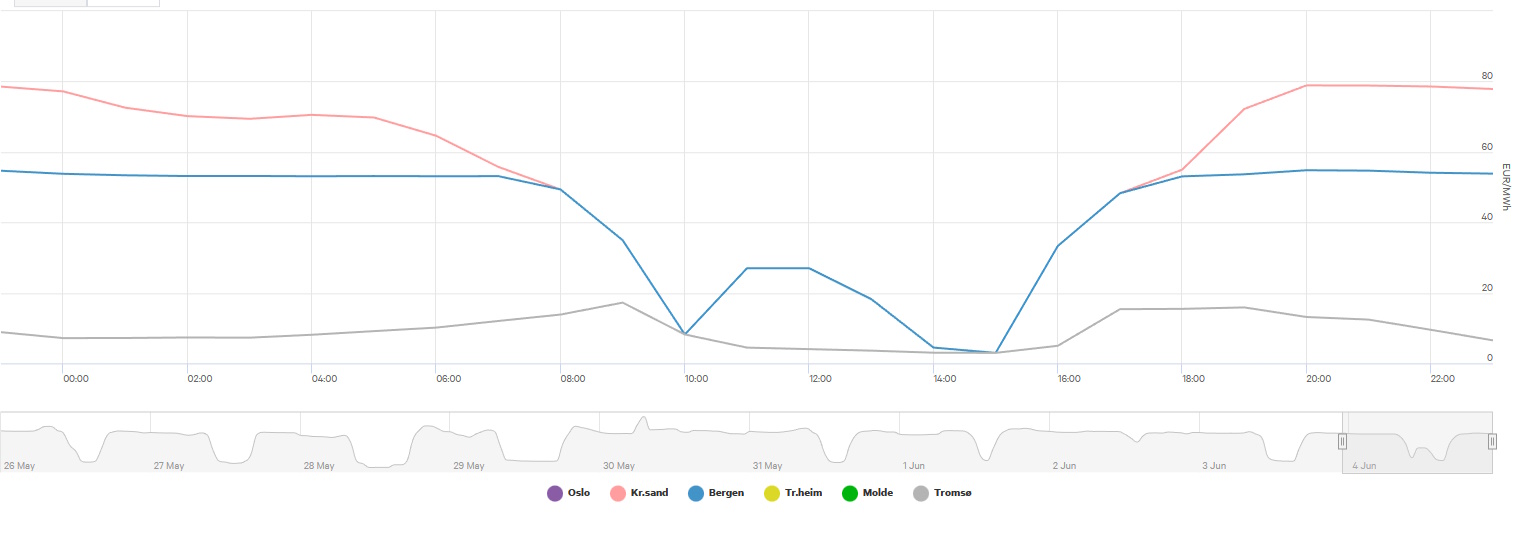
The Nord Pool image is a historical price example, not a current tariff. Dynamic prices, taxes, grid charges, and supplier markups must be checked for the driver's actual contract.
Charging losses and battery settings
Energy billed at the meter is greater than the energy stored in the battery. Losses occur in building wiring, EVSE electronics, the onboard charger, vehicle auxiliaries, thermal conditioning, conductors, and the battery. Low-power charging can also spend a larger share of its input on fixed vehicle overhead.
Charge limits, cell behaviour, battery temperature, and the trade-offs of routinely charging to a high state of charge belong to How an EV Battery Charges. The home system's job is to provide safe, controllable power; the vehicle decides how to use it.
A practical specification checklist
Before installation, record:
- Vehicle connector and maximum AC input
- Single-phase or three-phase support
- Normal daily energy and shortest parking window
- Available service capacity and proposed circuit
- Hardwired or receptacle connection
- Tethered or untethered cable and required reach
- Indoor or outdoor environmental rating
- Required protection, earthing, permits, and utility notification
- Static or dynamic load management
- Tariff, solar, and departure-time controls
- Local operation if networking fails
- Warranty for both equipment and installation
The correct installation is not necessarily the most powerful. It is the one that can repeatedly deliver the needed energy without exceeding the vehicle, building, or local electrical limits. For the relationship between home, public, AC, DC, and vehicle-side charging, see EV Charging: The Complete System.