
Niveaux SAE d’automatisation de la conduite : signification de chaque niveau
La norme SAE J3016 classe une fonction d’automatisation de la conduite selon les rôles de l’humain et du système, et non selon son degré de sophistication apparent, la quantité de matériel embarqué ou la possibilité pour le conducteur de retirer les mains du volant. Les six niveaux déterminent qui exécute la tâche dynamique de conduite, qui surveille l’environnement et qui assure le repli lorsque la fonction ne peut plus continuer.
Commençons par définir la tâche de conduite
La tâche dynamique de conduite comprend la direction, l’accélération, le freinage, la surveillance de la route, la détection des objets et des événements, ainsi que la réaction à ceux-ci. Le choix de l’itinéraire et la planification du trajet n’en font pas partie.
Le niveau s’applique à une fonction, et non de façon permanente à un véhicule. Une même voiture peut réunir plusieurs fonctions de sécurité de niveau 0 et de niveau 1, un assistant autoroutier de niveau 2 et, sur un marché limité, une fonction distincte de niveau 3.
Les avertissements et interventions momentanées, tels que l’alerte de collision frontale ou le freinage automatique d’urgence, ne constituent pas une automatisation continue de la conduite selon SAE J3016. Ils peuvent être essentiels à la sécurité, mais ne changent pas l’identité du conducteur.
Niveaux 0–2 : l’humain conduit
Niveau 0 — aucune automatisation de la conduite
L’humain exécute l’intégralité de la tâche de conduite. Une fonction peut avertir, assister ou intervenir momentanément, mais elle ne contrôle pas le véhicule en continu.
L’alerte d’angle mort, l’alerte de franchissement de ligne et le freinage automatique d’urgence en sont des exemples.
Niveau 1 — assistance au conducteur
La fonction assure en continu soit le contrôle latéral, soit le contrôle longitudinal : la direction, ou l’accélération et le freinage. L’humain exécute le reste de la tâche et supervise la fonction.
Le régulateur de vitesse adaptatif est un exemple longitudinal classique. Le centrage dans la voie sans contrôle simultané de la vitesse est un exemple latéral.
Niveau 2 — automatisation partielle de la conduite
La fonction assure en continu les contrôles latéral et longitudinal. Elle peut diriger et gérer la vitesse simultanément, mais l’humain reste chargé de détecter les objets et événements et d’y réagir.
Cela impose une supervision continue. Le conducteur doit regarder la route, vérifier que la fonction se comporte correctement et intervenir au besoin. Un système de surveillance du conducteur par caméra peut imposer l’attention, mais il ne transfère pas le rôle de conduite au véhicule.
Certains systèmes de niveau 2 exigent les mains sur le volant ; d’autres autorisent la conduite mains libres sur des routes désignées. Les deux restent de niveau 2 si l’humain doit surveiller la route.
Niveaux 3–5 : un système de conduite automatisée conduit
Niveau 3 — automatisation conditionnelle de la conduite
Dans son domaine de conception opérationnelle, le système de conduite automatisée exécute l’intégralité de la tâche dynamique de conduite. L’humain n’a pas à surveiller la route en permanence tant que la fonction est activée.
Le système peut demander une intervention lorsqu’il approche d’une situation qu’il ne peut pas gérer. Un utilisateur prêt à assurer le repli doit être réceptif à cette demande et reprendre le contrôle dans les délais. Le système doit également prévoir une réponse de réduction du risque si l’utilisateur ne réagit pas.
Le niveau 3 n’est donc pas simplement un « meilleur niveau 2 ». Le rôle de l’humain passe de superviseur permanent à utilisateur prêt à assurer le repli.
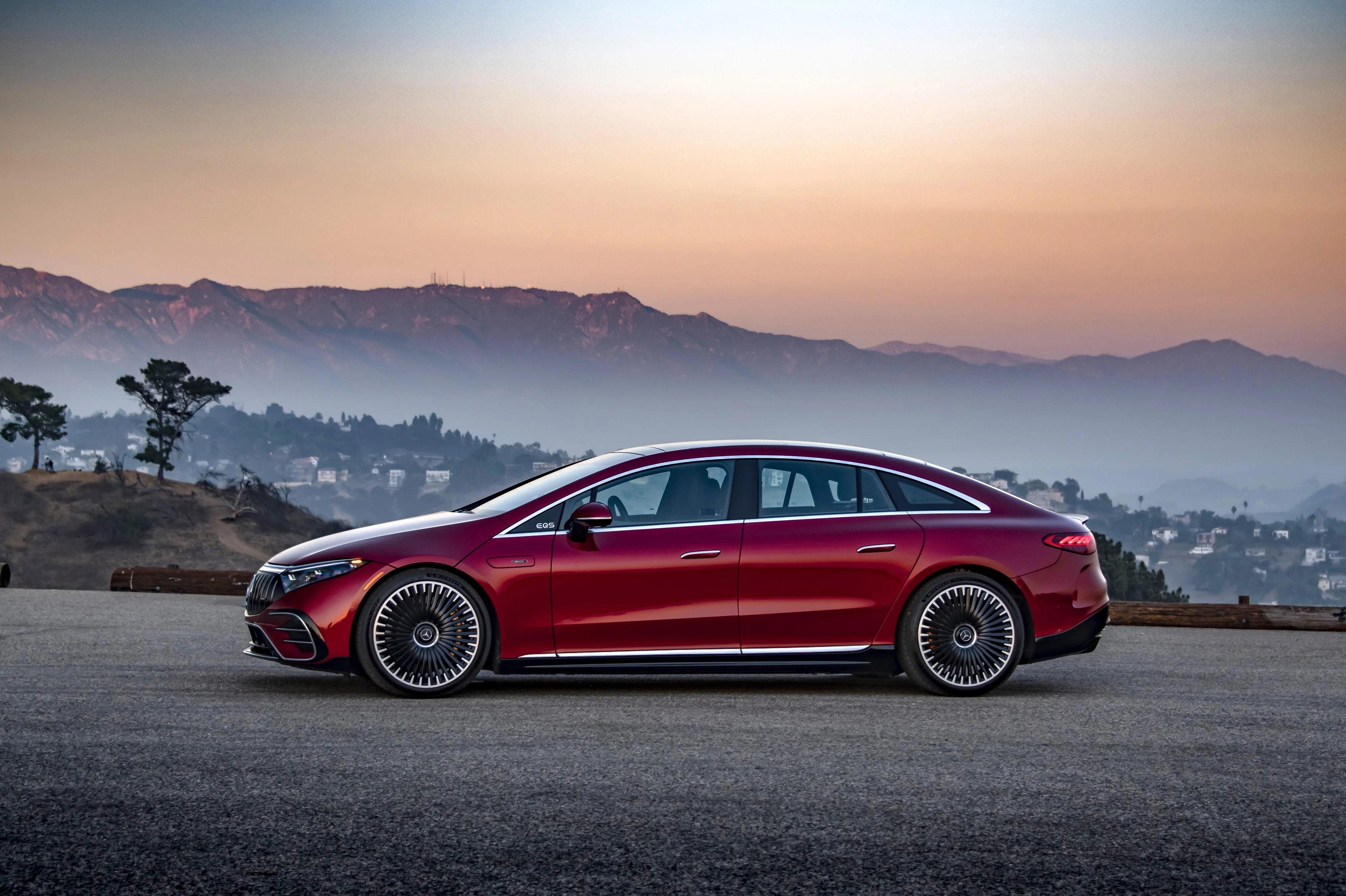
Niveau 4 — automatisation élevée de la conduite
Le système de conduite automatisée exécute l’intégralité de la tâche de conduite et assure le repli dans son domaine de conception opérationnelle. Il ne peut pas compter sur un humain pour le secourir.
Ce domaine peut être une zone urbaine cartographiée, un itinéraire fixe de navette, certaines autoroutes ou un parking agréé. Lorsque la fonction est active, tous les occupants peuvent être passagers. Si le système ne peut pas continuer normalement, il doit atteindre lui-même une condition de risque minimal.
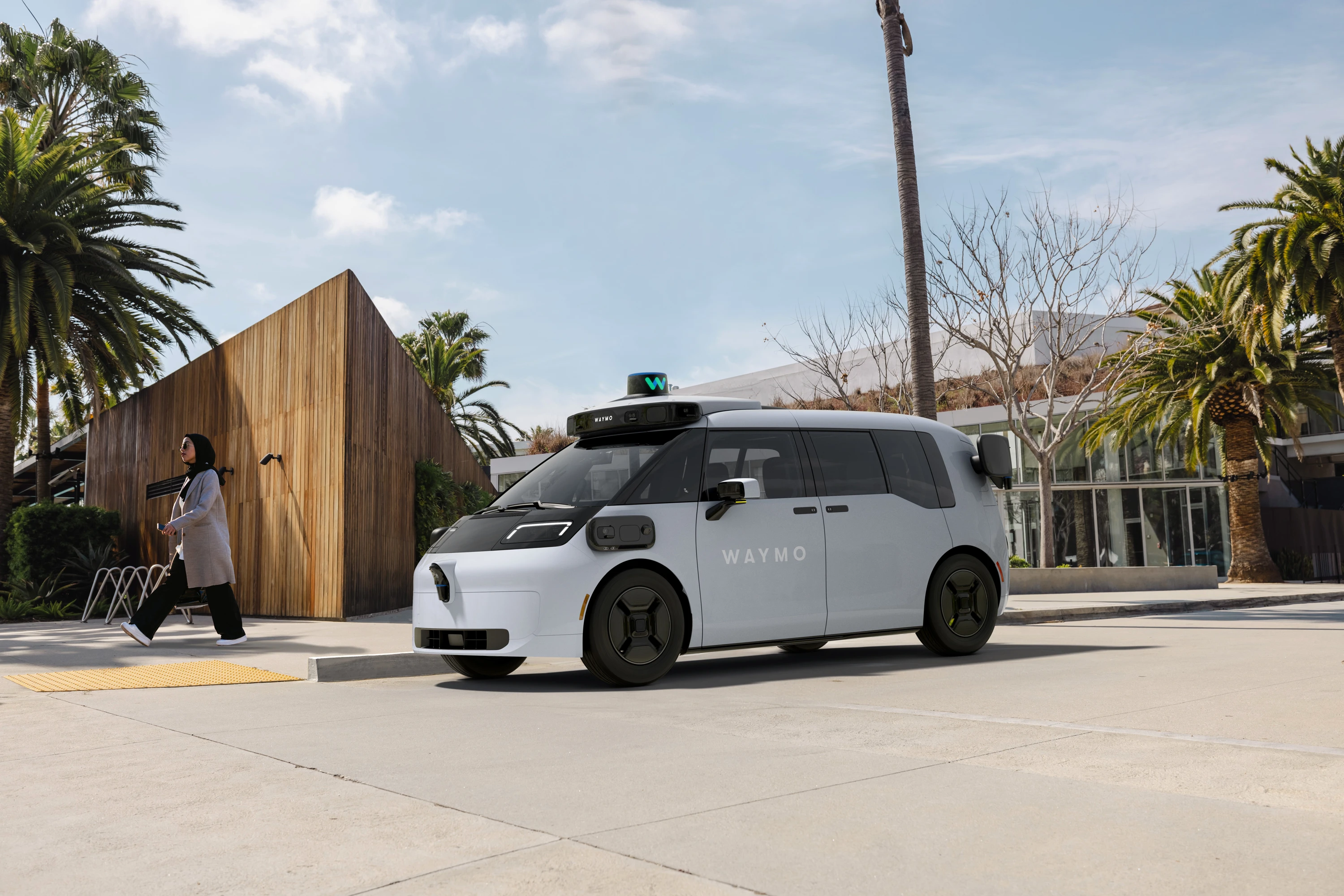
Niveau 5 — automatisation complète de la conduite
Le niveau 5 exécute l’intégralité de la tâche de conduite et assure le repli sans restriction liée au domaine de conception opérationnelle. Au sens de la SAE, il peut fonctionner dans toutes les conditions routières qu’un conducteur humain compétent pourrait gérer.
Aucun système de niveau 5 n’est exploité dans un service commercial public ni disponible dans un véhicule de série. Supprimer la restriction de domaine est une ambition bien plus exigeante qu’étendre un service de niveau 4 à davantage de lieux.
La frontière qui compte
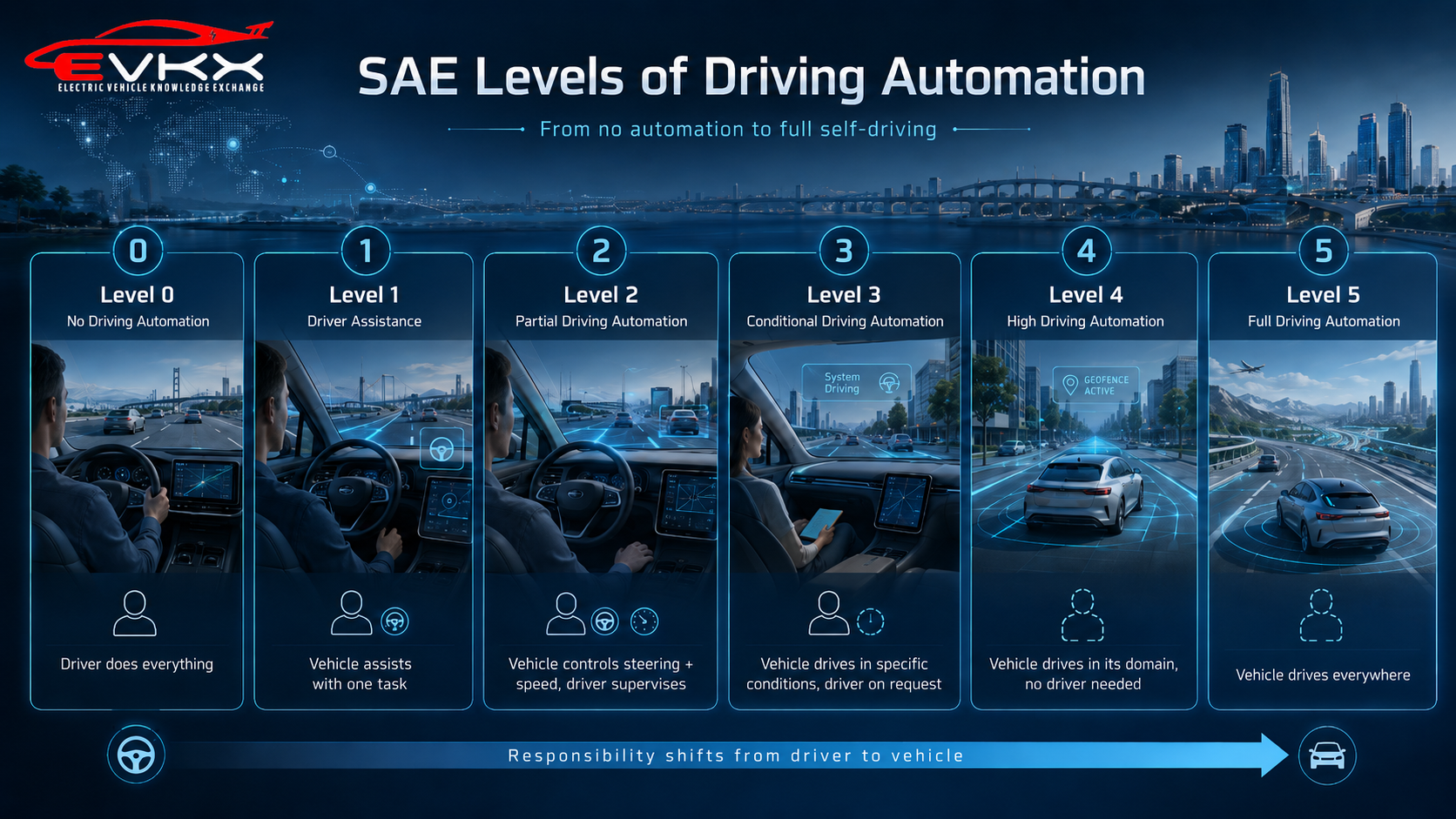
Les niveaux 0–2 relèvent de l’assistance au conducteur : l’humain conduit et surveille l’environnement. Les niveaux 3–5 relèvent de la conduite automatisée : le système exécute l’intégralité de la tâche de conduite lorsqu’il est activé.
Le repli sépare le niveau 3 du niveau 4. Le niveau 3 attend qu’un utilisateur prêt au repli réponde à une demande ; le niveau 4 doit gérer le repli sans cet utilisateur.
Le niveau n’indique pas l’étendue du domaine d’utilisation. Un assistant de niveau 2 largement utilisable peut fonctionner sur davantage de routes qu’une fonction de niveau 3. Un robotaxi de niveau 4 peut circuler sans conducteur dans un quartier tout en étant indisponible sur une route située juste au-delà de sa zone de service.
Ce que les niveaux ne déterminent pas
SAE J3016 est une taxonomie technique. Elle ne permet pas de :
- déclarer qu’un système est sûr ;
- l’homologuer pour un pays ou une route ;
- attribuer la responsabilité juridique après un accident ;
- mesurer le confort ou la commodité pour le conducteur ;
- garantir que deux fonctions de même niveau ont des capacités égales ; ni
- transformer une démonstration de prototype en fonction de série.
Pour les acheteurs, le niveau n’est qu’un premier filtre. Le domaine d’utilisation, la conception de la surveillance du conducteur, le comportement de repli, l’homologation commerciale, les conditions d’abonnement et les preuves de sécurité des performances comptent tout autant.