
Vehicle Doors and Openings
A vehicle door is a controlled opening in the passenger cell: it must admit people or cargo, remain closed under crash loads, seal against weather and noise, fit into a parking space, and still be understandable when power or sensors are unavailable.
EV architecture can change the proportions around that opening, but a flat floor and long wheelbase do not cancel the constraints imposed by high sills, a low roof, thick doors, or an intrusive wheel arch.
What every vehicle opening must do
This article covers door layouts and opening geometry. The human interface is examined in Door Handles and Emergency Access, while powered, comfort, and safety functions are covered in Door Automation, Safety, and Comfort.
A successful door system balances five jobs:
- Access: the clear opening must suit occupants, child seats, mobility aids, or cargo—not merely look large with the door open.
- Retention: latches, strikers, hinges, tracks, and surrounding structure must keep the opening closed when it should be closed. UN Regulation No. 11 sets performance requirements for door latches and retention components rather than prescribing one visual door style.
- Sealing: several metres of seals around a large moving panel must control water, dust, wind noise, and pressure changes.
- Kinematics: the complete movement path must avoid walls, ceilings, kerbs, adjacent vehicles, people, and other doors.
- Recovery: occupants and rescuers need a credible way to open the vehicle after low-voltage power loss, icing, actuator failure, or a collision.
These jobs interact. A larger aperture improves access but removes more fixed body structure. A complex hinge path can reduce one clearance problem while creating another. Powered movement can make a heavy panel easy to use, but adds sensors, control logic, and failure states.
Side-door layouts
The practical difference between side-door types is their swept volume: all the space occupied between fully closed and fully open. Buyers should consider that volume beside and above the car, not just the final open position.
Front-hinged doors
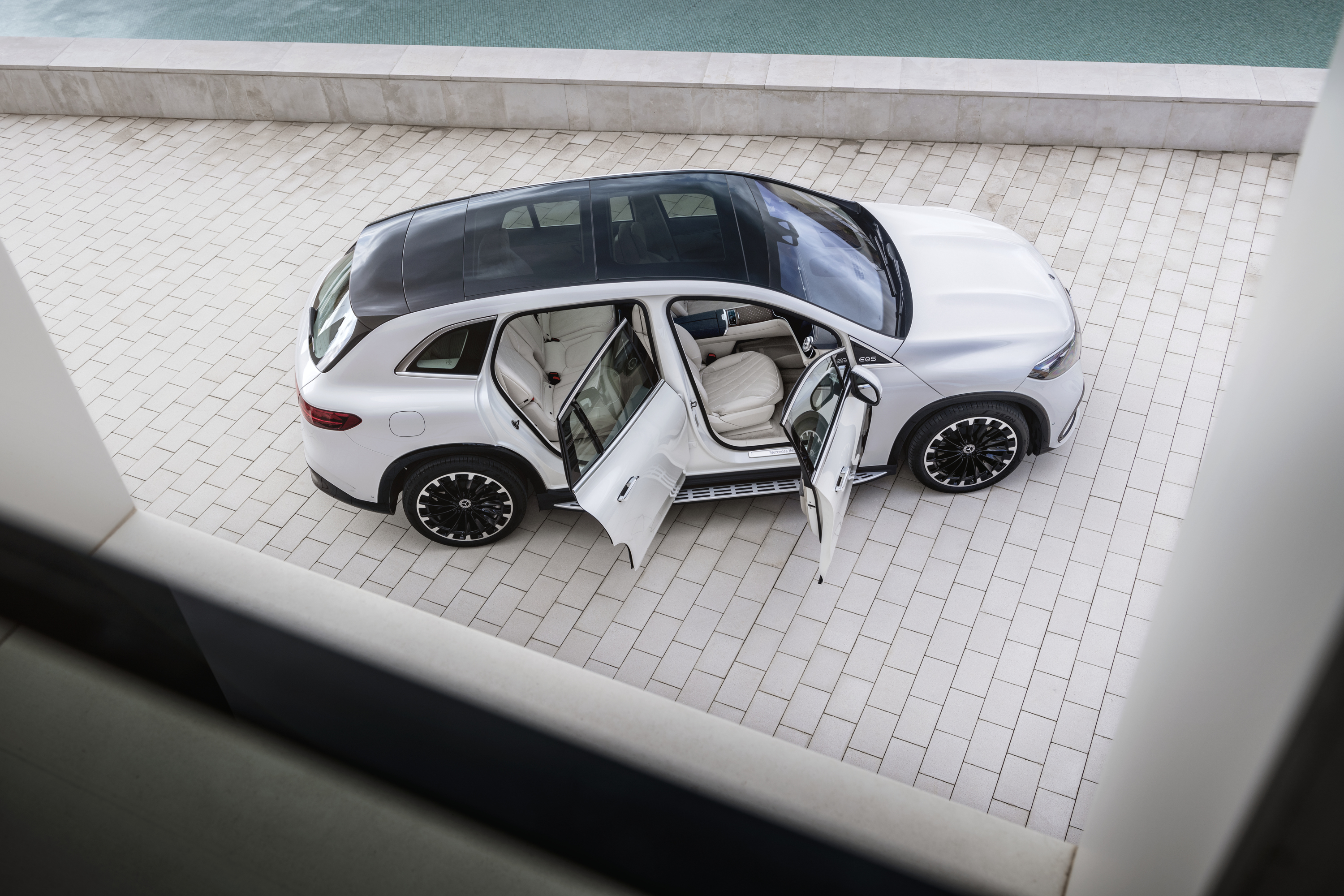
Most first- and second-row doors are hinged at the front edge and swing outward. The layout is familiar, mechanically direct, and straightforward to integrate with mirrors, wiring, window mechanisms, seals, and the front and centre pillars.
A long door creates a broad aperture but also sweeps a wide arc. Two-door cars therefore often need more side clearance than four-door cars with shorter individual doors.

Rear-hinged doors
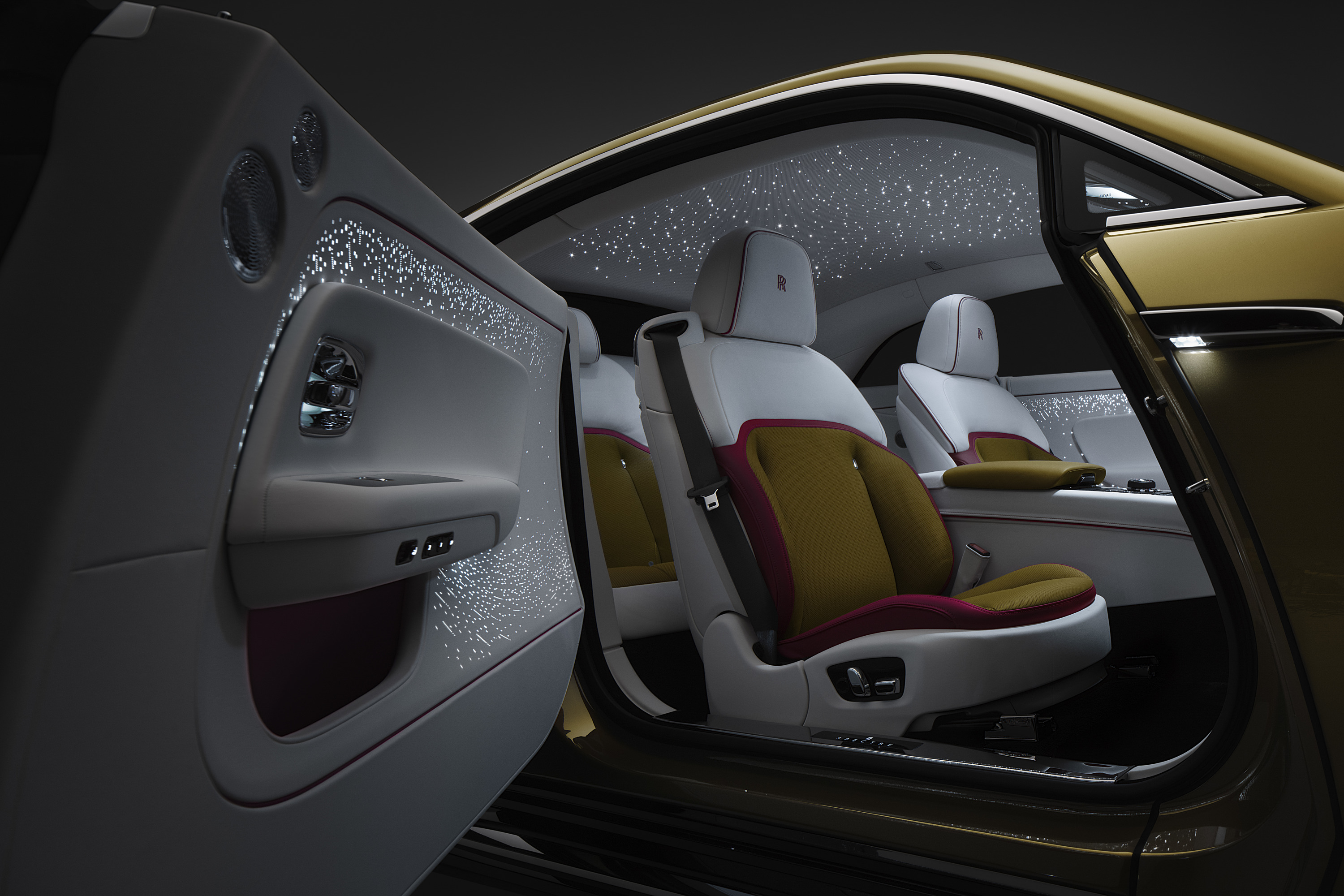
Rear-hinged, or coach, doors place the hinges at the rear edge. Used alone, as on the Rolls-Royce Spectre, they can make the front-seat opening feel more natural because the occupant approaches the seat without walking around the outer end of the door.
Used opposite a front-hinged door, the two panels can create a wide opening. If there is no fixed centre pillar, however, the closed doors and latches must help restore the load path that a conventional B-pillar would provide. Interlocking doors also need logic that prevents the wrong panel from opening first.
Scissor doors
Scissor doors rotate upward around a hinge near the front of the door. They reduce the wide lateral sweep of a long conventional door, but still need vertical clearance and enough room for the occupant to move around the raised panel.
The XPENG P7 Wing Edition illustrates the layout in a production EV. Its visual effect is obvious; its practical value depends on parking geometry, opening speed, sill height, and whether the mechanism remains easy to operate without power assistance.

Roof-hinged and articulated doors
A simple gullwing door hinges at the roof and moves outward and upward as one panel. It can expose a wide side opening while using less ground-level space beside the car, but the roof carries the hinge loads and the opening path needs headroom.
Tesla’s Model X uses an articulated rear door with two hinge axes, marketed as a Falcon Wing door. The control system varies the outward and upward path in response to sensed obstacles. Tesla nevertheless tells users to monitor the movement because the sensors cannot detect every object in every circumstance. This is an important distinction: adaptive kinematics can manage the opening envelope, but do not make it risk-free.

Sliding doors
A sliding door moves mainly along the body side, so its swept volume is narrow. That makes it effective in tight parking spaces and gives unobstructed access for child seats, wheelchair conversions, shuttle use, and commercial loading.
The cost is a long track and supporting mechanism, substantial moving mass, and more difficult sealing around a panel that moves both outward and rearward. Track position can also compete with exterior styling and interior trim.
The Volkswagen ID. Buzz uses two sliding doors on the passenger version. Volkswagen lists a 757 × 1,162 mm clear opening for the standard-wheelbase side doors, a useful reminder that access should be judged by measured aperture rather than door count alone.

Rear cargo openings
Rear-door choice determines loading height, opening size, shelter from rain, and the space needed behind or above the vehicle.
Trunk lid
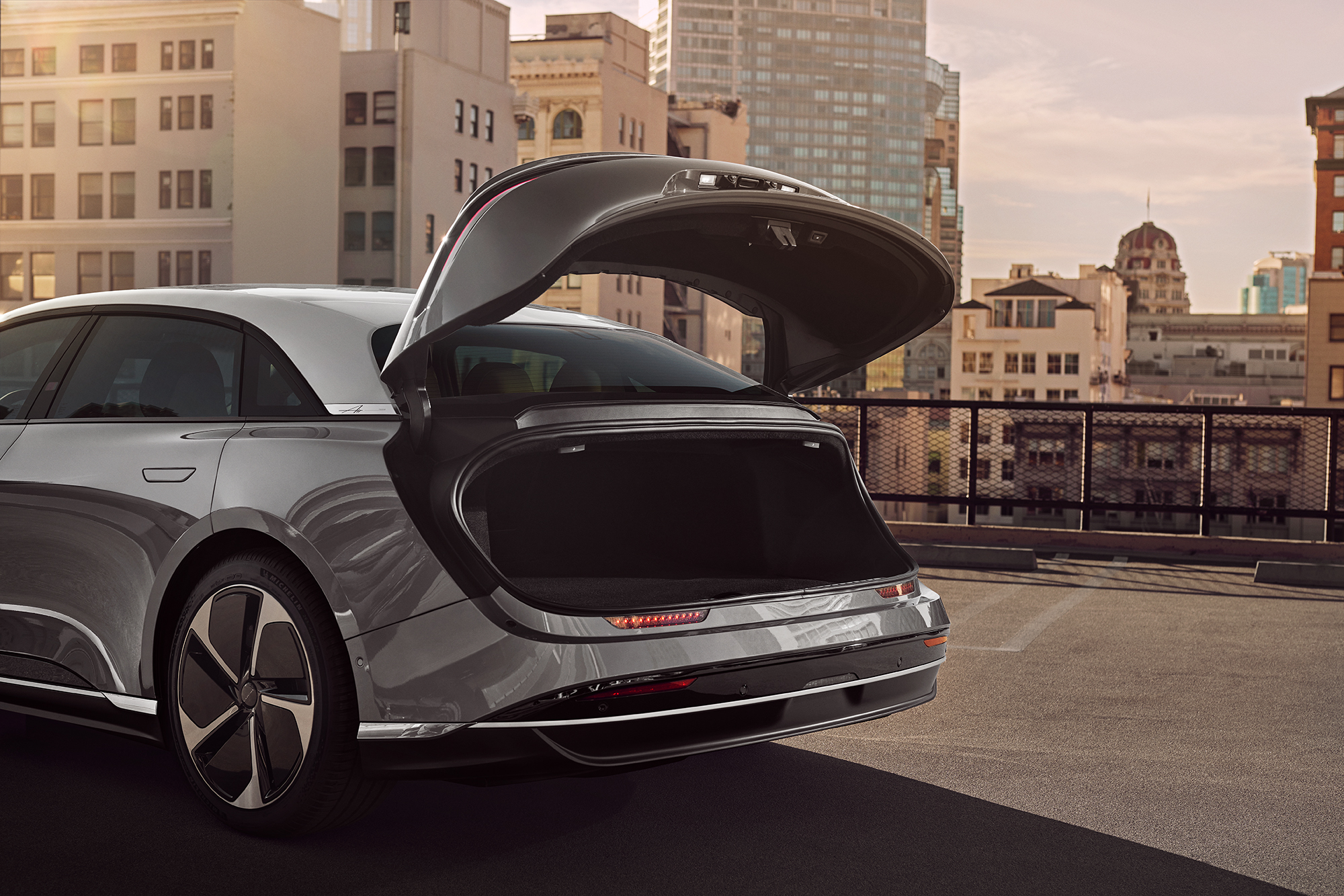
A sedan trunk lid opens a separate luggage compartment while the rear window remains fixed. This small aperture can help body stiffness, cabin isolation, and thermal separation, but restricts bulky cargo.
Hatch and liftgate
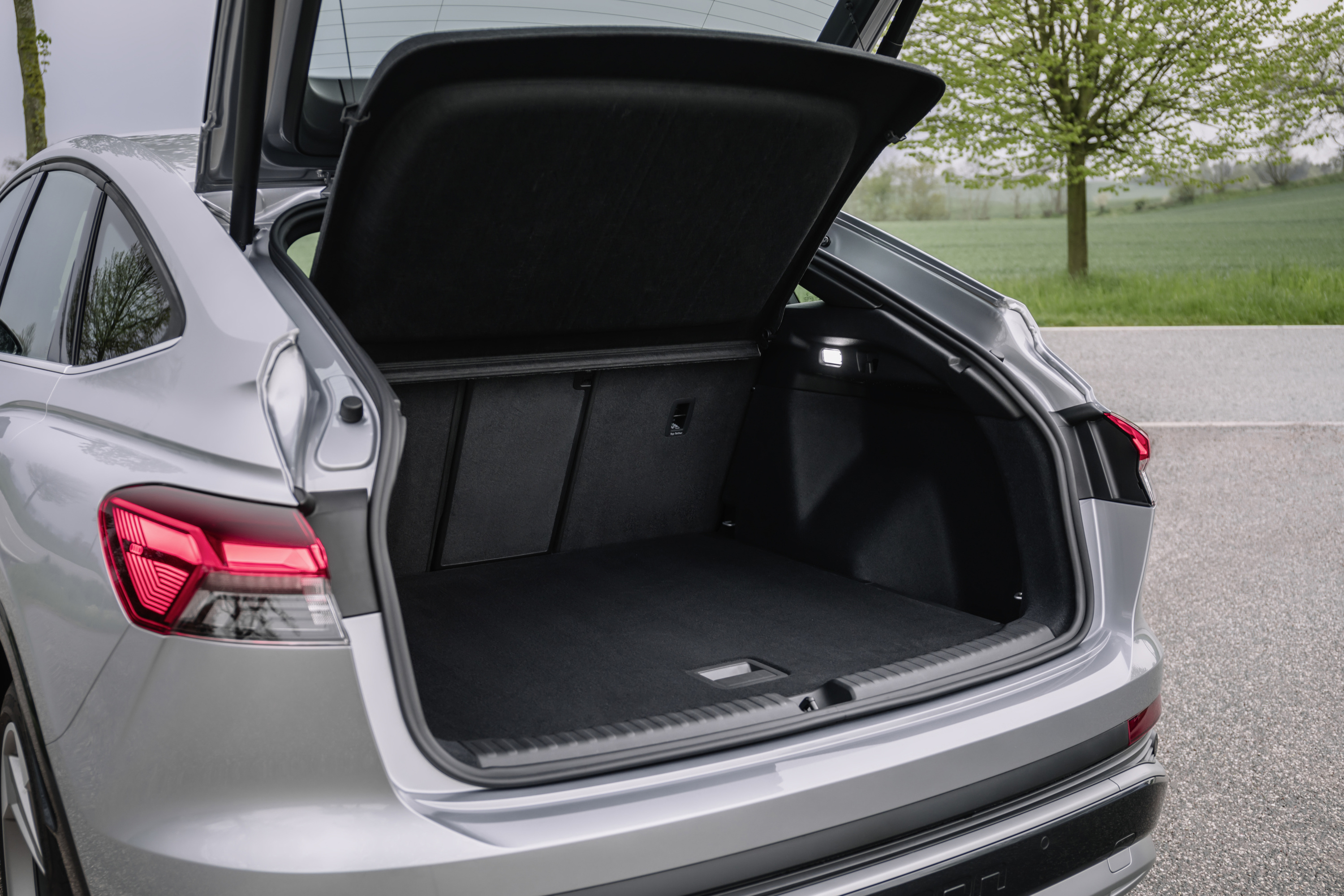
A hatch or liftgate includes the rear glass and exposes the cargo area to the cabin. “Hatch” usually describes a car-shaped rear opening; “liftgate” is common for the larger, more upright panel on a crossover, SUV, or van. The engineering principle is the same.
The large aperture makes tall or awkward objects easier to load, but the complete panel needs space behind and above the vehicle. Its mass includes glass, trim, wiring, lighting, and often a wiper and powered drive.

Split tailgate
A split tailgate divides the opening, commonly into an upper liftgate and a lower panel that folds down. The lower section can retain loose items, reduce the mass lifted overhead, and serve as a loading platform or seat. It also adds a latch line, seals, hinges, and weight.

Twin rear doors
Two outward-opening rear doors—often called barn doors or rear wing doors—avoid overhead clearance and can be opened one side at a time. They suit vans and loading bays, but need space behind the vehicle and place a vertical frame or seal in the rear view.

Side-hinged swing gate
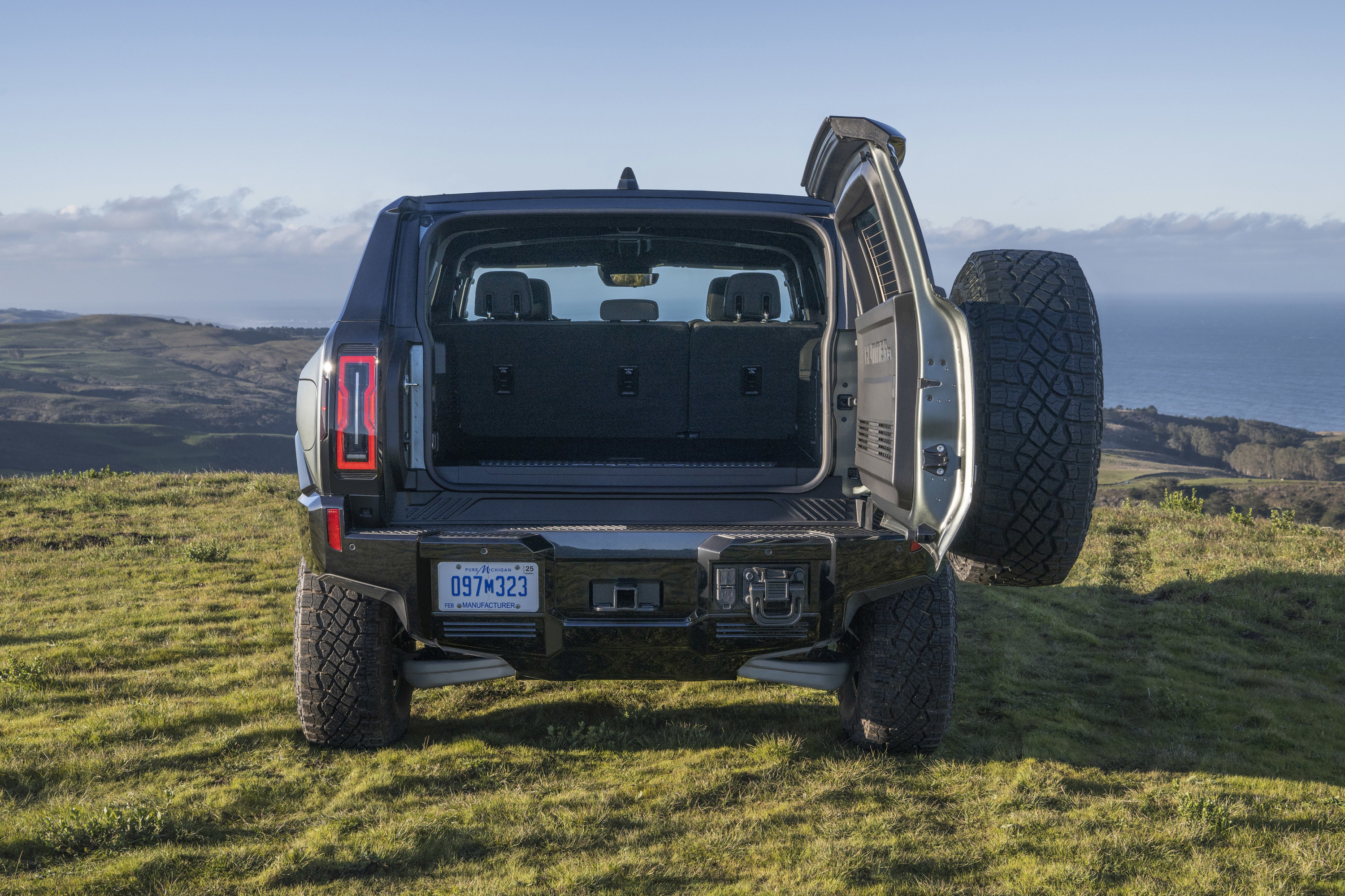
A single swing gate avoids overhead clearance but traces a wide arc behind the vehicle. Its hinge and check strap must control a large moment, particularly if the door carries a spare wheel.
Pickup tailgate
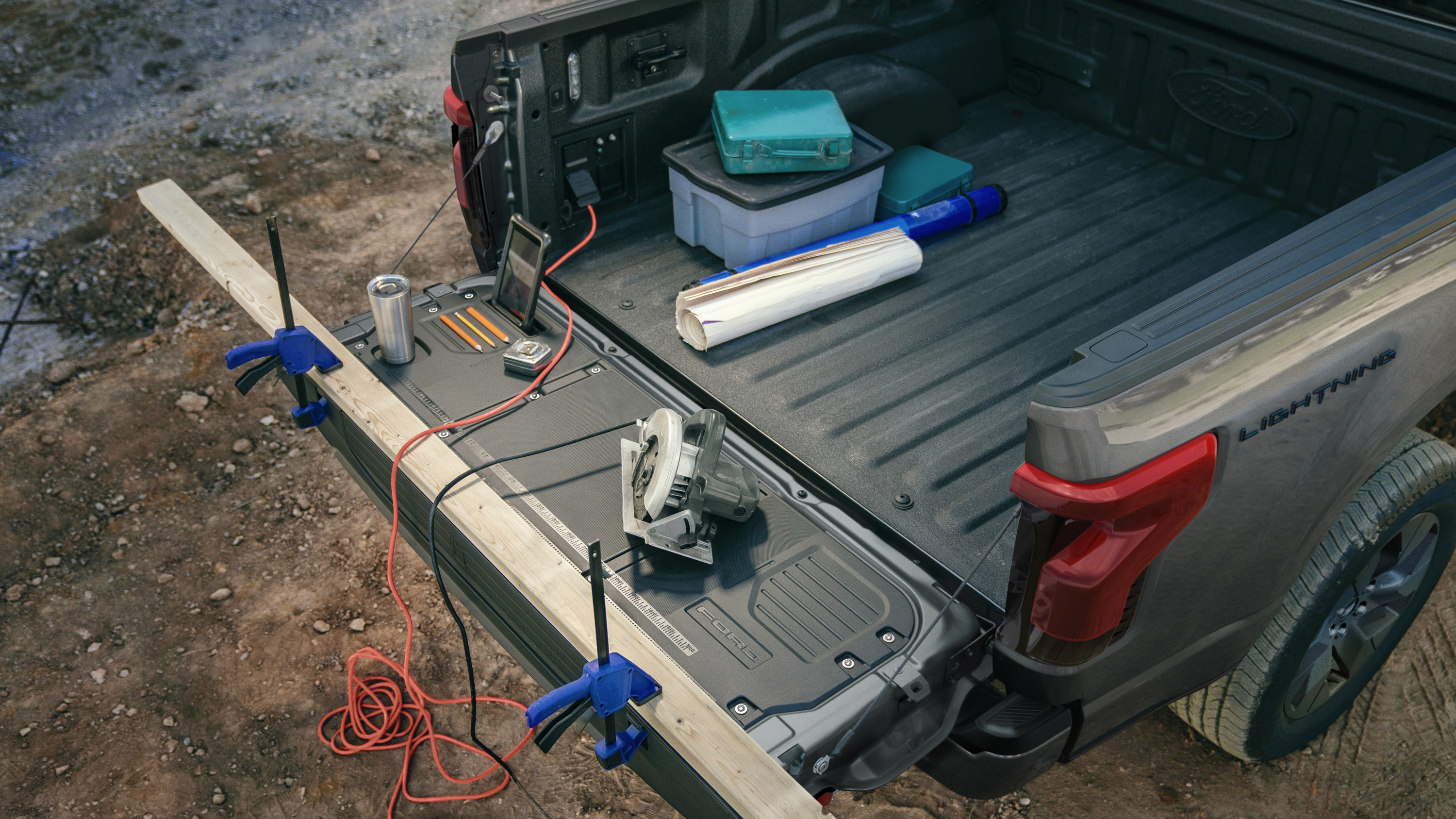
A pickup tailgate hinges at its lower edge and becomes part of the load floor when open. Steps, work surfaces, power outlets, and multi-position panels can add utility, but the basic questions remain payload on the open panel, opening clearance, and access with a trailer attached.
Hood and front-storage access
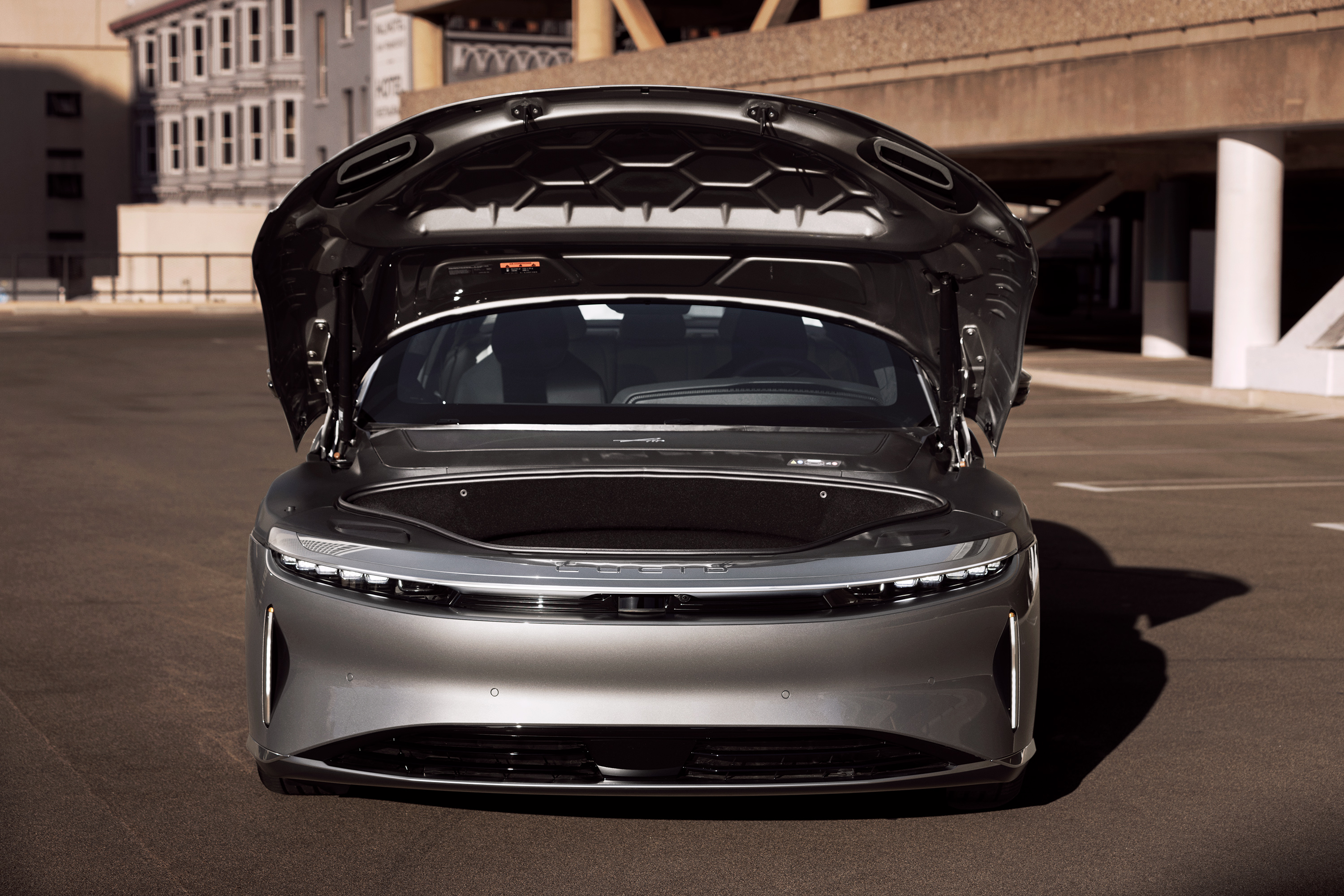
An EV hood may cover a front trunk, power electronics, climate equipment, cooling hardware, service points, and crash structure. A compact electric drive unit can free useful storage volume, but a frunk is not an automatic benefit of being electric: front-motor size, suspension layout, pedestrian-protection clearance, cooling, and crash-load paths all compete for the same space.
A daily-use frunk needs more than volume. Buyers should check the load lip, drainage, lighting, closing effort, low-voltage recovery method, and whether the hood can be opened safely when the vehicle is charging or disabled.
What EV architecture changes
A skateboard-style battery can create a flat cabin floor, but it can also raise the sill and seating position. That is why two EVs with similar wheelbases can feel very different to enter. Useful access is a three-dimensional path shaped by sill height, roof height, seat position, pillar angle, wheel arch, and the open door itself.
Door mass also matters. Large glass areas, acoustic insulation, side-impact beams, speakers, powered actuators, and elaborate trim all increase the energy required to move and stop a panel. A powered door may conceal that mass in normal use; it does not remove it when the system must be operated manually.
Aerodynamics create another EV-specific pressure. Seals, panel gaps, frameless glass, and handles all sit in fast airflow along the body. Improving those details can reduce wind noise and drag, but a difficult-to-use opening is not redeemed by a small aerodynamic gain.
How to judge a door system
Test the vehicle in the situations that matter, not only in a spacious showroom:
- Park beside a wall and check the real opening width at the seat.
- Enter and leave without twisting around the door edge or striking the sill.
- Install a child seat and load the bulkiest item you routinely carry.
- Check roof and rear clearance in your garage.
- Find every normal and emergency release without consulting the screen.
- Ask what happens with a depleted low-voltage battery.
- Look for exposed tracks, deep handle pockets, frameless-glass seals, and other areas where ice or dirt can accumulate.
- Confirm that a powered opening can be stopped, partially opened, and moved manually.
The best layout is not the most theatrical one. It is the opening that remains easy to understand and use across parking, weather, loading, collision, and power-loss conditions.