
Battery Swapping
Battery swapping exchanges a depleted traction battery for a charged one while the vehicle waits. It shortens the driver's energy stop by moving charging, cooling, inspection, and inventory management into the station.
The station is a battery logistics system
An automated passenger-car swap can include:
- Vehicle identification and eligibility checks
- Guidance into a precisely defined position
- High-voltage shutdown and confirmation that the pack is safe to disconnect
- Lifting or supporting the vehicle
- Releasing mechanical fasteners
- Disconnecting electrical, data, and design-dependent thermal interfaces
- Removing the pack and inspecting critical surfaces
- Selecting and installing a compatible charged pack
- Reconnecting, fastening, testing, and registering the pack to the vehicle
- Returning the removed pack to storage, inspection, thermal conditioning, and charging
The driver sees a short exchange; the operator manages a fleet of batteries for many hours. A swap station therefore combines robotics, high-voltage service equipment, battery storage, chargers, thermal management, fire protection, software, and inventory control.
What swapping changes
Conventional charging keeps the battery in the car while energy moves through a cable. Swapping moves the battery and charges it later.
That separation creates several possible advantages:
- A predictable stop measured in minutes when a compatible pack is ready
- Controlled charging temperatures and power at the station
- Inspection of packs at every exchange
- Separation of vehicle and battery ownership
- The ability to replace a small daily-use pack with more energy for a longer trip in a modular system
- Scheduled charging that can avoid some site peaks
- High vehicle utilization for taxis, ride-hailing, logistics, buses, and trucks
It also creates obligations that plug-in charging does not have:
- The station must hold enough compatible battery inventory.
- The vehicle must permit repeated structural removal without compromising crashworthiness or sealing.
- Pack geometry, fasteners, connectors, cooling, software, and identification must remain interoperable.
- The operator must manage differences in pack age, energy capacity, state of health, and ownership.
- A queue can form even when swaps are quick if station throughput or charged inventory is exhausted.
Swapping does not eliminate charging time or grid demand. It relocates both.
Vehicle and pack design
A structural battery integrated deeply into the body can improve stiffness, mass, and packaging, but it is difficult to remove frequently. A swappable pack needs a serviceable boundary and repeatable interfaces.
Design requirements can include:
- Accurate locating features and robot access
- Fasteners that tolerate many verified cycles
- High-voltage contacts protected from contamination and wear
- Reliable data and interlock connections
- Seals that survive repeated exchange
- Thermal connections or a pack-contained thermal design
- Protection from water, salt, stones, impact, and underbody damage
- Software that authenticates the pack and its configuration
- Crash-load paths that remain predictable after repeated swaps
Pack standardization can occur within one brand, across several models, or across an industry platform. The wider the intended compatibility, the harder it becomes to freeze dimensions and interfaces while cell technology, voltage, chemistry, and vehicle packaging continue to evolve.
The internal construction and structural trade-offs of traction batteries are covered in Battery Pack and Configuration.
Inventory determines service capacity
A station with 20 battery bays does not necessarily have 20 packs ready for any arriving vehicle. Some packs may be:
- Charging
- Cooling or warming
- Reserved
- Under inspection
- Incompatible with the arriving model or energy tier
- Held below a high state of charge to reduce storage stress
- Quarantined after a detected fault
Operators must forecast arrivals, pack mix, energy demand, and charging time. A burst of vehicles can deplete charged inventory faster than the station replenishes it. Grid capacity, charger power, and battery temperature then determine recovery.
Theoretical daily throughput also differs from achieved throughput. Positioning delays, user errors, inspections, maintenance, pack imbalance, vehicle variety, and peaks in demand reduce utilization.
Safety and quality control
China's GB/T 40032-2021 provides national safety requirements for EV battery swapping. A safe implementation still depends on the exact vehicle, pack, station, maintenance process, and local regulation.
A station should control:
- Correct pack identity and software configuration
- Isolation resistance and high-voltage interlocks
- Connector condition and temperature history
- Mechanical locking and fastener verification
- Enclosure, seal, and underbody condition
- Fault codes and crash-event records
- State of charge, state of health, and cell imbalance
- Thermal condition before storage, charging, or release
- Quarantine and escalation rules
Automation can make these checks consistent, but it can also repeat a systematic error at scale. Sensors, independent verification, traceable logs, preventive maintenance, and a safe degraded mode matter as much as robot speed.
Battery safety across design, use, repair, second life, and recycling is covered in EV Battery Safety and EV Battery Lifecycle.
Ownership and the fairness problem
Battery-as-a-service can lower the vehicle's purchase price by separating the battery subscription or rental. It can also allow capacity upgrades where the vehicle and service support them.
The contract must answer difficult questions:
- Does the customer own a specific pack, a capacity entitlement, or only access to the network?
- What minimum energy, power, and state of health are guaranteed?
- Can an older pack replace a newer one?
- Who pays for damage, abnormal degradation, or missing service history?
- What happens when the subscription ends or the network leaves a market?
- Can the vehicle be sold or exported outside the network?
- Is plug-in charging still available?
- Are pack upgrades compatible with the vehicle's crash, thermal, and electrical limits?
The strongest swapping system is not only mechanically fast; it makes battery condition and customer rights legible.
Current implementation models
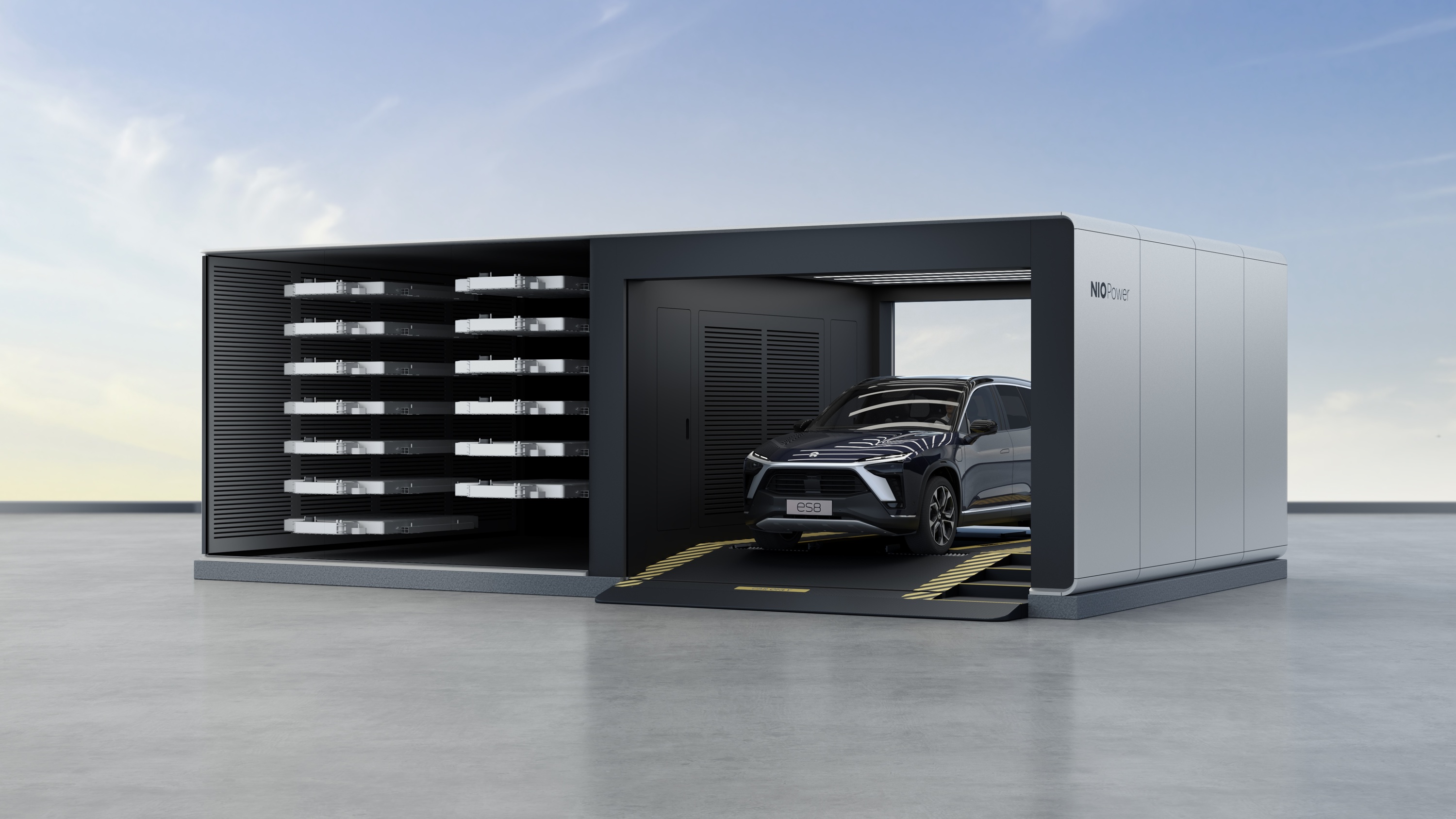
NIO's Power Swap Station 4.0 illustrates a whole-pack, brand-ecosystem approach. NIO states that the station stores 23 batteries, can complete an automated exchange in 144 seconds, and is designed for up to 480 swaps per day. These are manufacturer specifications for that station generation, not universal swapping performance.
CATL's EVOGO takes a modular approach. Its original Choco-SEB concept allowed a compatible vehicle to use one to three battery blocks, with a standard station storing up to 48 blocks and exchanging one block in a claimed minute. Modularity can align rented energy with daily needs, but it demands a vehicle platform designed around those blocks.
Commercial trucks, taxis, and other high-utilization fleets can offer a stronger business case than private cars because predictable routes and concentrated demand raise station throughput. Standardized fleet hardware also reduces the number of pack variants each site must stock.
OCPP 2.1 adds backend support for battery-swapping operations, including swap-station functions. A management protocol can standardize transactions and status exchange; it does not standardize the pack's physical, thermal, or crash interface.
When swapping is the better tool
Battery swapping is most persuasive when:
- Vehicles return to predictable corridors or depots
- Downtime is expensive
- A compatible fleet creates high station utilization
- Battery ownership separation has clear customer value
- Land, grid capacity, and pack inventory are available
- The vehicle platform was designed for repeated exchange
Plug-in charging is usually simpler when vehicles can dwell for hours, standards must span many brands, the network is sparse, or the battery is structurally integrated.
The two approaches can coexist. A swappable vehicle may use home or public charging for routine energy and reserve swapping for high-utilization days or long journeys. The correct comparison is not “three minutes versus thirty minutes”; it includes station capital, battery inventory, grid energy, compatibility, queue risk, vehicle design, and the value of time.
The wider charging-system context is covered in EV Charging: The Complete System.