
Vehicle Windows: Safety, Solar Control, Noise, Wipers, and Smart Glass
Vehicle windows are safety glazing, climate-control surfaces, acoustic barriers, moving mechanisms, and optical platforms for sensors and displays. This overview explains how those functions fit together and directs readers to the detailed EVKX chapters for each system.
What the glazing system has to do
The name of a pane describes its position, not necessarily its construction:
- The windshield provides the main forward view, is bonded into the body opening, and normally uses laminated safety glazing.
- Side windows can be movable or fixed and may use tempered or laminated glass. One vehicle can use different constructions at the front and rear.
- The rear window may carry a demister grid, antennas, and a wiper, or it may be replaced by a regulated camera-monitor system.
- Roof glazing has separate questions involving structure, heat, drainage, shading, and switchable opacity; see Glass Roofs: Design, Heat Control, Safety, and Smart Glass.
Laminated glass uses two or more glass plies bonded by a polymer interlayer. The interlayer helps retain fragments after breakage and can add acoustic damping, solar control, heating, or optical correction for a head-up display. Tempered glass is heat-treated to increase strength and to fragment into many small pieces when it fails. Neither construction is universally superior: pane position, occupant retention, visibility, security, escape, mass, cost, and repairability all influence the choice.
UN Regulation No. 43 defines multiple safety-glazing constructions and tests for properties such as optical quality, fragmentation or impact behavior, abrasion resistance, environmental durability, and installation. Requirements still vary with market and pane position. UNECE: UN Regulation No. 43 — Safety glazing
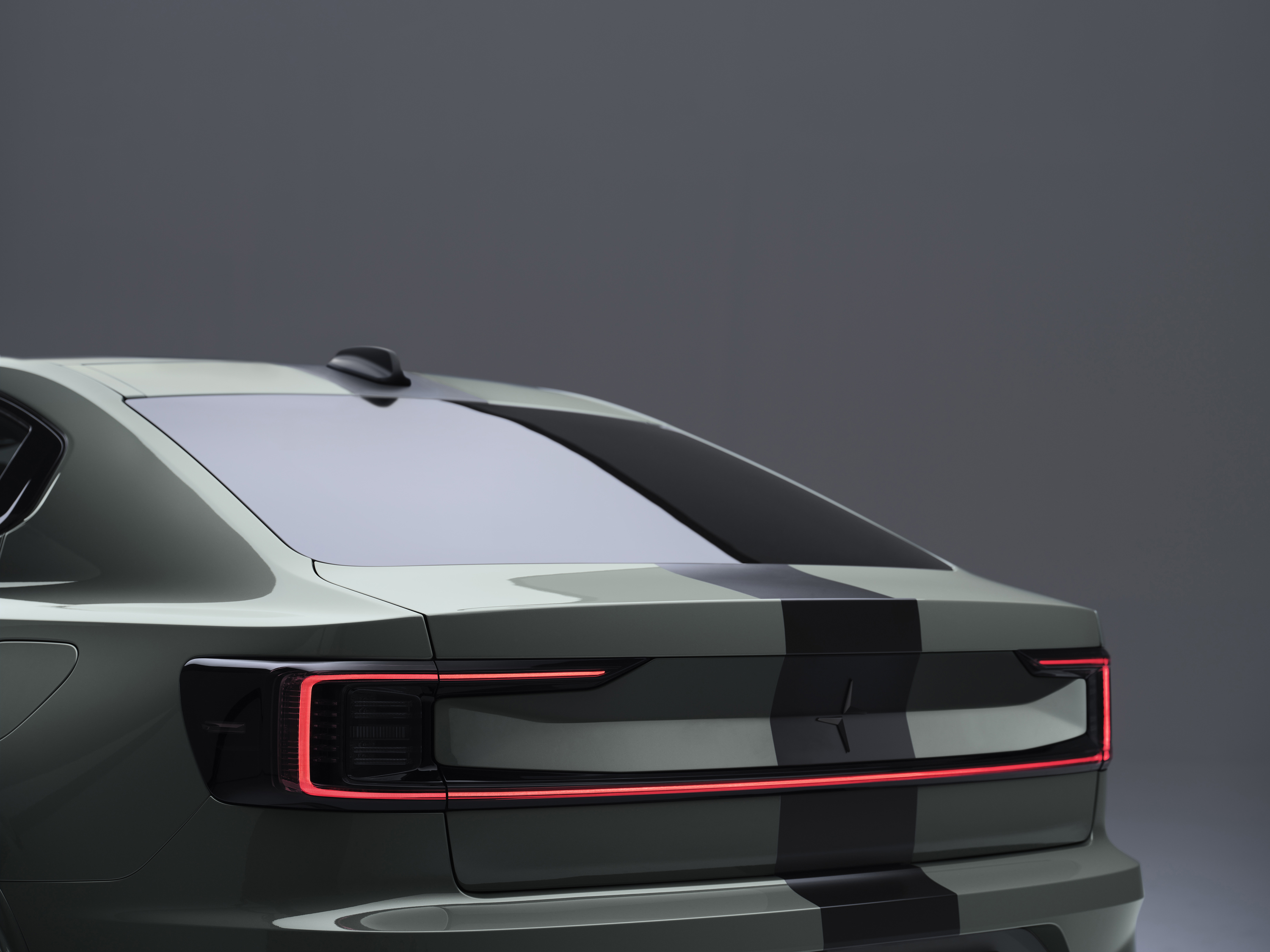
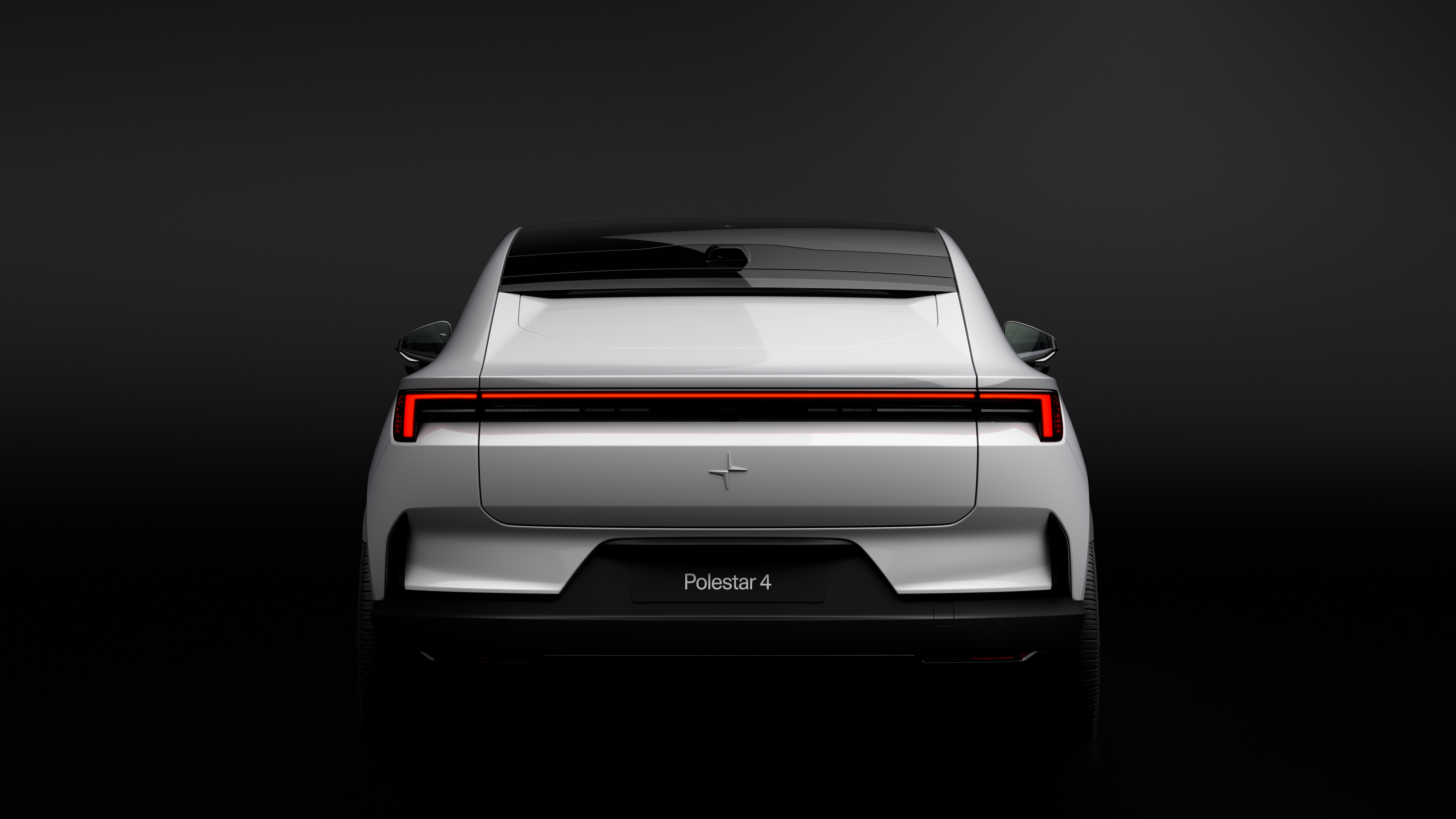
Rearward visibility is also changing. UN Regulation No. 46 covers indirect-vision devices, including camera-monitor systems, and the Polestar 4 is a production EV example without a conventional rear window. Its roof camera feeds a display in the interior-mirror position. A camera can avoid obstruction by passengers or cargo, but it adds dependence on lens cleanliness, heating, power, image processing, and display performance. UNECE: UN Regulation No. 46 — Devices for indirect vision Polestar: Polestar 4 camera-based rear-view system
Solar heat, glare, UV, and cabin noise
Visible darkness is not a complete glazing specification. Visible-light transmittance, direct solar transmittance, total solar transmittance, ultraviolet transmission, reflectance, color, and optical distortion describe different properties. ISO 13837 defines methods for measuring luminous, direct-solar, and total-solar transmittance and colorimetry in automotive glazing. ISO 13837:2021 — Solar transmittance of road-vehicle safety glazing
Solar-control glass can absorb or reflect selected wavelengths through body tint, interlayers, or coatings. A nearly clear pane can reject useful solar energy, while dark privacy glass does not by itself prove strong total-solar rejection. In one studied solar-control PVB configuration, NREL estimated a potential 4% reduction in air-conditioning power; that result demonstrates the mechanism, not a universal EV range gain. NREL: Solar-control PVB, cabin temperature, A/C demand, and EV range Pilkington: Automotive solar-control windshield coatings
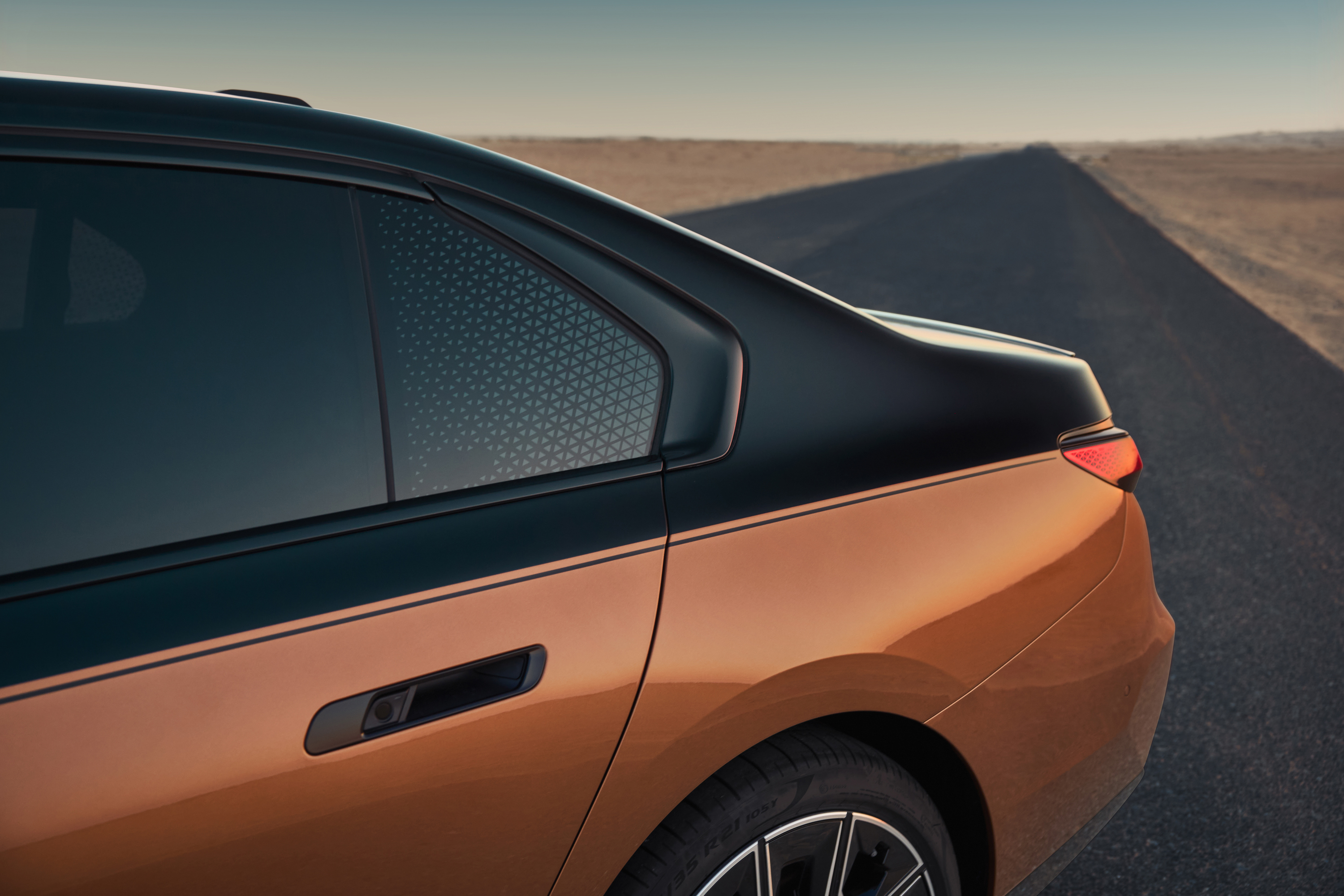

Acoustic glazing normally uses a viscoelastic laminated interlayer to reduce sound transmission in selected frequency ranges. Its real benefit depends on pane area, frequency, seals, door structure, tires, wheelhouses, and the other paths through which noise reaches the cabin. In an EV, reduced powertrain noise can make wind and road noise easier to notice, but glass alone does not “soundproof” the vehicle. Eastman Saflex: Acoustic PVB interlayers and frequency-specific damping
The complete explanation—including solar measurements, UV and IR claims, acoustic laminates, radio-frequency compatibility, HUD optics, tint-film trade-offs, and a buyer comparison method—is in Solar-Control and Acoustic Automotive Glazing.
Power windows, sunshades, and switchable glass
A power window combines a movable pane, guides, seals, a regulator, a low-voltage motor, position sensing, switches, and a door or body controller. One-touch travel, global opening or closing, end-stop learning, and the short glass drop used by some frameless doors are software-controlled behaviors layered on the mechanism.

Anti-trap systems can stop or reverse a closing pane, but detection depends on the obstruction, contact point, window geometry, seal friction, temperature, and control mode. It should never be tested with a hand, child, animal, or rigid body part. UN Regulation No. 21 and US FMVSS No. 118 provide examples of requirements for applicable power-operated closures; their exact scope depends on market and actuation method. UNECE: UN Regulation No. 21 — Interior fittings and power-operated windows US FMVSS No. 118 — Power-operated window, partition, and roof-panel systems
Manual shades usually retract into a spring-loaded cassette and require no electrical power. Electric side or rear shades add motors, guides, limit control, and model-specific safety behavior. Some powered rear shades retract automatically in reverse, but this should not be assumed for every vehicle. Ford documents both manual rear-side shades and a power rear-window shade in one owner-manual implementation. Ford Owner's Manual: Manual side shades and power rear sunshade
Switchable glazing uses technologies such as suspended particles, liquid-crystal/PDLC layers, or electrochromic materials. The important comparisons are visible and total-solar transmission in each state, switching speed, haze, color, operating temperature, unpowered behavior, and replacement cost—not simply whether the pane becomes “dark.”
See Power Windows, Anti-Trap Systems, and Sunshades for regulators, one-touch controls, position learning, anti-trap protection, manual shades, electric curtains, diagnosis, and emergency operation.
Wipers, washers, heating, and visibility
Wipers remove bulk water; washers loosen contamination; glass heating and HVAC manage ice and condensation; rain and humidity sensors can automate parts of the response. These systems overlap, but none replaces the others.
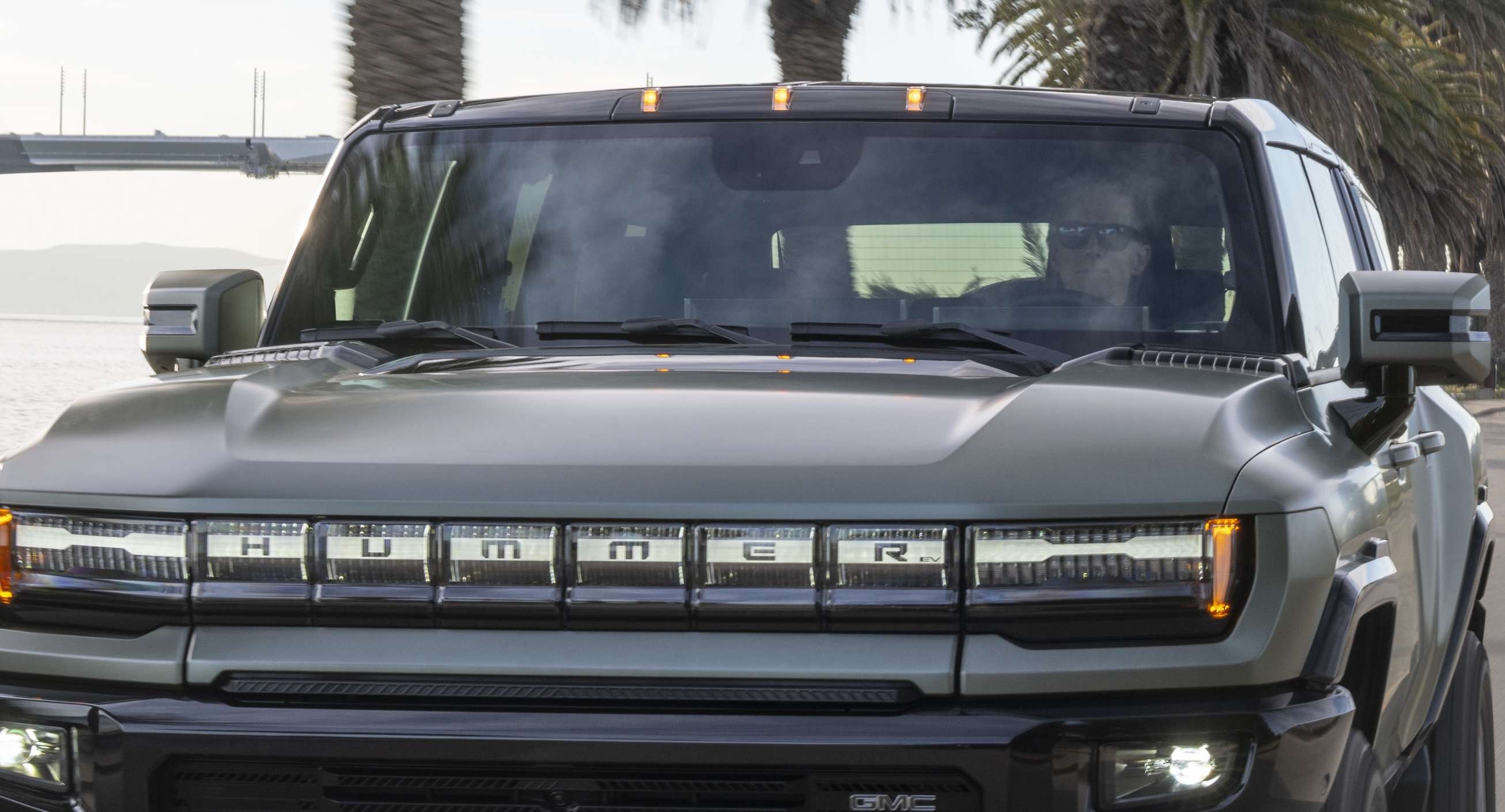
Blade length alone does not determine wiping quality. Curvature, attachment, arm pressure, aerodynamic lift, park strategy, rubber condition, glass contamination, and the washer pattern all matter. Concealed blades often require a documented service position and should not be forced upward against the hood.
Optical rain sensors sample a small windshield area. Dirt, wax, ice, a damaged coupling layer, incompatible replacement glass, or poor blade performance across that area can change automatic wiping. HELLA also documents combined sensor modules that can measure ambient light, solar load, or cabin humidity. HELLA: Rain-light sensor operation and repair
Defrosting removes exterior frost or ice; demisting removes interior condensation. Glass heating helps, while effective demisting also requires airflow and moisture control. US FMVSS Nos. 103 and 104 illustrate the separate performance requirements for defrosting/defogging and wiping/washing systems. Other markets apply their own rules. US FMVSS No. 103 — Windshield defrosting and defogging systems US FMVSS No. 104 — Windshield wiping and washing systems
The detailed maintenance and diagnosis guide—including blade faults, washer chemistry, rain-sensor limits, EV preconditioning, rear wipers, camera cleaning, and checks after windshield replacement—is Windshield Wipers, Washers, Heating, and Visibility.
Repair, calibration, and emergency escape
The correct replacement windshield is defined by its functions, not just its outline. Two panes that fit the same opening can differ in acoustic or solar layers, heating, antennas, rain-sensor preparation, camera brackets, ceramic masking, and HUD optics.
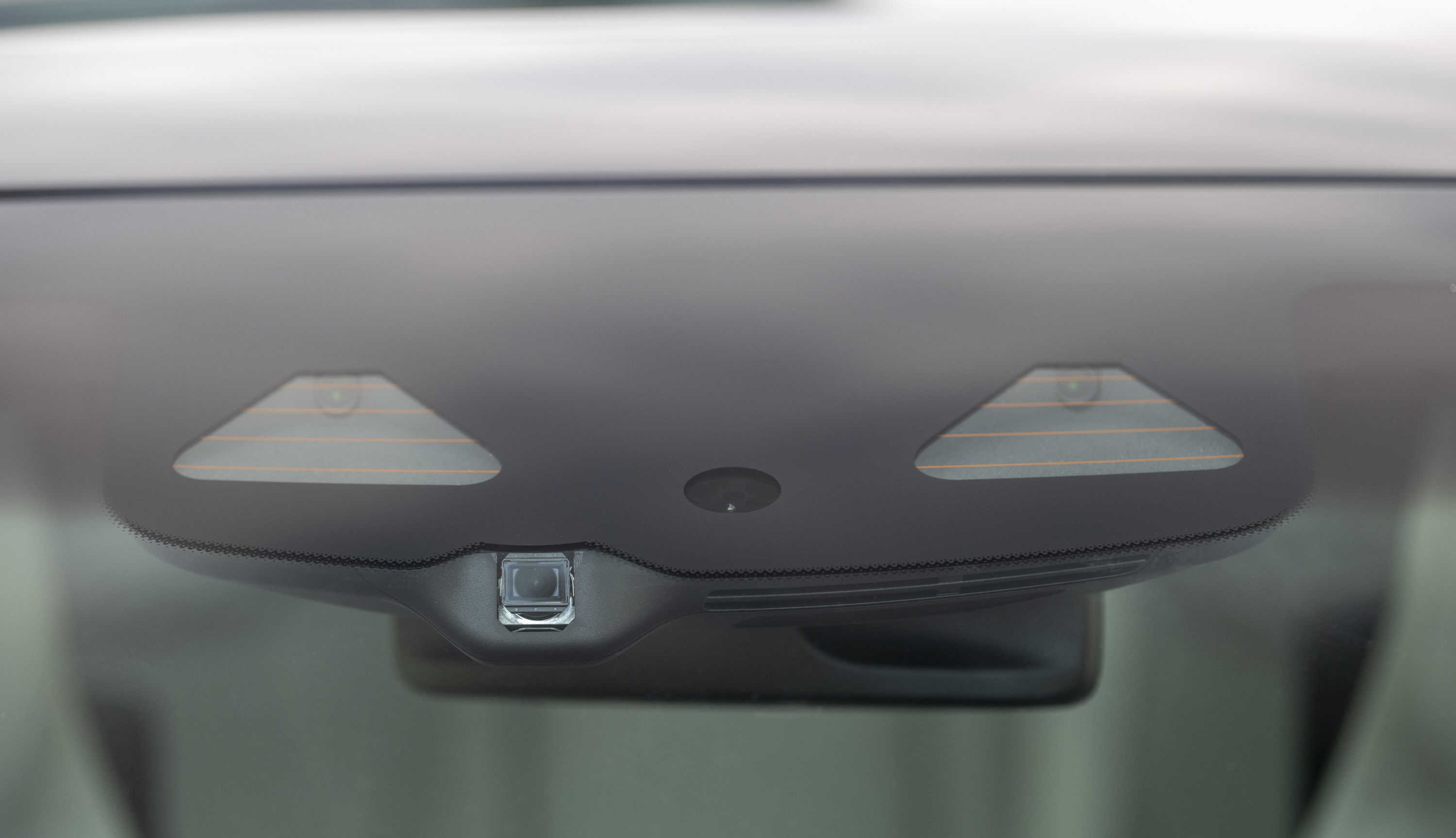
A windshield-mounted camera depends on exact bracket and glass geometry. Replacement can require static calibration, dynamic calibration, both, or a manufacturer-defined verification procedure. EVKX covers the wider process in Calibration, Cleaning and Sensor Health.
HUD windshields have their own optical requirements. A conventional windshield can produce a double reflection, so compatible glass may use wedge geometry or another tailored construction. The correct pane and installation position matter even when the vehicle reports no diagnostic fault. Pilkington: HUD-compatible windshield construction See Head-Up Displays for the complete display system.
Glass construction also changes emergency escape. In AAA testing, several escape tools broke tempered side glass, but none penetrated the laminated samples. Owners should identify each side pane, learn the primary and mechanical door releases, and avoid assuming that one glass tool works on every window. AAA: Vehicle escape-tool testing on toughened and laminated glass
See Automotive Glass Repair, Calibration, and Emergency Escape for chip assessment, replacement specification, adhesives and safe-drive-away conditions, water leaks, ADAS and HUD verification, low-voltage failure, and the limits of emergency glass tools.
What buyers and owners should check
- Identify the construction and approval marking of every pane; do not assume all side windows are identical.
- Ask which panes have acoustic or solar-control treatment and request meaningful visible and total-solar data.
- Try every manual shade, electric curtain, switchable pane, window control, child lock, and one-touch function.
- Test wind and road noise on coarse pavement and at motorway speed.
- Inspect for distortion, chips, delamination, wiper scratches, tint-film defects, camera warnings, and HUD ghosting.
- Test demisting, defrosting, washers, every wiper speed, rear visibility, rain sensing, and any camera washer.
- Learn the low-voltage and mechanical emergency-opening procedures before they are needed.
- When pricing replacement, include the exact glass specification, mouldings, adhesive work, calibration, and taxes.
The strongest glazing system is not necessarily the darkest, quietest, or most electronic. It preserves a clear view, manages heat and noise without hiding trade-offs, behaves predictably when dirty or unpowered, and can be repaired without losing the functions integrated into the pane.
Sources
- Solar-Control and Acoustic Automotive Glazing
- Power Windows, Anti-Trap Systems, and Sunshades
- Windshield Wipers, Washers, Heating, and Visibility
- Automotive Glass Repair, Calibration, and Emergency Escape
- Glass Roofs: Design, Heat Control, Safety, and Smart Glass
- Calibration, Cleaning and Sensor Health
- Head-Up Displays
- UNECE: UN Regulation No. 43 — Safety glazing
- ISO 13837:2021 — Solar transmittance of road-vehicle safety glazing
- NREL: Solar-control PVB, cabin temperature, A/C demand, and EV range
- Pilkington: Automotive solar-control windshield coatings
- Eastman Saflex: Acoustic PVB interlayers and frequency-specific damping
- UNECE: UN Regulation No. 21 — Interior fittings and power-operated windows
- US FMVSS No. 118 — Power-operated window, partition, and roof-panel systems
- Ford Owner's Manual: Manual side shades and power rear sunshade
- US FMVSS No. 103 — Windshield defrosting and defogging systems
- US FMVSS No. 104 — Windshield wiping and washing systems
- HELLA: Rain-light sensor operation and repair
- AAA: Vehicle escape-tool testing on toughened and laminated glass
- UNECE: UN Regulation No. 46 — Devices for indirect vision
- Polestar: Polestar 4 camera-based rear-view system
- Pilkington: HUD-compatible windshield construction