
Blind-Spot Monitoring
Blind-spot monitoring warns when a detected road user occupies or approaches an area beside the vehicle that can be difficult to see in the mirrors.
Sensors used
Blind-spot monitoring most commonly uses rear corner Radar to track vehicles approaching in adjacent lanes. Side or rear Cameras can supplement radar or provide the primary evidence in some architectures.
Coverage, minimum detectable target and closing-speed limits vary by configuration. Sensor Fusion covers track association, while Calibration, Cleaning and Sensor Health explains how bumper repairs, contamination or blocked views can reduce performance.
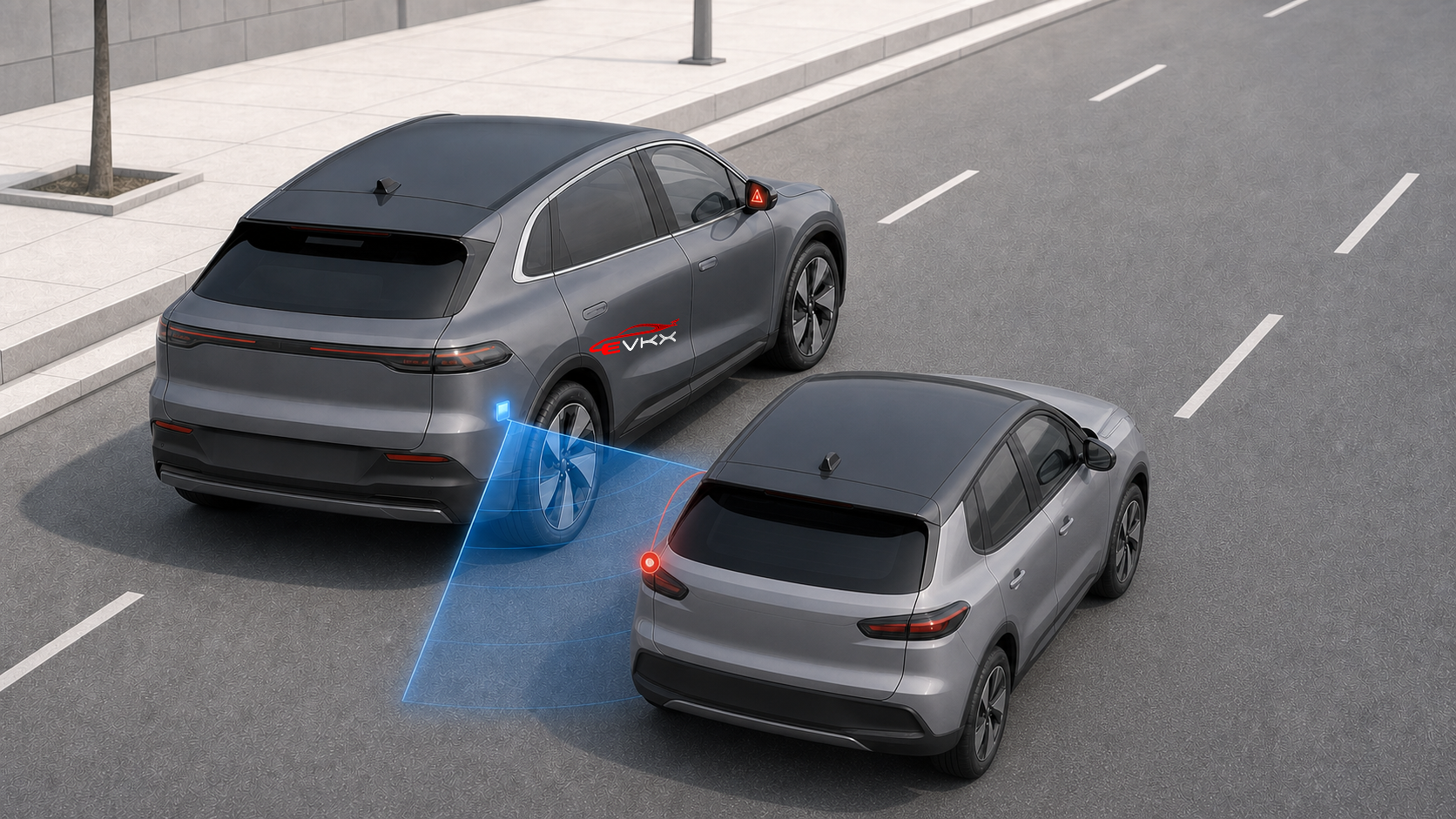
Detection zone
Rear corner radar is common because it can estimate both distance and relative speed. Cameras or ultrasonic sensors may add coverage. The monitored area normally extends along the adjacent lanes, but its length and minimum operating speed vary.
The system may illuminate a symbol in the mirror or door. Activating the turn signal can escalate the warning with flashing, sound or vibration.
What the warning means
A warning means that the system has detected a potential conflict in its designed zone. No warning does not prove that the lane is clear. Motorcycles, bicycles, rapidly approaching vehicles, objects between lanes and traffic on sharply curved roads can be difficult to classify.
Mirrors, a shoulder check and signaling remain part of a safe lane change.
Opening-door and trailer extensions
Some vehicles keep the side sensors active after stopping and warn occupants before a door is opened into the path of a cyclist or vehicle. That behavior is better described as exit warning.
Trailer support can extend the monitored zone along a trailer, but it may require the driver to enter trailer dimensions or use approved towing equipment. A bicycle rack or unrecognized trailer can instead disable or degrade monitoring.
Warning versus intervention
Blind-spot monitoring is an information function. Blind-spot intervention can add steering resistance, corrective steering or braking after the driver begins an unsafe lane change. The distinction should be explicit in specifications and reviews.
NHTSA lists blind-spot warning and blind-spot intervention as separate technologies. A package name such as "blind-spot assist" may include one or both.
Practical limitations
Heavy rain, snow, mud, impact damage or bumper repairs can obstruct or misalign corner sensors. Drivers should recognize the unavailable indicator and avoid assuming that an unlit mirror symbol means the system is operating.
A useful comparison states the target types, approach speeds, side coverage, trailer behavior and whether the system only warns or also intervenes.