
Autonomous Driving in Electric Vehicles
Driving automation is not one technology or a straight line from cruise control to a car that can drive anywhere; the useful questions are who is driving, where the system can operate, what the human must do and what happens at a limit. This series answers them for EV buyers using evidence from standards, regulators, safety organizations, manufacturers and driverless-fleet operators.
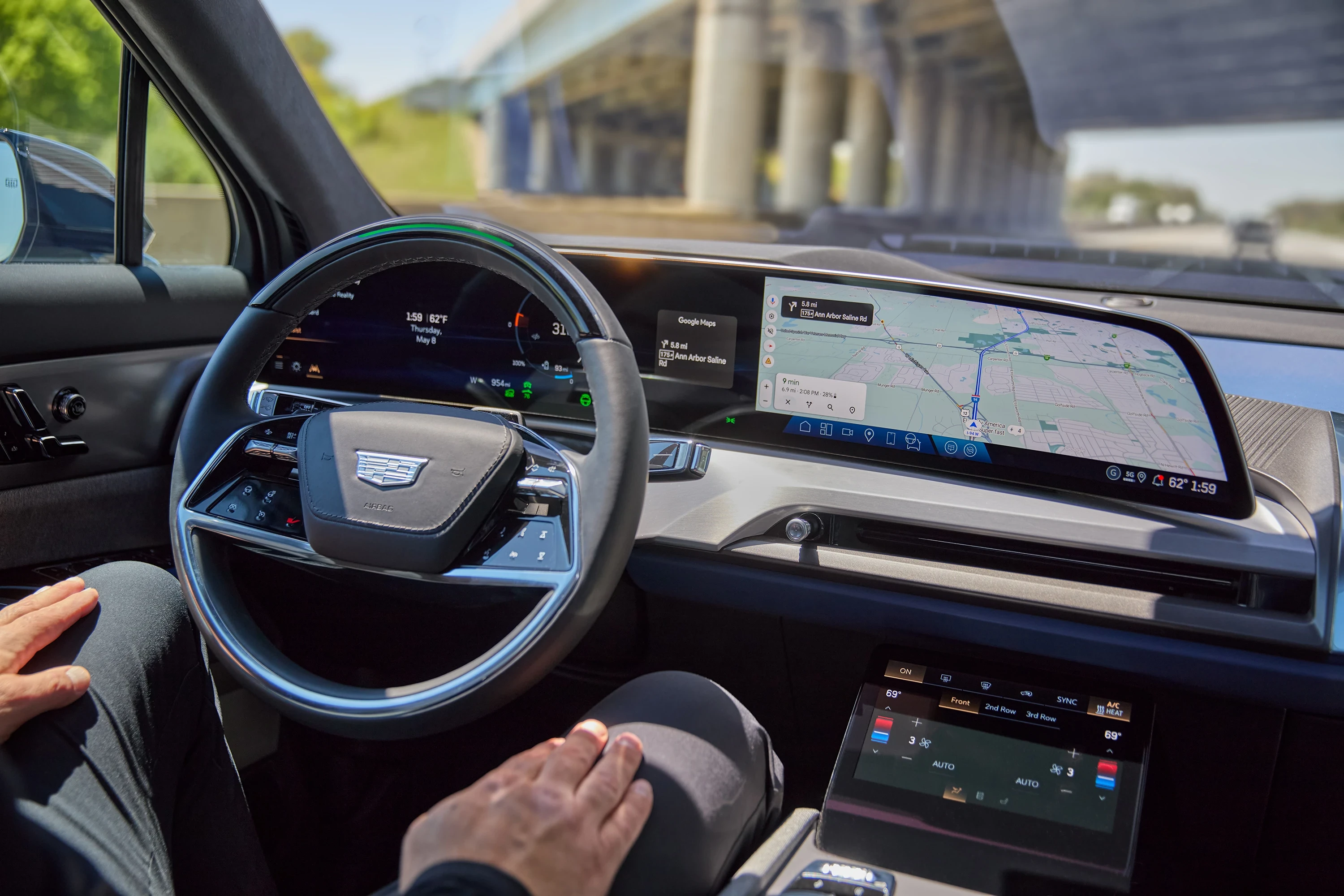
The reality behind the label
Most automated features sold in passenger cars are SAE Level 2 driver support. They may steer, accelerate and brake at the same time, and some permit hands-free operation on approved roads. The human is still driving and must supervise continuously.
Level 2 can now include point-to-point route execution on city streets: choosing lanes, making turns, negotiating intersections and stopping for red lights or stop signs. Completing a route does not make the system Level 3; the boundary changes only when the system, rather than the human, monitors the driving environment while engaged.
SAE Levels 3–5 are different because an automated driving system performs the complete dynamic driving task while engaged. Level 3 still needs a fallback-ready user who can respond to a takeover request. Level 4 must handle the task and fallback without relying on a human inside its operational design domain. Level 5 removes that domain restriction, but no Level 5 system is in public service or available to buy.
The level applies to a specific feature under specific conditions, not to the vehicle for all journeys. A car can contain Level 2 and Level 3 features, while a Level 4 robotaxi can be driverless in one service area and unable to operate elsewhere.
Four tests for any automation claim
Marketing names are poor evidence. Apply four tests instead.
- Driver role: Must a human watch the road continuously, be available after a transition period, or can every occupant remain a passenger?
- Operating domain: Which roads, mapped areas, speeds, weather, light and traffic conditions are supported?
- Fallback: Who brings the vehicle to a minimal-risk condition when the feature cannot continue?
- Evidence: Is the claim supported by type approval, an operating permit, a published safety case, transparent outcome data, or only a product demonstration?
Hands-free operation answers none of these questions by itself. A hands-free feature can still be Level 2. Likewise, a Level 4 vehicle is not necessarily more versatile than a privately owned Level 2 car; it may be far more automated inside a much smaller domain.
Why electric vehicles are central, but not required
Driving automation is powertrain-agnostic. A combustion vehicle can be automated, and an EV is not autonomous because it has electric propulsion.
EVs nevertheless dominate many purpose-built robotaxi programs. Electric motors provide fast, precise torque control, large traction batteries can supply sensing and compute loads through power converters, and modern EV platforms often combine brake-by-wire, electric steering, centralized compute and updateable software. Fleet operators can also coordinate charging and maintenance around high vehicle utilization.
There is a cost. Cameras, radar, lidar, computers, cleaning systems and cooling consume energy; external sensor pods can add aerodynamic drag. Research has measured material range losses on instrumented EVs, although the result depends strongly on hardware, compute efficiency, speed and duty cycle. Automation and electrification therefore need to be engineered together rather than treated as free complements.
The three markets developing at different speeds
Consumer driver support is scaling fastest. Level 2 systems cover more roads and more driving situations, while driver monitoring and misuse safeguards remain decisive.
Conditional automation in private cars is advancing in smaller steps. Level 3 features are available in limited markets and domains, with exact speed, road and environmental restrictions. Their importance is the changed driver role, not the size of the usable map.
Driverless fleet services provide the clearest Level 4 deployments. Robotaxis can operate without a driver, but only inside approved service areas supported by mapping, fleet maintenance, charging, remote assistance and local operating procedures.
These are distinct products with different safety arguments and business models. Comparing them on one “self-driving” scale hides more than it reveals.
Read the series
- SAE Levels of Driving Automation — the six levels and the roles behind them
- Level 2 vs Level 3 — why eyes-on and eyes-off are a boundary, not a feature upgrade
- Point-to-Point Level 2 — destination-guided city driving, traffic lights and stop signs under supervision
- Operational Design Domain — the roads and conditions that define where automation works
- Sensors and Compute — cameras, radar, lidar, positioning, compute and actuation
- The Automated-Driving Software Stack — perception, prediction, planning, control and fallback
- Why Autonomous Fleets Are Going Electric — the real links and trade-offs between electrification and automation
- Safety, Redundancy and Regulation — safety cases, redundancy, cybersecurity and regulation
- Automated-Driving Systems in the Real World — a current field guide to supervised, conditional and driverless systems
- The Hard Problems Automated Driving Has Not Solved — the technical, human and operational problems still open
- The Road Ahead — the evidence-based path from broader assistance to bounded autonomy