
Pickup-bed cargo
An electric pickup bed can carry objects that will not fit in an enclosed luggage compartment, but bed size is not payload. The exact truck's mass, axle, tailgate and restraint limits determine what it can safely transport.
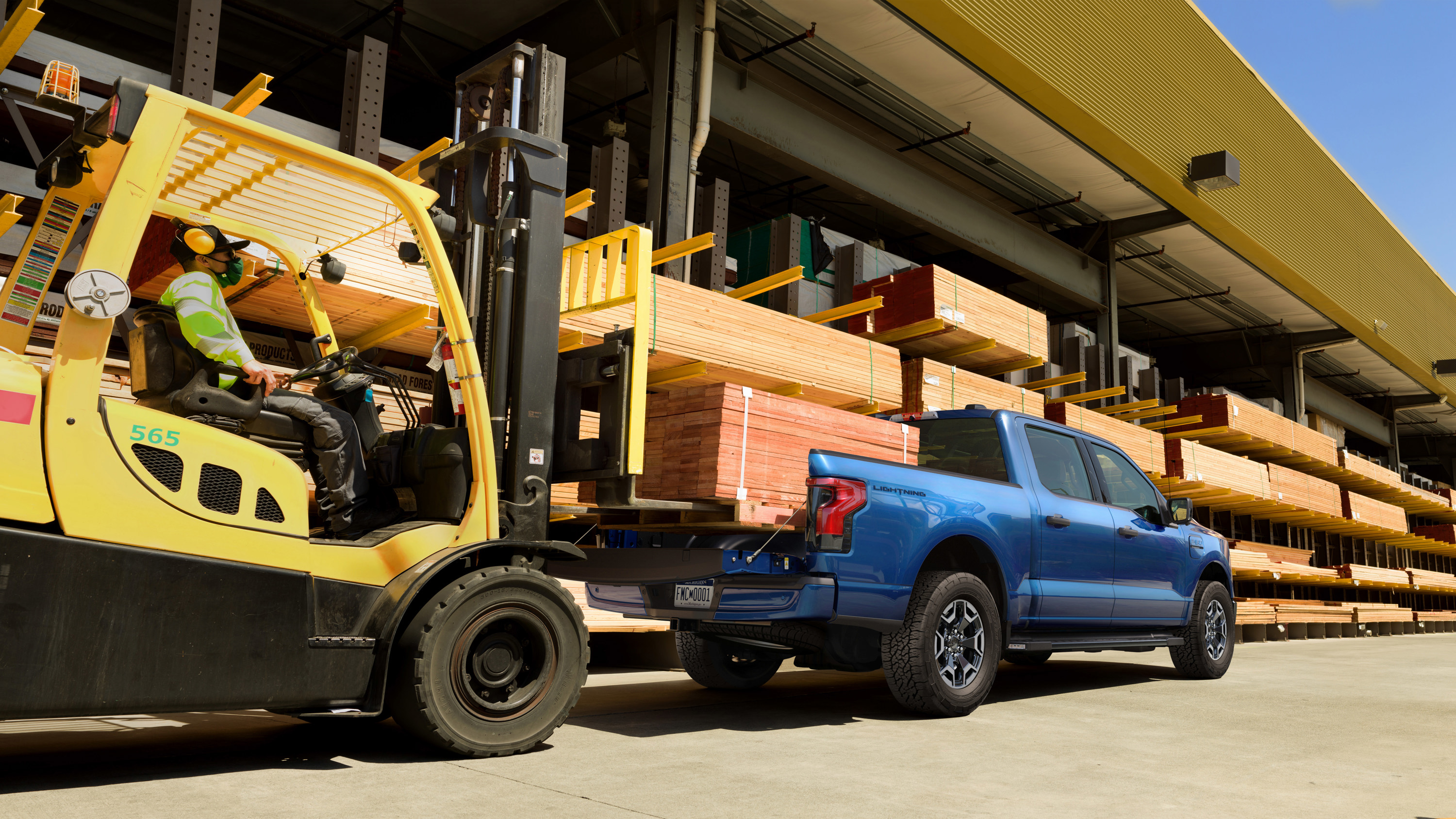
Payload is a mass limit
Payload includes occupants, cargo in the cabin, frunk and bed, fitted accessories and trailer tongue load. A tonneau cover, rack, toolbox, bed liner, spare wheel or hitch reduces the capacity left for people and cargo.
The certification label or registration document is the starting point for the exact vehicle. A brochure maximum may describe a different trim, battery, cab, suspension or option package. Ford's F-150 Lightning guidance states that load capacity is designated by weight rather than volume and directs owners to the vehicle-specific carrying-capacity label.
Do not assume that an empty part of the bed can still be filled. Dense materials can reach payload or rear-axle limits while leaving substantial volume unused.
Load placement affects the axles
Place heavy cargo low and distribute it as the owner's manual specifies. Mass behind the rear axle adds leverage and can increase rear-axle load while reducing front-axle load, affecting steering, braking and headlamp aim.
Long items resting on an open tailgate introduce a separate tailgate load and a longer lever arm. Check the tailgate, bed extender and rack ratings rather than treating the bed payload as permission for any arrangement.
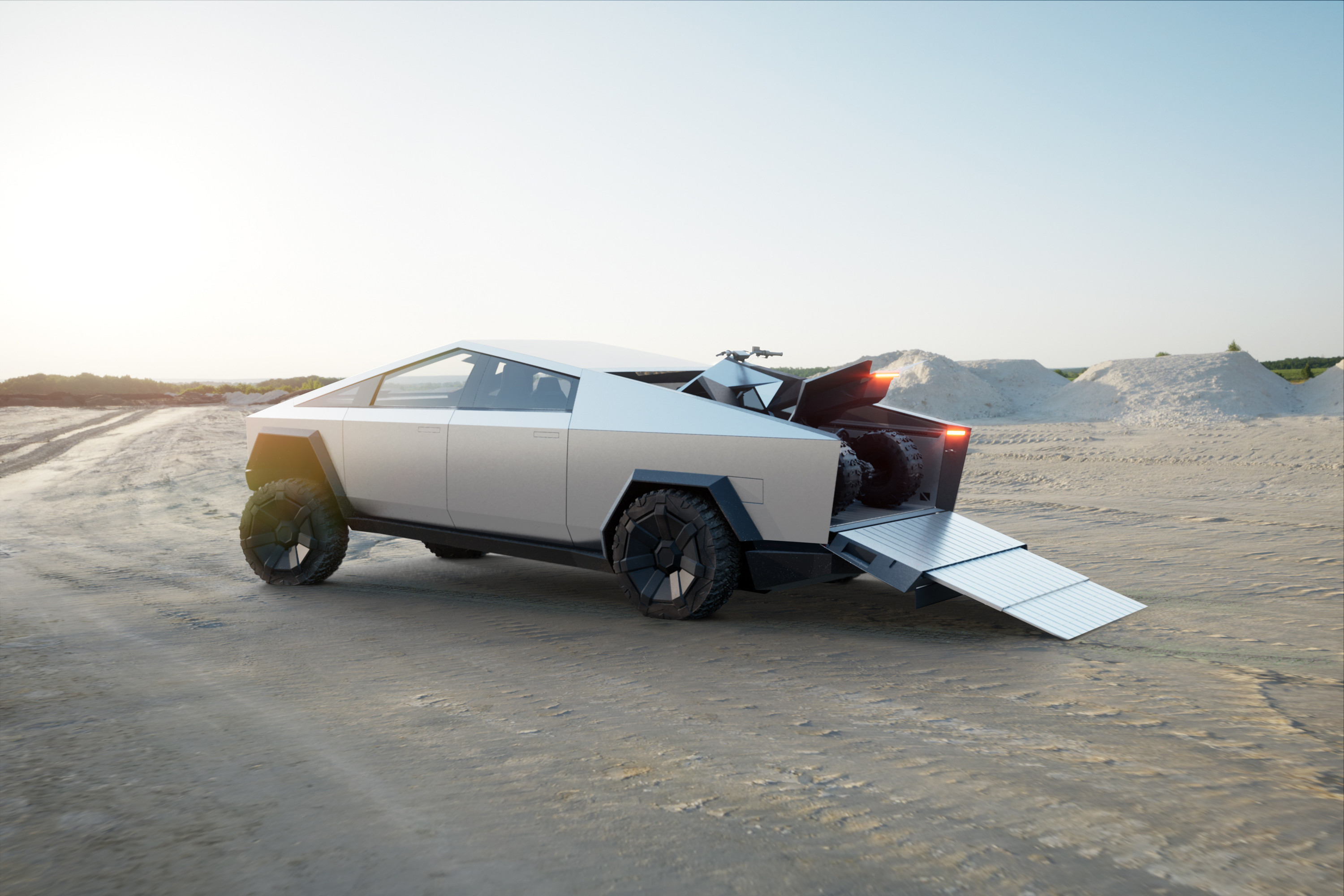
Motorcycles, machinery and other concentrated loads require suitable loading ramps, attachment points and weight distribution. The photograph of an item in a bed does not establish that every configuration of that model can carry it.
Restrain the load
Use rated bed tie-downs and restraints matched to the cargo. Straps should prevent forward, rearward, lateral and vertical movement. A tarp or tonneau cover can contain light material and protect it from weather, but it is not automatically a rated restraint for heavy cargo.
NHTSA advises tying large objects directly to the vehicle or trailer, covering loose loads and checking the load again before driving. Local rules govern projections, flags, lamps and the distance an item may extend beyond the vehicle.
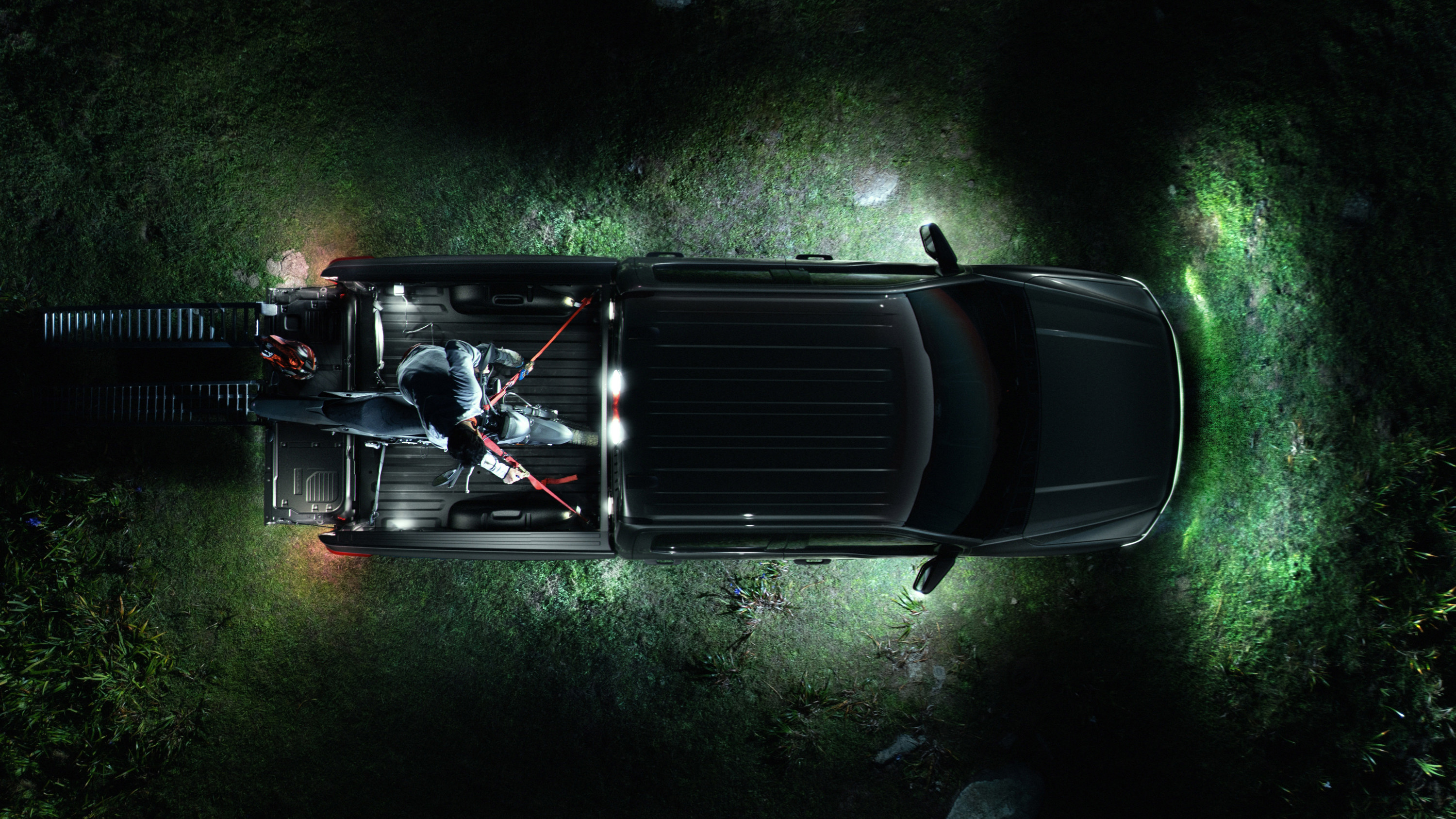
Protect sharp edges, keep cargo clear of the rear window and lights, and confirm that nothing can enter the road during braking or over bumps.
Mass and aerodynamics affect energy use
Added mass raises the energy required for acceleration and climbing. Some energy can be recovered during deceleration, but regenerative braking is limited by traction, battery state, temperature and system power.
Bed cargo can also change airflow. A tall object above the cab, an open tailgate, a rack or an irregular load may increase drag. A tonneau cover can change the flow again, but no single range percentage applies to every truck, cover and speed.
Use the vehicle's loaded range estimate when available, then compare it with actual consumption during the first part of the trip. Ford's available On-Board Scales illustrate a useful aid: they estimate payload as items are added, but the door-jamb label remains the authority for the specific truck.
Work and camping features
Some electric pickups provide bed outlets, lighting, cameras or load scales. These features do not increase payload. Secure cables and tools so they cannot move, keep electrical equipment within its environmental rating and account for stationary power use in the battery reserve.
For sleeping platforms or removable campers, include the complete installed mass and verify bed, axle, roof and attachment ratings. A slide-in structure can also raise the center of gravity and alter crosswind response.
What to check
- Read the exact vehicle's payload and axle ratings.
- Include occupants and every fitted accessory.
- Check tailgate, rack and bed-extender limits separately.
- Use rated restraint points and inspect them during the trip.
- Keep lights, plate, cameras and the driver's view clear.
- Recalculate the charging plan after measuring loaded consumption.