
Cameras in Driver Assistance and Automated Driving
Cameras provide the richest semantic view used by road vehicles: lane markings, signal colors, signs, gestures and object appearance. Their output is still a sampled image whose meaning and depth must be inferred by software.
What a camera measures
A digital camera converts light falling on an image sensor into pixel values. Lens geometry, exposure, dynamic range, resolution, frame rate, color filtering and image processing determine what information reaches the perception stack.
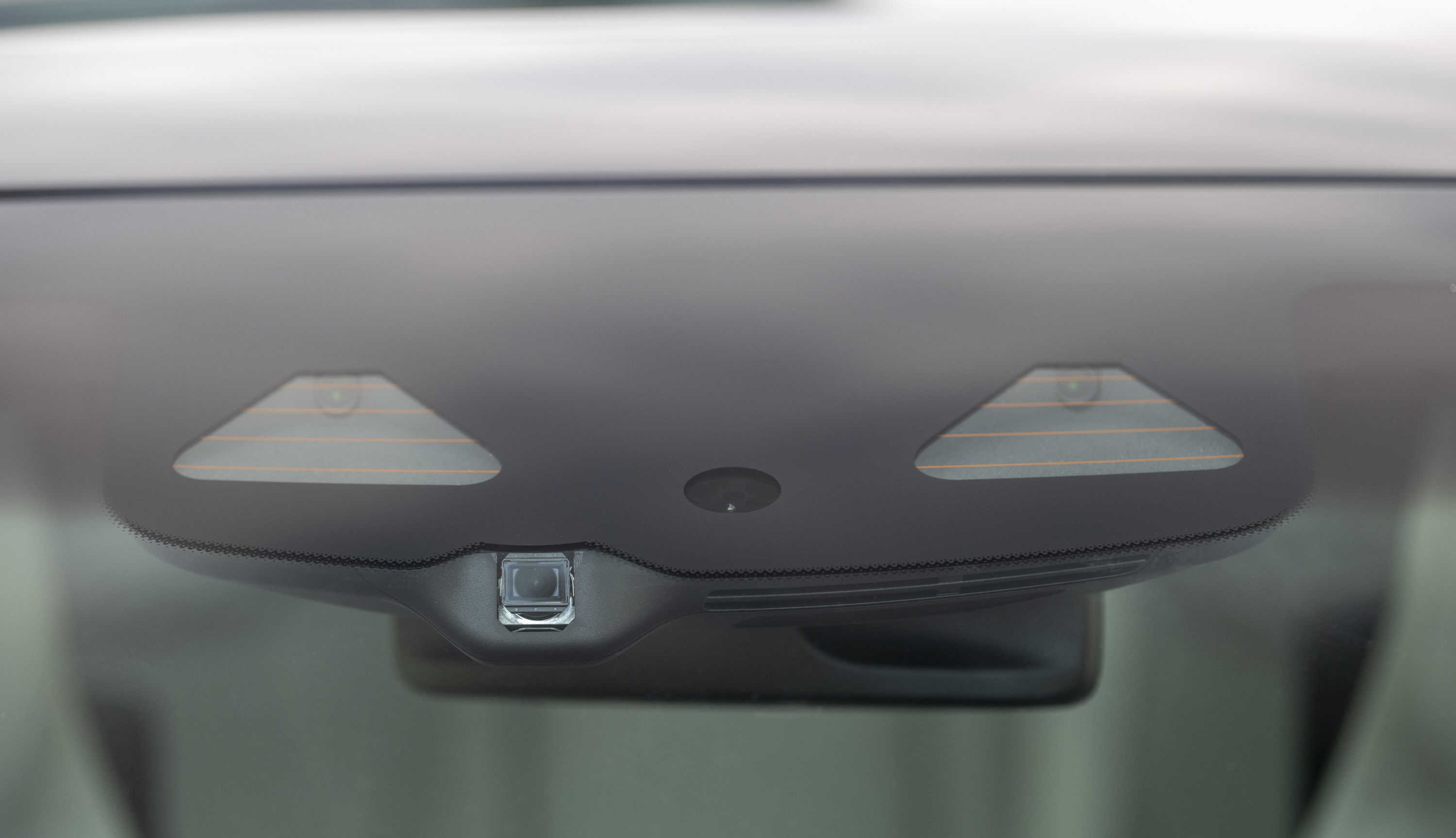
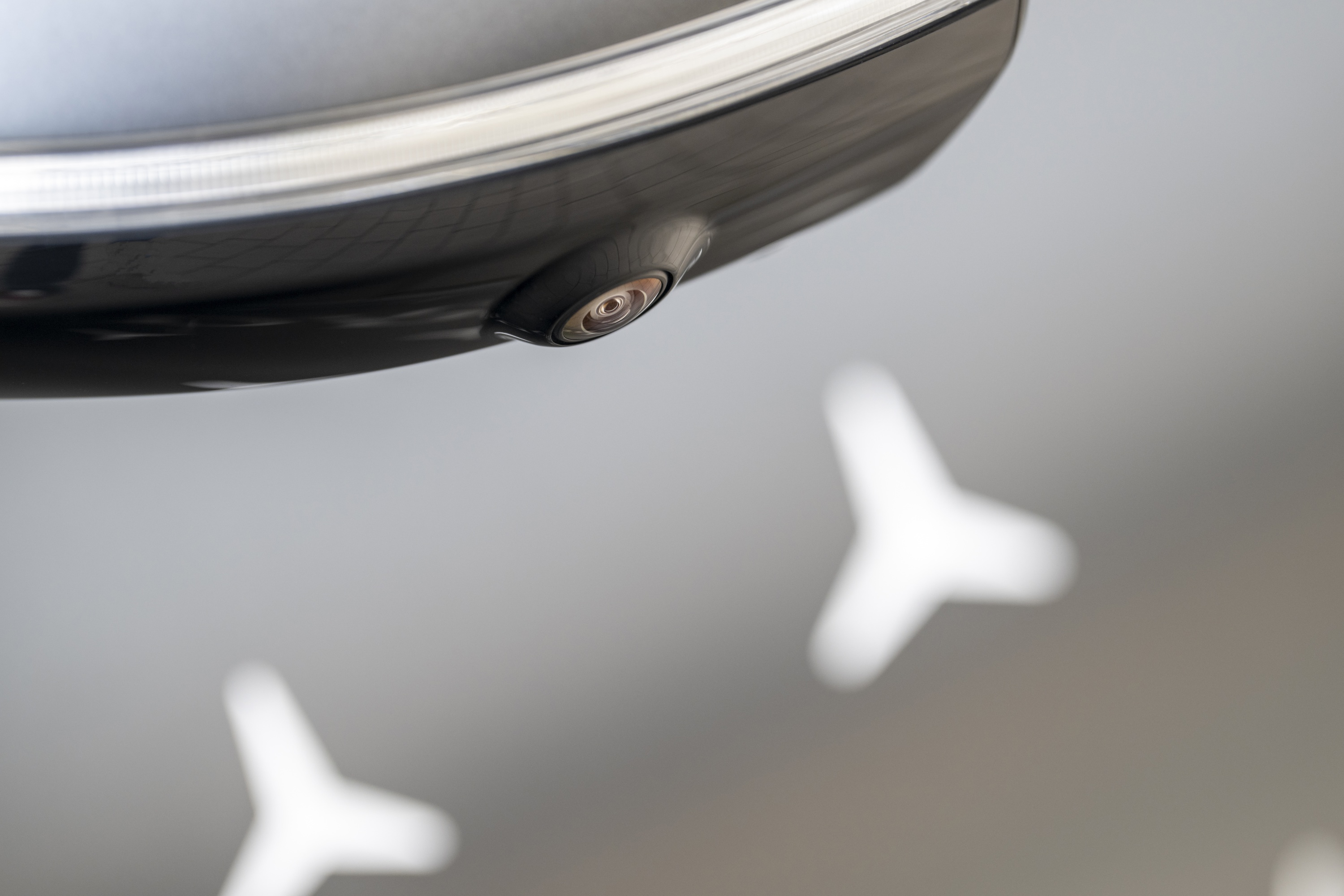
Forward cameras are commonly mounted behind the windshield. Surround-view cameras cover the sides, corners and rear. Interior cameras monitor the driver or occupants. Some systems use stereo pairs with a known baseline; others estimate scene geometry from a single camera over time.
Where cameras are strongest
Visible-light cameras carry dense angular detail and texture. That makes them especially useful for:
- lane and road-edge detection;
- traffic-sign text and symbol recognition;
- traffic-light state and lane association;
- vehicle, cyclist, pedestrian and animal classification;
- drivable-space and obstacle-boundary estimation;
- visual localization against landmarks;
- parking views and recorded video;
- driver gaze, attention and drowsiness estimation.
These are software outputs, not direct camera measurements. Performance depends on training data, scene novelty, calibration, thresholds and the interaction with the rest of the vehicle.
Depth from cameras
The statement “cameras cannot measure distance” is inaccurate.
- Stereo vision estimates depth from disparity between synchronized, calibrated cameras.
- Structure from motion uses camera or object movement across frames.
- Known geometry uses lane width, horizon, object dimensions or other constraints.
- Machine-learned monocular depth estimates scale from patterns learned in data.
These methods can produce useful metric distance. Their uncertainty can grow with low texture, glare, occlusion, small baselines, distant objects, calibration error or unfamiliar scenes. Radar and lidar obtain range from signal time or frequency behavior more directly, so combining modalities can constrain some vision ambiguities. See Sensor fusion.
Exterior camera roles
Forward cameras commonly contribute to lane departure warning, lane centering, forward collision warning, automatic emergency braking, speed-limit assistance and traffic-control recognition. A camera can identify that a light is red, but a vehicle must also determine which signal controls its path, where to stop and whether the feature is permitted to act.
That complete chain can be implemented in a supervised Level 2 system. Recognition of traffic lights or stop signs does not make the vehicle Level 3 or autonomous; the human/system responsibility described in SAE Level 2 versus Level 3 remains decisive.
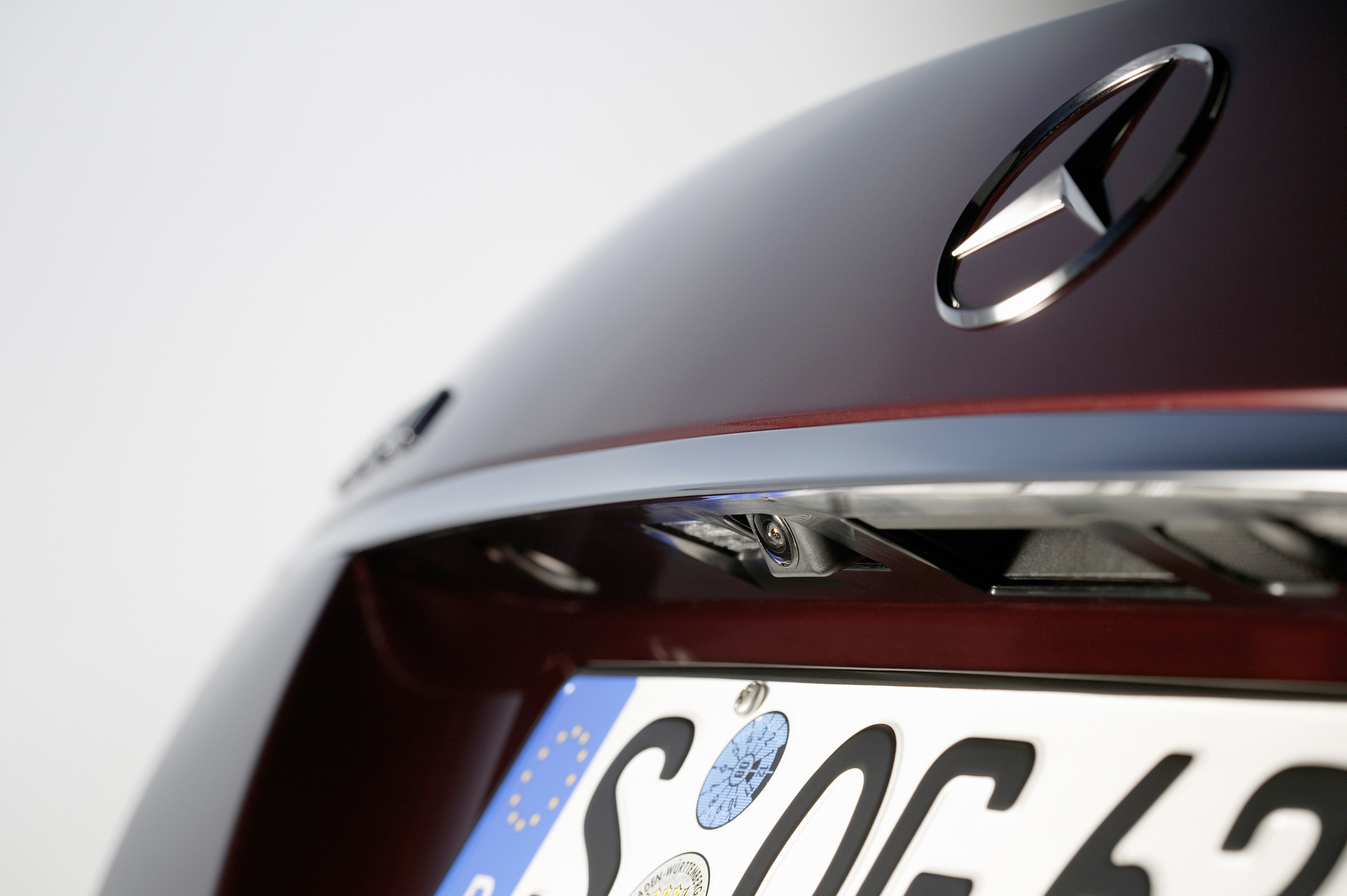
Rear and side cameras provide reversing views, blind-area context and surround visualization:
Interior cameras are a different safety channel
A driver-monitoring camera observes the person rather than the road. Depending on its illumination and software, it may estimate gaze direction, eyelid closure, head pose, seat occupancy or distraction.
This is critical for supervised assistance because the vehicle needs evidence that the driver can perform the required fallback. Steering-wheel torque alone is not the same measurement as visual attention. Interior monitoring also raises privacy, data-retention and demographic-performance questions that should be evaluated separately from exterior perception.
Failure modes
Cameras depend on light reaching a clean optical path. Common challenges include:
- darkness or low contrast;
- direct sun, headlight glare and rapid exposure transitions;
- rain, snow, fog, spray, condensation, dirt and ice;
- worn lane markings and unusual traffic-control layouts;
- motion blur, compression, rolling-shutter effects and lens flare;
- partial occlusion or a changed mounting angle.
Research on adherent rain shows that water on the optical surface can affect vision-based object detection. See SAE: effect of adherent rain on vision-based object detection. Tesla's owner documentation also lists contamination, weather, glare and low light as possible causes of degraded camera-based features at Tesla owner's manual: camera limitations and troubleshooting. These mechanisms apply broadly even though implementations differ.
Camera-only is an architecture, not a verdict
Multiple cameras and strong software can support advanced driver assistance and automated-driving research. A smaller modality set can reduce hardware, packaging and fusion complexity. It also concentrates more of the safety argument on vision performance and its failure detection.
The human-eyes analogy is incomplete, and fitting radar or lidar is not proof that another system is safer. Camera-only vs multimodal sensing compares camera-only and multimodal approaches. How to validate sensor and perception claims explains the evidence needed to move beyond architecture claims.
Calibration and maintenance
Windshield or body repair can change camera alignment. A blocked view can be obvious to a driver yet difficult for software to diagnose in every case. Vehicle-specific calibration, cleaning and warning behavior are covered in Calibration, cleaning and sensor health.
A useful camera specification therefore includes more than megapixels: field of view, angular resolution, dynamic range, low-light behavior, latency, calibration stability, cleaning provisions and performance of the deployed perception software.