
Audi A2 e-tron - What do we know
Audi A2 e-tron - What do we know
Audi has confirmed the A2 e-tron as a new all-electric entry-level model family in the compact class, with its world premiere scheduled for autumn 2026. It will be built at Audi's main plant in Ingolstadt, making it the second electric model produced there after the Q6 e-tron. The A2 e-tron is intended to make premium electric mobility more accessible in a smaller, more city-friendly format.
That already makes it one of the more significant additions to Audi's EV lineup. The brand has expanded its electric range with larger and more expensive models — the Q8 e-tron, Q6 e-tron, e-tron GT — but has lacked a compact EV positioned as a genuine entry point. The A2 e-tron is meant to fill that gap.
What has been confirmed
Audi has confirmed very little beyond the basics. The A2 e-tron will be fully electric, it sits in the compact class, it will be manufactured in Ingolstadt, and it will make its public debut in autumn 2026. Audi has also released an early silhouette sketch showing an aerodynamically sloped roofline with a distinctive rear spoiler that echoes the original A2.
No technical specifications have been published. There is no confirmed platform, battery size, range, charging speed, power output, pricing, dimensions, or body style. What follows is based on informed inference from the Volkswagen Group's current EV strategy.
The A2 name
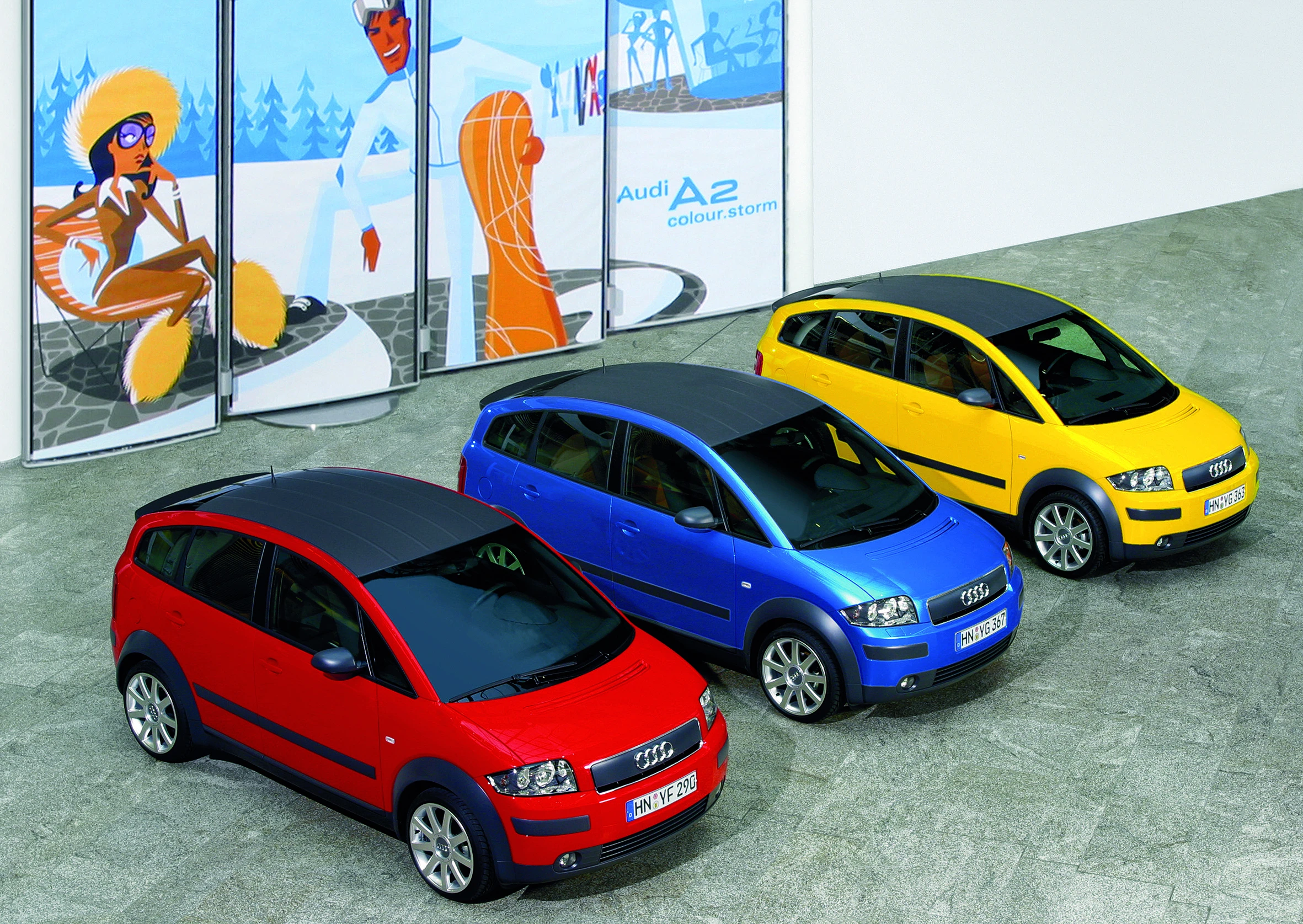
The original Audi A2 was produced from 1999 to 2005. It was a compact car built with lightweight aluminum construction, known for strong efficiency and smart packaging. It was not a big seller, but it earned a lasting reputation as one of Audi's more clever and forward-thinking designs. The name is a deliberate callback — Audi is linking the new model to efficiency and urban usability rather than performance or luxury.
Platform and drivetrain
Audi has not announced the platform. Based on timing, size class, and Volkswagen Group's broader rollout strategy, the A2 e-tron is likely related to the MEB+ architecture used by the upcoming Volkswagen ID. Polo and ID. Cross. That platform uses front-wheel drive in its compact applications, which would be a credible baseline for an entry-level A2 e-tron.
If the A2 e-tron does use MEB+, it would most likely run a 400-volt electrical architecture rather than the 800-volt PPE system used by larger Audi models like the Q6 e-tron and e-tron GT. The compact, accessible positioning of the A2 e-tron points toward the mainstream MEB side of the Volkswagen Group portfolio, not the premium PPE side.
Whether Audi will offer an all-wheel-drive quattro variant is unknown. The MEB family supports multiple drivetrain layouts, so it is technically possible, but there is no indication yet of motor count, trim strategy, or whether quattro will be available at launch.
What it could inherit from MEB+
If the platform assumption is correct, the A2 e-tron could share several traits with Volkswagen's newest compact EVs. The ID. Cross, for example, offers two battery options (37 kWh LFP and 52 kWh NMC), DC fast charging up to 105 kW, and motor outputs ranging from 85 kW to 155 kW. The newest MEB+ generation also brings updated software, one-pedal driving, and newer driver assistance functions.
Audi would likely differentiate with its own interior design, materials, and infotainment approach, but the underlying technical package could be similar. This should be treated as a reasonable expectation based on platform sharing, not a confirmed Audi specification.
Launch timing
Audi has confirmed the world premiere for autumn 2026. That means the full reveal, with technical specifications and pricing, is expected later this year. Delivery timing and market availability have not been announced. European markets are the most likely first priority given the car's urban focus and the segment's importance in Europe.
What is still unknown
Almost everything beyond the name and production location:
- Platform confirmation
- Battery size and chemistry
- Range (WLTP or EPA)
- Charging speed
- Motor output and drivetrain layout
- Dimensions and body style (hatchback, crossover, or both)
- Interior design and technology
- Driver assistance features
- Pricing
- Market availability and delivery timing
- Whether "model family" means multiple body styles
This article will be updated as more details are released.