
Volkswagen ID. Cross - Wat weten we
Volkswagen ID. Cross - Wat weten we
Volkswagen heeft de ID. Cross bevestigd als een compacte elektrische SUV die de T-Cross in het aanbod zal vervangen. Gebouwd op het doorontwikkelde MEB+-platform met voorwielaandrijving, richt hij zich op het segment van compacte crossovers met hoge verkoopvolumes in Europa met een vanafprijs van €28,000. Productie gaat van start in het najaar van 2026.
De ID. Cross neemt een positie in onder de ID.4 en deelt zijn platform met de aanstaande ID. Polo. Samen vormen deze twee modellen Volkswagens zet op kleinere, betaalbaardere elektrische auto's — het segment waar de volumeverkoop daadwerkelijk plaatsvindt.
Wat is bevestigd
Volkswagen is ongewoon specifiek geweest met de ID. Cross en heeft afmetingen, batterijopties, motorvermogens, laadsnelheden en prijzen bekendgemaakt voorafgaand aan de volledige onthulling.
De bevestigde cijfers: een lengte van 4,153 mm op een wielbasis van 2,601 mm, twee batterijopties (37 kWh LFP en 52 kWh NMC), tot 450 km WLTP-actieradius op de grotere batterij, snel DC-laden tot 105 kW en drie motoropties variërend van 85 kW tot 155 kW. Alle versies hebben voorwielaandrijving.
Platform en afmetingen
De ID. Cross is gebouwd op het MEB+-platform, een evolutie van de MEB-architectuur die door de ID.4 en ID.5 wordt gebruikt, maar opnieuw geconfigureerd voor voorwielaandrijving en kleinere voertuigen. Het deelt dit platform met de ID. Polo.
De keuze voor voorwielaandrijving is een weloverwogen beslissing voor dit segment: het vereenvoudigt de indeling, verlaagt de productiekosten en verbetert de efficiëntie in stedelijke en voorstedelijke ritten die deze klasse domineren.
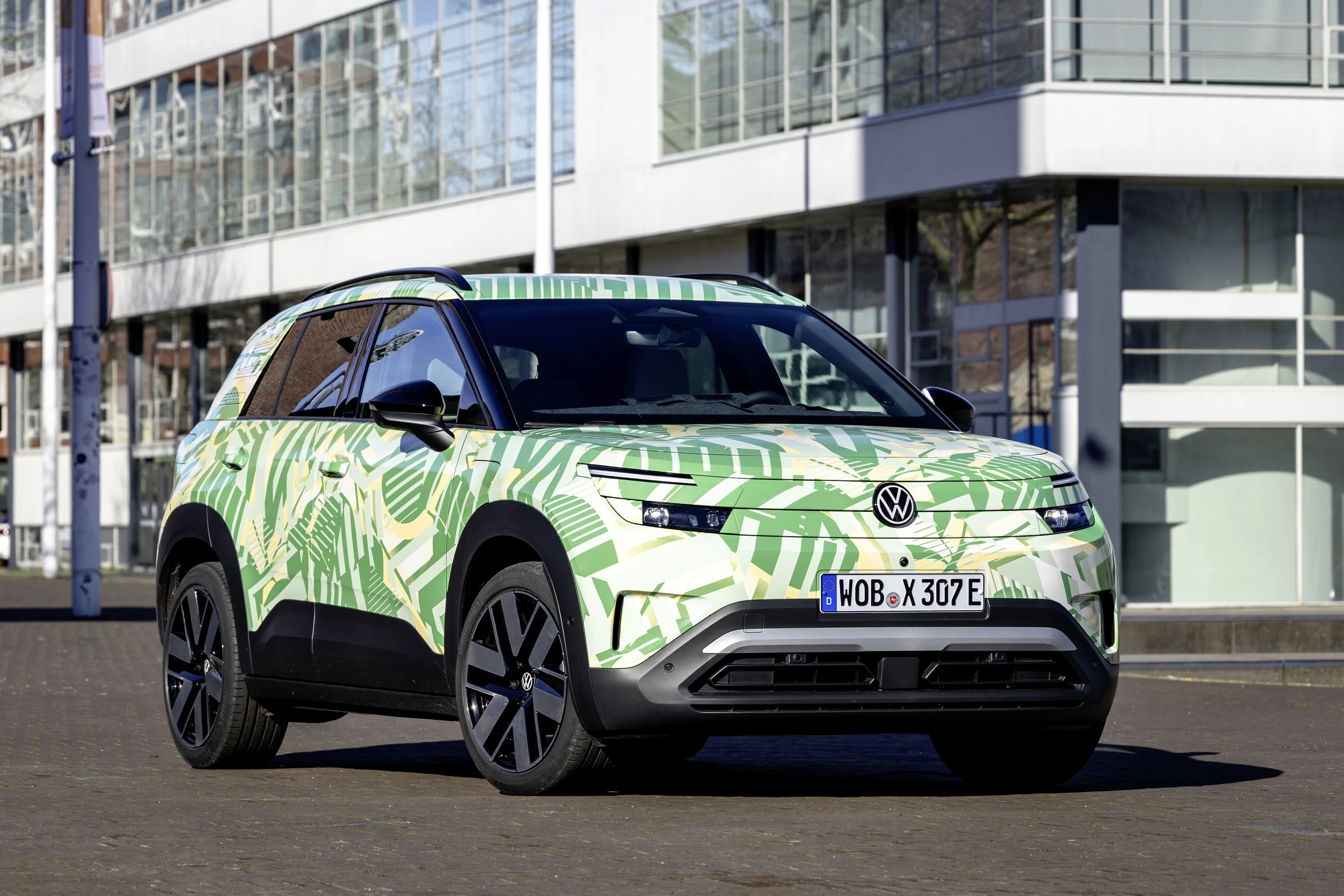
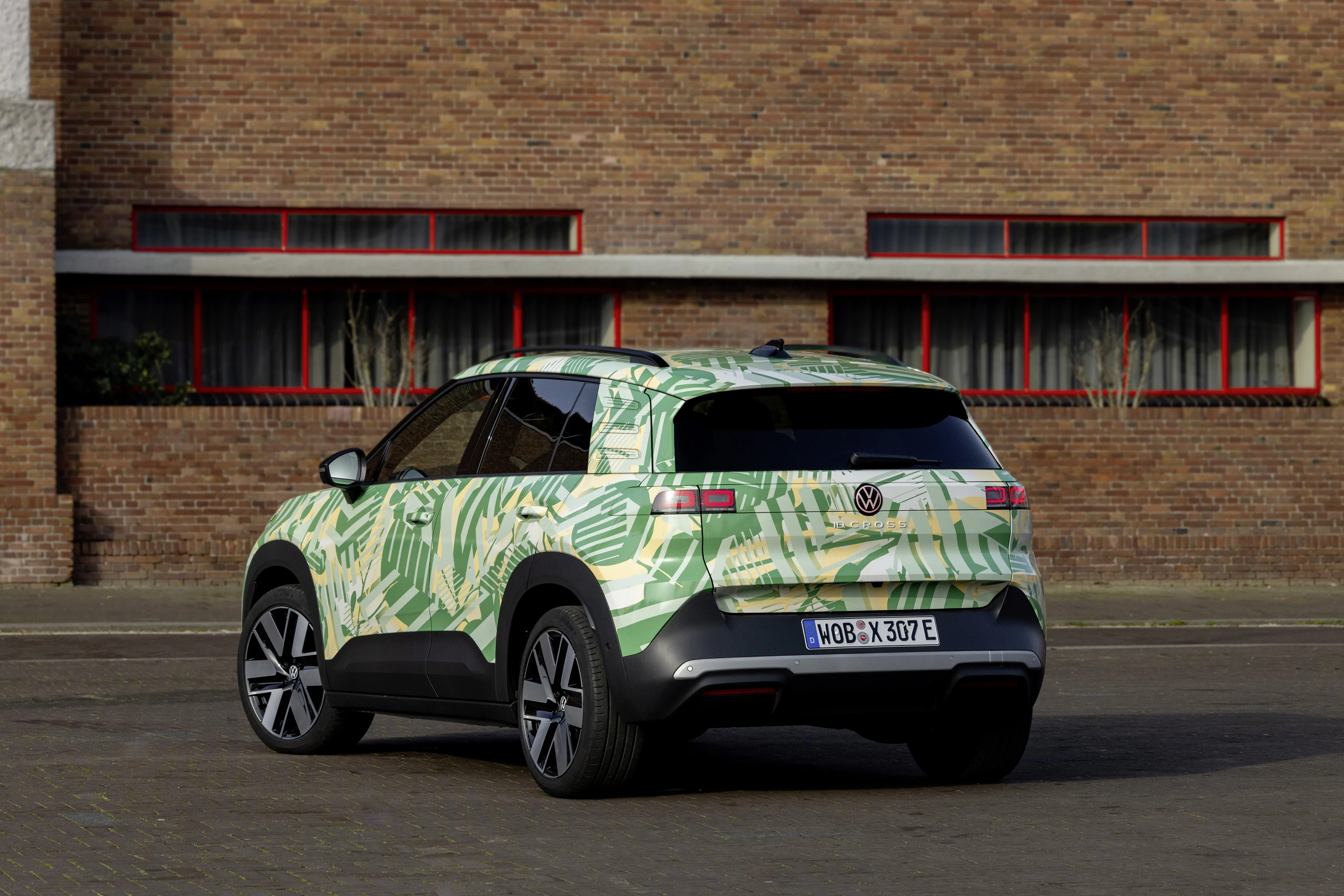
Met een lengte van 4,153 mm, een breedte van 1,794 mm en een hoogte van 1,581 mm is de ID. Cross een échte compacte SUV. De wielbasis van 2,601 mm is lang in verhouding tot de totale lengte, wat zich zou moeten vertalen in redelijke binnenruimte voor deze maat. De bagageruimte achter de achterstoelen bedraagt 475 liter en breidt uit tot 1,340 liter met neergeklapte stoelen. Er is een kleine frunk van 22 liter. De trekcapaciteit is vastgesteld op 1,200 kg.
De verhoudingen zijn rechtopstaand en conventioneel — korte overhangen, een hoge zitpositie en robuuste designelementen. Volkswagen geeft hier duidelijk de voorkeur aan vertrouwdheid boven experimenteel design.
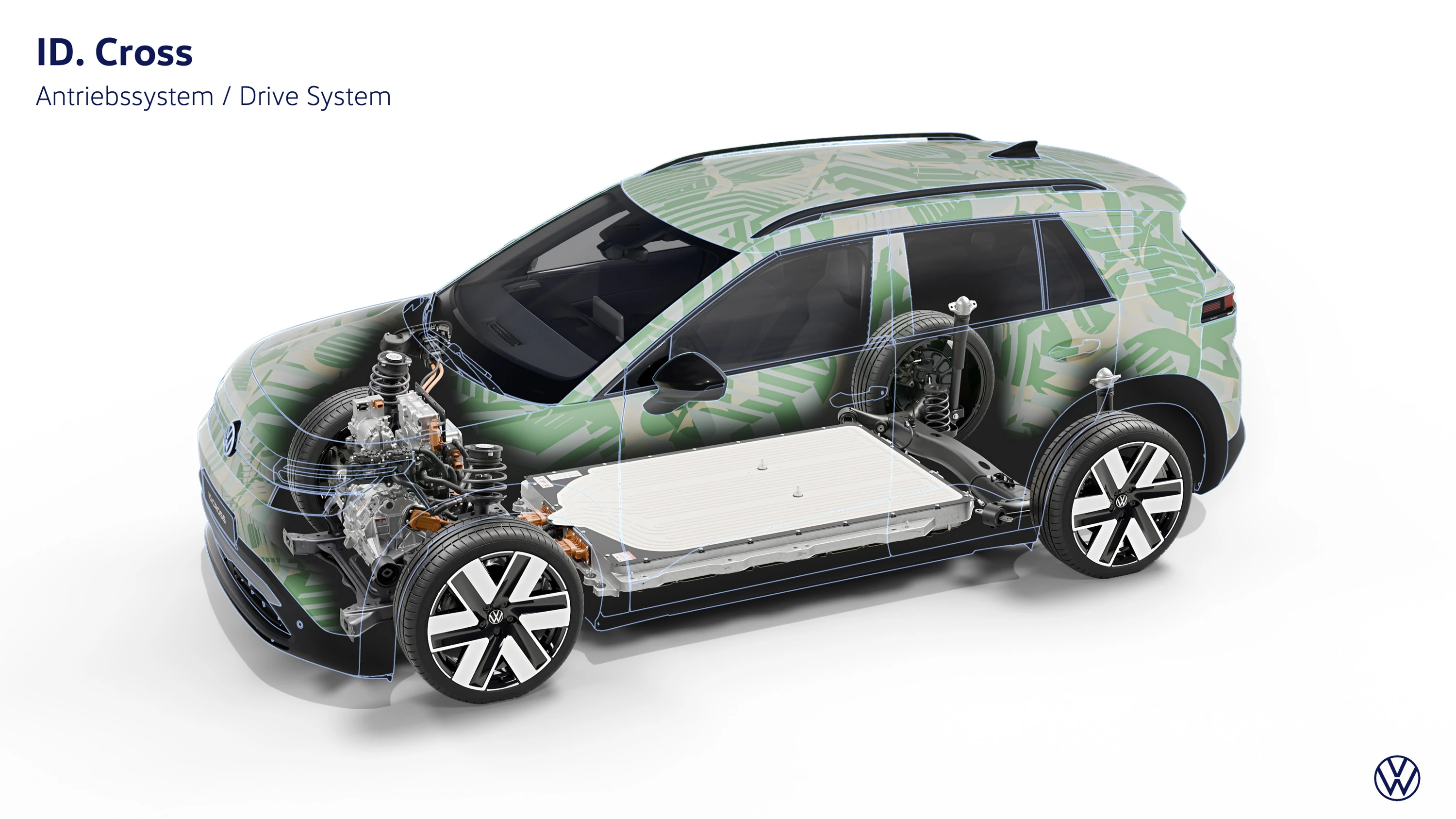
Batterij, laden en aandrijflijn
Twee batterijpakketten zijn bevestigd. Het instapmodel met 37 kWh gebruikt LFP-chemie en biedt lagere kosten en betere duurzaamheid ten koste van de energiedichtheid. Het 52 kWh-pakket gebruikt NMC-chemie voor een hogere energiedichtheid en een grotere actieradius.
De actieradius van de 52 kWh-batterij bedraagt tot 450 km volgens de WLTP-cyclus. Volkswagen heeft geen actieradius voor de 37 kWh-variant gepubliceerd, maar op basis van de efficiëntie van het platform en het kleinere pakket is iets rond de 300 km een redelijke verwachting.
Snel DC-laden piekt op 90 kW voor het 37 kWh-pakket en op 105 kW voor het 52 kWh-pakket. Het 37 kWh-pakket laadt van 10 tot 80 procent in 27 minuten; het 52 kWh-pakket doet hetzelfde in 24 minuten. AC-laden wordt verwacht op 11 kW. Dit zijn geen segmentleidende laadsnelheden, maar ze zijn adequaat voor de betreffende batterijformaten.
Drie motoropties zijn beschikbaar, allemaal voorin gemonteerd:
- 85 kW (116 PS) — instapmodel
- 99 kW (135 PS) — middensegment
- 155 kW (211 PS) — topvermogen, met 290 Nm koppel
De 155 kW-motor werd bevestigd op het concept. Het is waarschijnlijk dat het 37 kWh-pakket wordt gecombineerd met de twee lagere vermogens, terwijl de 52 kWh-batterij over het hele gamma beschikbaar is, maar Volkswagen heeft de exacte combinatie van aandrijflijn en batterij nog niet bevestigd.
Interieur en technologie
Volkswagen heeft minder van het interieur getoond dan van de technische specificaties, maar de belangrijkste details wijzen op een meer conventionele aanpak dan bij eerdere ID.-modellen.
Het instrumentencluster is een digitaal display van 10,25 inch, gecombineerd met een 13-inch infotainmentscherm. Fysieke knoppen keren terug voor belangrijke bedieningselementen zoals klimaat en volume — een direct antwoord op kritiek op de alleen-aanraakinterfaces die werden gebruikt in de ID.3 en ID.4. Het softwareplatform wordt naar verwachting gedeeld met nieuwere modellen in de line-up, wat moet resulteren in een sneller en responsiever interface dan de vorige generatie.
Buiten de schermen en bedieningselementen heeft Volkswagen niet veel bekendgemaakt over materialen, zitopties of specifieke rijassistentiefuncties. Het concept toonde 20-inch velgen, hoewel de productieversies waarschijnlijk kleiner zullen beginnen.
Prijzen en marktpositie
De ID. Cross begint bij €28,000 in Europa, wat ongeveer $32,000 is tegen de huidige wisselkoersen. Dat plaatst hem onder de ID.4 en direct in het gebied waar de meeste compacte SUV's worden verkocht. Ter context: de vergelijkbaar geprijsde Citroën ë-C3 Aircross en de aanstaande Renault 4 E-Tech mikken op een vergelijkbare prijsklasse, maar met kleinere batterijen en lagere laadsnelheden.
Volkswagen richt zich duidelijk op massale adoptie. De combinatie van een instapprijs onder de €28,000 met de LFP-batterij en een NMC-optie met een grotere actieradius voor kopers die dat nodig hebben, dekt de twee meest voorkomende gebruiksscenario's: een betaalbare stadsauto en een praktische alleskunner.
Lancering
Volkswagen heeft een marktintroductie in het najaar van 2026 bevestigd. De ID. Cross volgt de ID. Polo in de uitrol van de MEB+-familie voor kleine auto's. Europese markten komen eerst aan bod; beschikbaarheid in andere regio's is nog niet bevestigd.
Wat is nog onbekend
- Actieradius voor de 37 kWh-batterij
- Exacte combinaties van aandrijflijn en batterij per uitvoering
- Interieurmaterialen en comfortfuncties
- Details van het rijassistentiepakket
- Beschikbaarheid buiten Europa
- Volledige uitsplitsing van uitvoeringsniveaus en optieprijzen
- Gewichtscijfers
Dit artikel wordt bijgewerkt zodra er meer details beschikbaar komen.