
Stalks and Column Controls
Column stalks place stable, shaped controls within finger reach of the steering wheel. Their main HMI advantage is not tradition; it is that drivers can often identify and operate them through position, movement, and tactile feedback while keeping their gaze forward.

Common stalk functions
A vehicle may use one or more stalks for:
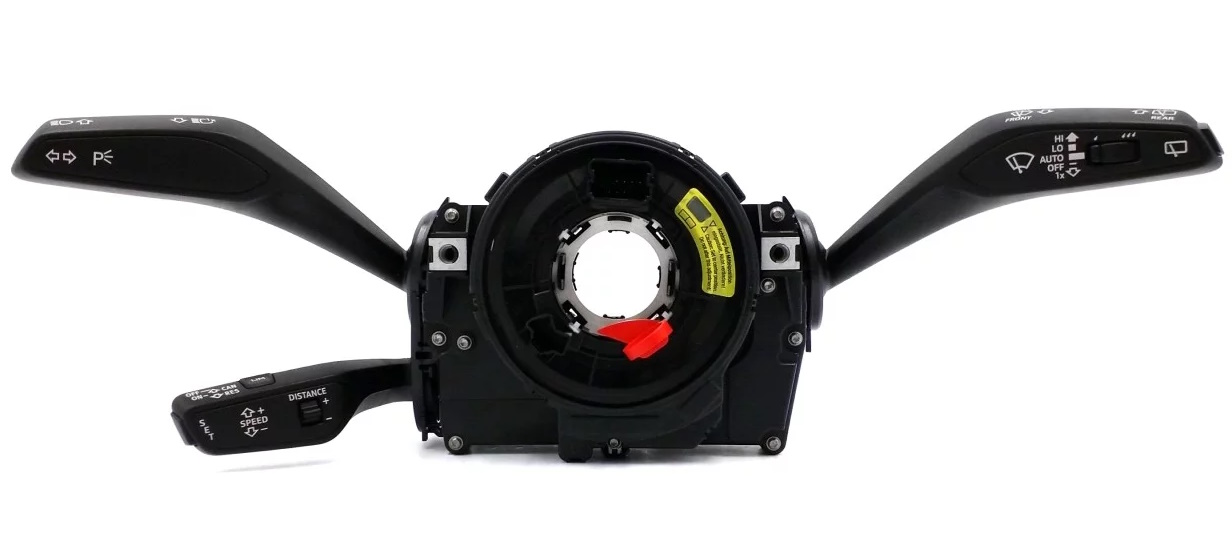
- turn indicators and a lane-change flash;
- high beam, headlight flash, or lighting modes;
- front and rear wipers, washers, and intermittent timing;
- cruise control, following distance, or a speed limiter;
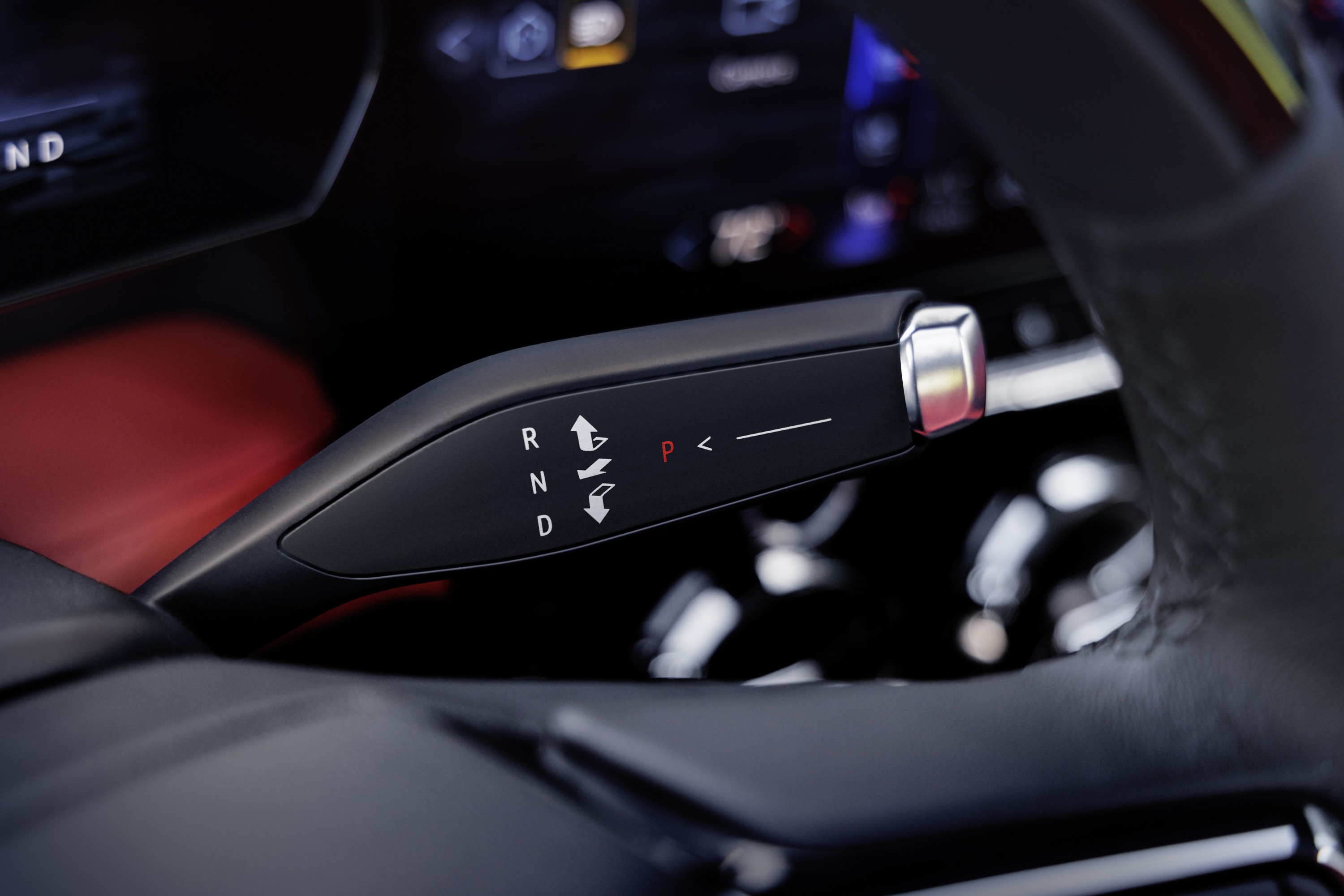
- Drive, Neutral, Reverse, and Park selection.
The exact mapping varies by market and model. Some manufacturers combine turn signals, lights, and wipers on one stalk; others divide functions across both sides or provide a separate cruise stalk.
Why the design works
A stalk has a fixed position relative to the wheel, a distinct shape, and movement along a constrained path. Detents can separate a brief lane-change indication from a latched turn signal. A rotary collar can adjust wiper interval. Pull, push, up, and down movements can represent separate functions without filling the wheel spokes.
These benefits depend on consistency. A short movement and a long movement should not be easy to confuse. A multi-function collar needs readable markings. A momentary electronic stalk needs clear visual and audible confirmation because its physical position may return to centre instead of showing the selected state.
UN Regulation No. 121 addresses the location and identification of controls, tell-tales, and indicators in markets applying it. ISO 2575 specifies conventional symbols intended to make controls and tell-tales easier to identify across vehicles. UNECE — UN Regulation No. 121 on controls, tell-tales, and indicators ISO 2575:2021 — Symbols for controls, indicators, and tell-tales
Turn signals, wipers, and gears
Turn-signal operation is unusually sensitive to wheel position. A control on the wheel rotates during a junction or roundabout; a column stalk remains in the same place. Cancellation behaviour also matters. Automatic cancellation that occurs too early or too late forces a second action and can leave the driver uncertain about what other road users see.
Wipers need direct adjustment as visibility changes. Automatic rain sensing can reduce workload, but the driver still needs an obvious override and a clear way to select sensitivity, continuous wiping, washing, and the rear wiper where fitted.
A gear stalk can free console space and make Drive and Reverse reachable without looking down. The interface must still distinguish direction, Neutral, Park, and any automatic parking behaviour. A momentary selector needs a prominent state indication because lever position alone does not reveal the selected gear.
Stalkless layouts
Some production vehicles move turn signals, wipers, or gear selection to steering-wheel controls and screens. The layout can reduce hardware and create a clean column, but it removes a familiar fixed reference.
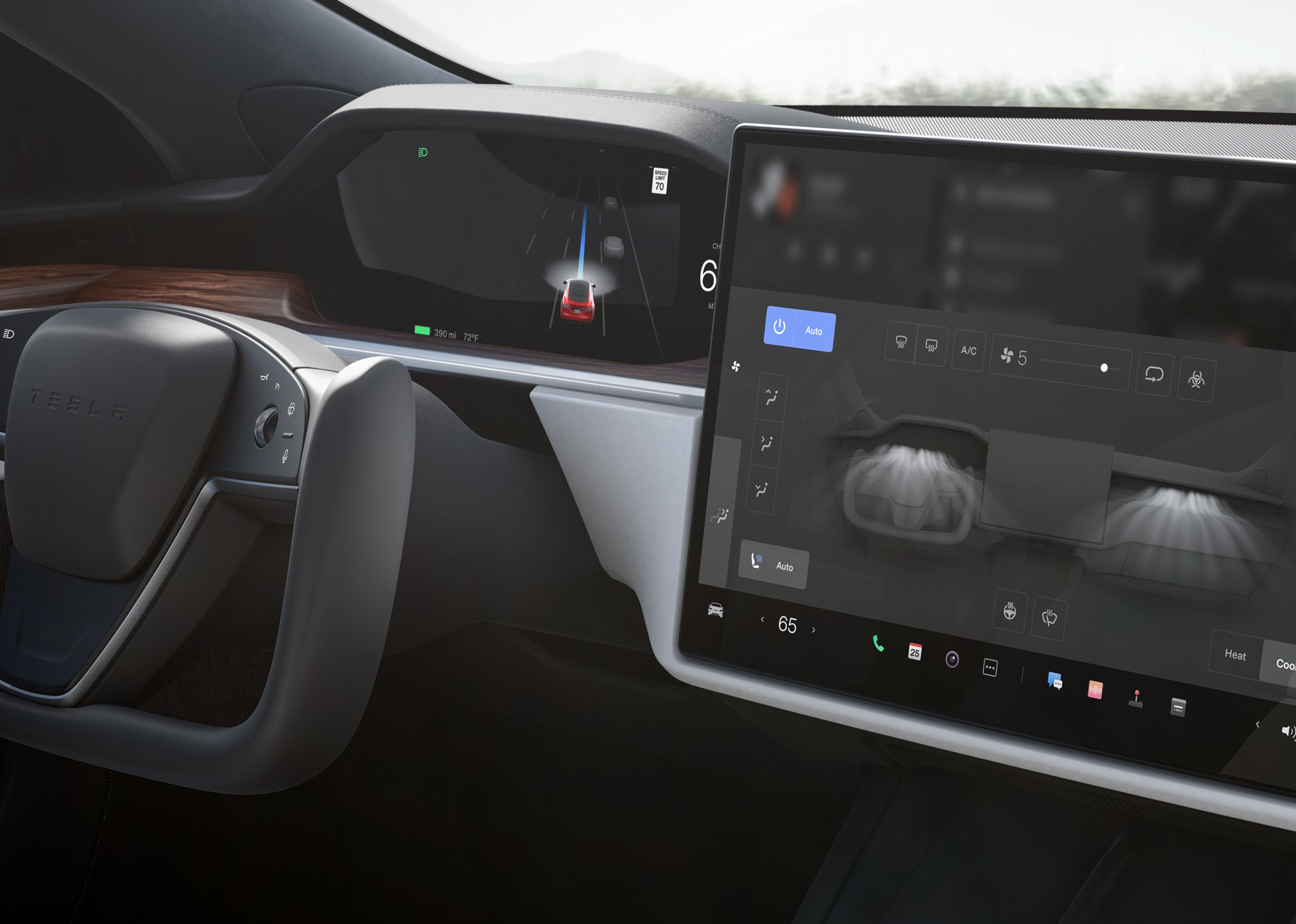
On-wheel turn controls rotate with the wheel, which can make their position harder to identify during large steering inputs. Automatic gear-direction prediction can reduce routine input, but the driver needs an immediate manual override when the prediction is wrong or the situation is ambiguous. The relevant test is not visual minimalism; it is reliable operation in junctions, roundabouts, parking manoeuvres, poor weather, and unusual traffic layouts.
The following retained demonstration shows one reviewer’s experience with a stalkless layout. It is an illustration, not a controlled safety study.
Euro NCAP’s 2026 general-control assessment examines input type, access path, tactile identification, and visible status for selected driving functions. It provides a more repeatable basis for evaluating new layouts than assuming that either a stalk or a screen is inherently superior. Euro NCAP — 2026 Safe Driving protocols
What buyers should check
- Can you identify each stalk and movement by touch?
- Are the indicator detents and lane-change action distinct?
- Can the wipers be overridden immediately without opening a menu?
- Is rear-wiper operation obvious?
- Does a momentary gear stalk give unmistakable direction and Park feedback?
- Do wheel-mounted replacements remain locatable while the wheel is turned?
- Is there a direct manual gear-selection path if prediction fails?
- Are automatic cancellation and rain sensing predictable enough that they reduce rather than add work?
A good stalk turns position and movement into memory. If a manufacturer removes that reference, the replacement must provide equally dependable discovery, operation, and confirmation.