
Safety
A safe EV does more than survive a laboratory crash. It combines systems that help the driver avoid danger, a structure and restraints that manage impact forces, and high-voltage safeguards that support occupants and rescuers after a collision.
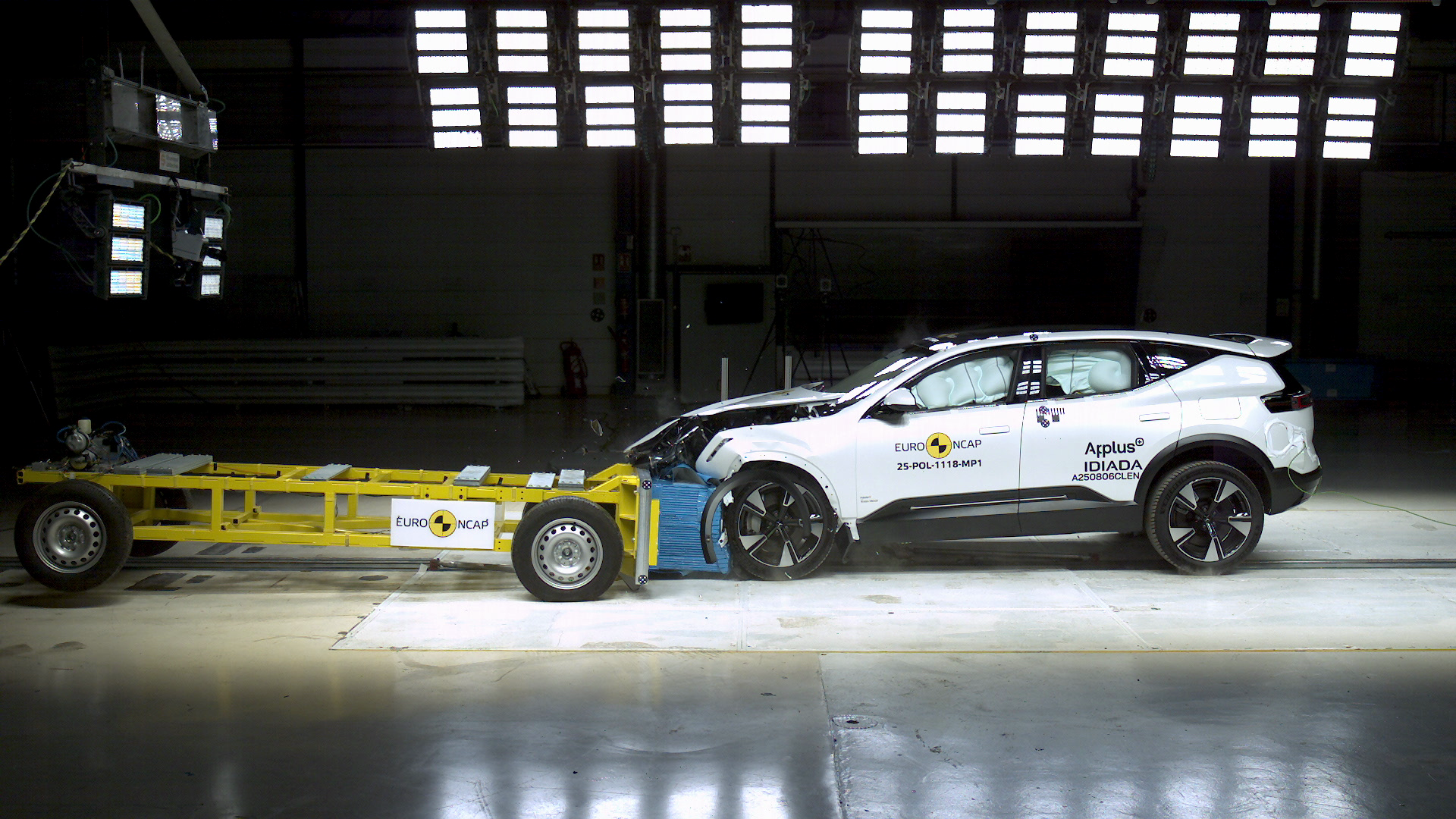
Safety is a system
Vehicle safety is best understood as a sequence, not a single feature or star rating:
- Safe driving systems support attention, visibility, speed control, and predictable vehicle behaviour.
- Crash avoidance systems warn the driver or intervene when a collision becomes likely.
- Crash protection uses the body structure, seat belts, airbags, seats, and head restraints to preserve survival space and manage loads on the body.
- Post-crash safety isolates hazards, enables an emergency call, helps occupants leave the vehicle, and gives rescuers the information they need.
Euro NCAP adopted these four stages as the basis of its 2026 rating structure. They also make a useful framework for judging an individual vehicle: strength in one stage cannot fully compensate for a serious weakness in another.
Before a crash: active safety and ADAS
Active safety covers the vehicle functions intended to maintain control or prevent a collision. That begins with fundamentals such as tyres, brakes, lighting, steering, stability control, visibility, and a clear driver interface. It also includes advanced driver-assistance systems.
The driver-assistance systems (ADAS) series explains these systems in detail. Important crash-avoidance functions include forward collision warning, which alerts the driver to a developing conflict; automatic emergency braking, which can brake when the driver does not react in time; lane-keeping assistance, which can warn or intervene during an unintended lane departure; and driver monitoring, which checks whether the driver remains attentive and able to respond.
These systems have operating limits. Weather, road markings, sensor obstruction, speed, target type, and driver behaviour can all affect performance. Assistance reduces risk; it does not make the vehicle self-driving or remove the driver's responsibility.
During a crash: structure and restraints
Passive safety takes over when a collision cannot be avoided. The Structural safety creates controlled deformation outside the cabin while trying to preserve survival space around the occupants. It must manage frontal, side, rear, rollover, and underbody loads without creating dangerous intrusion.
Seat belts are the primary restraints. They hold occupants in a position where the structure and other restraints can protect them, while pretensioners and load limiters manage movement and belt force. Airbags supplement the belts by cushioning specific contact areas; they are not substitutes for wearing a belt.
The quality of the complete restraint strategy matters more than the number of airbags or the use of a particular material. Sensors, deployment timing, belt geometry, seat position, airbag coverage, and structural deformation must work together for occupants of different sizes.
EV-specific protection
Battery-electric vehicles add hazards that combustion-engine vehicles do not have: a high-voltage electrical system and a large rechargeable energy-storage system. The pack enclosure, surrounding sills and cross-members, electrical isolation monitoring, contactors or pyrotechnic disconnects, and post-crash procedures all form part of the safety case.
In a qualifying crash, the vehicle may disconnect the traction battery from the high-voltage bus. Physical pack damage can still require monitoring because a damaged cell may develop an internal short circuit or a delayed thermal event. The Battery safety explains cell protection, thermal propagation, high-voltage isolation, and emergency response in more detail.
An EV is not automatically safer or less safe simply because its battery sits in the floor. A low centre of gravity can reduce rollover propensity, and the powertrain layout can give engineers different load paths, but vehicle mass, structure, restraint calibration, pack protection, and crash compatibility still determine the result.
How to judge a vehicle
Start with a current independent rating for the exact model, market, model year, body style, and safety equipment. Then read the category scores and test comments rather than stopping at the headline stars. A vehicle can protect front occupants well yet perform less strongly for rear occupants, vulnerable road users, crash avoidance, or post-crash rescue.
Ratings from different organisations are not interchangeable, and ratings from different years may use different protocols. The Crash testing and safety ratings explains what the main tests measure, how active safety is assessed, and how to read a result without overinterpreting it.
Explore the safety series
- Airbags
- Seat belts
- Structural safety
- Crash testing and safety ratings
- Battery safety
- driver-assistance systems (ADAS) series