Autocar India
4027 reviews
Autocar India: major Indian car journalism with strong local EV relevance
Autocar India is one of India’s best-known automotive publications, with a magazine, website, and large YouTube channel covering the full Indian car and motorcycle market. It is not an EV-only outlet; it reviews petrol, diesel, hybrid, electric, luxury, performance, SUV, motorcycle, scooter, and commercial-vehicle content. For EV viewers, its value lies in placing electric vehicles within the real Indian market rather than treating them as a separate enthusiast category.
The channel is best suited to Indian car buyers who want professional, structured reviews with strong local context. Autocar India covers prices, variants, road conditions, efficiency, aftersales relevance, equipment, ground clearance, ride quality, cabin comfort, and practicality in ways that are specific to India. This is especially important for EVs, where charging infrastructure, climate, traffic, battery warranty, real-world range, government policy, and brand trust can matter as much as the vehicle specification.
Autocar India is closely associated with a wider editorial team rather than one YouTube personality. Hormazd Sorabjee is the editor and one of the most recognisable voices of the brand, while presenters and journalists such as Renuka Kirpalani, Nikhil Bhatia, Shapur Kotwal, Jay Patil, Sergius Barretto, and others appear across reviews, features, comparisons, and podcasts. This gives the channel the feel of a professional automotive publication rather than a single-host review channel.
A major strength of Autocar India is its access and authority in the Indian market. The channel regularly gets early drives, first looks, comparison tests, and detailed reviews of cars that matter to Indian buyers. For EVs, this includes important local-market models from Tata, Mahindra, MG, Hyundai, Kia, BYD, Mercedes-Benz, Volvo, BMW, and newer entrants. The channel also covers India-specific EV developments, such as Maruti Suzuki’s entry into EVs, Tata’s expanding electric lineup, Mahindra’s born-electric SUVs, and the arrival of global EV brands in India.
Autocar India’s EV coverage is practical and buyer-focused. Its website has a dedicated electric-cars section listing EVs available in India, with prices ranging from mainstream models such as the MG Comet to ultra-luxury models such as the Rolls-Royce Spectre. It also publishes real-world EV range tests for mass-market electric cars in India, which is particularly useful because official ARAI or MIDC range figures can differ significantly from what owners experience in traffic, heat, highway use, and mixed driving.
The channel’s geek level is accessible to moderate. Autocar India covers EV-specific topics such as battery size, range, charging, motor output, efficiency, regenerative braking, software, driving modes, and ownership practicality. It can also discuss platform strategy and market positioning in more depth through formats such as the Deep Drive podcast. However, it is not primarily a specialist EV testing channel focused on charging-curve graphs, thermal-management analysis, battery chemistry, diagnostics, or repeatable 1,000 km tests.
The EV stance can be described as pragmatic and mainstream. Autocar India treats EVs as an important and growing part of the Indian market, but it does not approach them as automatically better than combustion, hybrid, or CNG alternatives. Electric cars are judged on whether they make sense for Indian buyers: price, usable range, charging convenience, ride comfort, warranty, practicality, performance, features, and suitability for local conditions all matter.
A distinctive advantage is Indian-market relevance. Many global EV reviews do not answer the questions Indian buyers have: how the car handles rough roads, whether the rear seat is comfortable in chauffeur-driven use, how efficient it is in traffic, whether the price makes sense after incentives, how usable the charging network is, and how the EV compares with strong petrol, diesel, hybrid, or CNG alternatives. Autocar India’s reviews are shaped around those local realities.
Production quality is professional, consistent, and publication-led. The videos are generally well filmed, clearly edited, and structured around established road-test journalism rather than YouTube spectacle. The style is informative and authoritative, with enough polish for mainstream viewers but enough detail for serious car shoppers. The channel’s long-running review playlist and large archive make it useful for comparing models over time.
Autocar India also has a strong wider platform beyond YouTube. Its website includes news, reviews, comparisons, expert reviews, videos, buyer information, and electric-car listings, while its podcasts and feature formats add industry context. This makes the channel more than a video outlet; it is part of a major automotive media ecosystem focused on the Indian market.
The main limitation for EV-focused viewers is that Autocar India is not dedicated solely to electric vehicles. Viewers looking for highly standardized EV range testing, detailed charging-curve analysis, winter EV testing, or charging-infrastructure deep dives may need specialist EV channels. Its India focus is also both a strength and a limitation: Indian buyers get highly relevant advice, while viewers elsewhere may need to adjust for different pricing, specifications, charging networks, and availability.
Overall, Autocar India is one of the most useful general automotive channels for understanding EVs in the Indian market. It is especially valuable for buyers comparing electric cars with petrol, diesel, hybrid, and CNG alternatives under Indian conditions. It is not the most technical EV channel and not an EV-only outlet, but it provides professional, locally relevant EV coverage backed by one of India’s strongest automotive editorial platforms.
Latest reviews
Audi India’s comeback plan | Deep Drive Podcast Ep.124 | Autocar India

Decoding Honda 2-Wheelers' premium strategy for India | Deep Drive Podcast Ep.123 | Autocar India
Kia Syros EV review - The best EV under Rs 20 lakh? | First Drive | Autocar India
Plugging in to PHEVs | Deep Drive Podcast Ep.122 | Autocar India
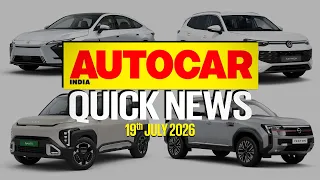
Kia Syros EV revealed, Nissan Tekton launched and more | Quick News | Autocar India
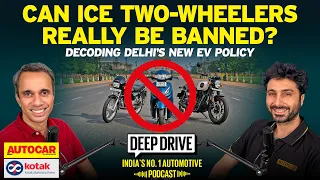
Is Delhi’s EV policy the start of the end for ICE bikes? | Deep Drive Podcast Ep.121| Autocar India
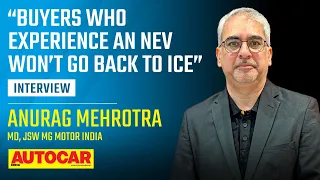
JSW MG’s big plans for BEVs and hybrids - Anurag Mehrotra | Interview | Autocar India
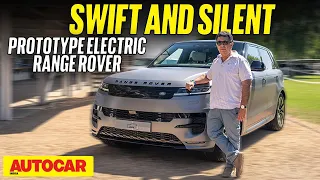
Range Rover Sport EV Prototype - New direction, same approach | Drive | Autocar India
Developing the Jaguar Type 01 - Jon Darlington | Interview | Autocar India
2026 Tata Sierra EV review – Overpriced or good value? | First Drive | Autocar India
What it takes to drive across 13 countries | Deep Drive Podcast Ep.120 | Autocar India
Jaguar Type 01 development, challenges and future plans - Rawdon Glover | Interview | Autocar India
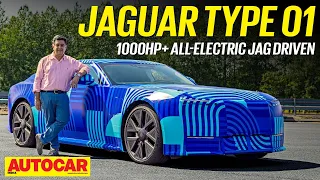
Jaguar Type 01 - Jaguar's first step in a new direction | Drive | Autocar India
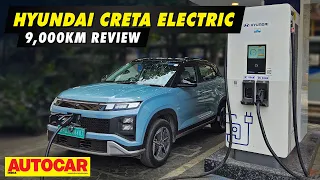
Hyundai Creta Electric - Living with it | Long Term Review | Autocar India
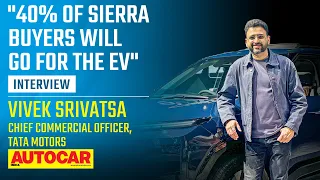
Why Tata Is Betting Big On The Sierra EV - Vivek Srivatsa | Interview | Autocar India
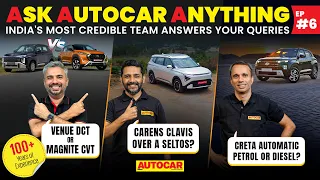
Ask Autocar Anything - Creta Petrol vs Diesel, Kylaq, Punch & More | AAA Ep. 6 | Autocar India
How 4x4 shapes brand image | Deep Drive Podcast Ep.119 | Autocar India
Tata Sierra EV decoded - Range, performance and AWD - Anand Kulkarni | Interview | Autocar India
Tata Sierra EV - Tata’s most exciting EV | First Look | Autocar India
China's growing influence on the cars we buy | Deep Drive Podcast Ep.118 | Autocar India
How flex fuel vehicles impact your pocket | Deep Drive Podcast Ep.117 | Autocar India
Duster rollout strategy, Bridger update & more - Stéphane Deblaise | Interview | Autocar India