
Nivå 2 eller nivå 3: Hvem kjører?
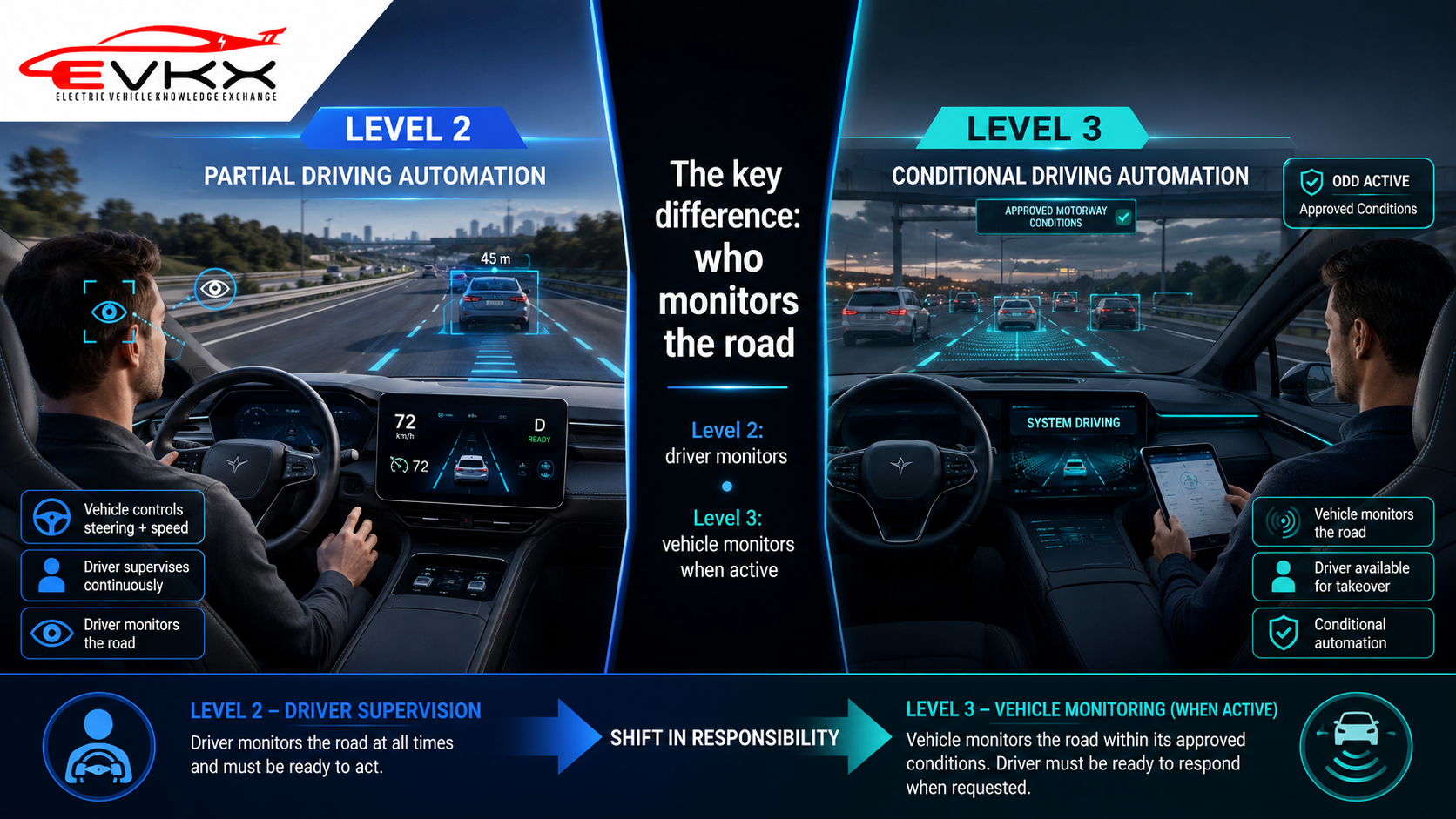
Nivå 2 og nivå 3 kan se like ut fra førersetet, men den avgjørende forskjellen er hvem som må overvåke veien og reagere umiddelbart på farer. På nivå 2 er det mennesket som kjører; på nivå 3 kjører det automatiserte kjøresystemet innenfor et begrenset domene, mens en bruker som er klar til å overta, fortsatt er tilgjengelig.
Nivå 2 er overvåket assistanse
En nivå 2-funksjon utfører sideveis og langsgående styring samtidig. Den kan kombinere adaptiv cruisekontroll, filsentrering, assisterte filskift og navigasjonsstyrte manøvrer.
Føreren har fortsatt ansvaret for å oppdage og reagere på objekter og hendelser. Enkelt sagt må føreren følge med på veien, vurdere om systemet oppfører seg riktig, og gripe inn når det er nødvendig. Funksjonen kan tillate kjøring uten hendene på rattet og likevel kreve at blikket holdes på veien.
Førerovervåking er derfor en del av sikkerhetsdesignet, ikke et bevis på autonomi. Kamerabaserte systemer kan følge blikkretning og hodeposisjon mer direkte enn rattmoment alene. Sterke sikkerhetstiltak bruker også trinnvis skjerpede varsler, nødbremsing og begrensninger som hindrer umiddelbar reaktivering etter gjentatt feilbruk.
Uavhengige tester fra IIHS har vist store forskjeller mellom sikkerhetstiltakene på nivå 2. Vurderingen ser på overvåking, oppmerksomhetspåminnelser, nødprosedyrer, samarbeidende styring og om sentrale sikkerhetsfunksjoner forblir aktive. Testen gjør ikke systemet med høyest vurdering til et automatisert kjøresystem; den vurderer hvor godt en førerstøttefunksjon håndterer sin avhengighet av mennesket.
Nivå 3 endrer kjørerollen
Når en nivå 3-funksjon er aktivert innenfor sitt godkjente domene, utfører den hele den dynamiske kjøreoppgaven, inkludert overvåking av omgivelsene og reaksjon på trafikken.
Personen i førersetet blir en bruker som er klar til å overta. Vedkommende kan rette oppmerksomheten mot en aktivitet som er tillatt av produsenten og lokal lovgivning, men må være mottakelig for en anmodning om å gripe inn. Brukeren kan ikke sove, forlate setet eller anta at systemet fortsetter utenfor sitt domene.
Nivå 3-systemet må gjenkjenne at det nærmer seg en grense, og be om overtakelse i så god tid at brukeren kan gjenvinne situasjonsforståelsen. Hvis brukeren ikke reagerer, trenger kjøretøyet en risikoreduserende strategi i stedet for en brå overlevering.
Derfor har nivå 3-funksjoner vanligvis snevrere vilkår enn modne nivå 2-assistenter. Produsenten må støtte hele kjøreoppgaven og en kontrollert overgang, ikke bare holde bilen i kjørefeltet.
Hendene fri, blikket på veien og blikket bort
Disse betegnelsene beskriver det menneskelige grensesnittet tydeligere enn mange produktnavn:
- Hendene på rattet, blikket på veien: Føreren overvåker og beholder kontakt med eller dreiemoment på rattet.
- Hendene fri, blikket på veien: Føreren kan slippe rattet, men må overvåke veien kontinuerlig. Dette er fortsatt nivå 2.
- Hendene fri, blikket bort: Brukeren kan rette oppmerksomheten mot noe annet mens systemet utfører kjøreoppgaven innenfor sitt domene. Dagens produksjonseksempler er nivå 3.
- Ingen fører nødvendig: Et nivå 4-system utfører både kjøreoppgaven og reservefunksjonen innenfor sitt domene.
«Blikket bort» betyr ikke at systemets instruksjoner kan ignoreres. En nivå 3-bruker må kunne reagere på en anmodning om overtakelse. Hvilke andre aktiviteter som er tillatt, avhenger også av kjøretøyets instruksjoner og lokal lovgivning.
En overtakelse er ikke en vanlig utkobling
På nivå 2 overvåker mennesket allerede. Hvis funksjonen når en grense, må føreren være klar til å gripe inn umiddelbart. Et varsel kan hjelpe, men ansvaret for overvåkingen har hele tiden ligget hos føreren.
På nivå 3 kan brukeren trenge tid til å avslutte en annen aktivitet, se på veien, forstå situasjonen og ta fysisk kontroll. En trygg overgang avhenger derfor av:
- tidlig oppdagelse av en domenegrense som nærmer seg;
- tydelige visuelle, hørbare og haptiske varsler;
- overvåking av at brukeren er tilgjengelig;
- tilstrekkelig overgangstid for situasjonen;
- en definert reaksjon hvis brukeren ikke overtar; og
- et grensesnitt som gjør den aktive modusen entydig.
Det vanskeligste tilfellet er en overgang som utløses av forverrede forhold. Et system bør ikke vente til det allerede har mistet evnen til å oppfatte eller kontrollere situasjonen.
Teknisk rolle er ikke det samme som juridisk ansvar
Det er vanlig å si at «produsenten blir ansvarlig» på nivå 3. Det er for generelt. SAE J3016 fordeler roller i kjøreoppgaven; standarden avgjør ikke sivilrettslig, strafferettslig eller forsikringsmessig ansvar.
Ansvaret avhenger av jurisdiksjonen, det godkjente systemet, om det ble brukt innenfor domenet, kjøretøyets tilstand, hendelsesdata og brukerens og produsentens opptreden. Nivå 3 skaper et annet juridisk og bevismessig spørsmål fordi systemet kjørte mens det var aktivert, men utfallet avgjøres ikke av SAE-nummeret alene.
Dette bør kjøpere kontrollere
Før du betaler for en av funksjonstypene, bør du kontrollere nøyaktig kjøretøy, modellår, maskinvaregenerasjon, programvareversjon og marked. Spør deretter:
- Er funksjonen nivå 2 med blikket på veien eller godkjent nivå 3 der blikket kan rettes bort?
- På hvilke veier og ved hvilke hastigheter kan den aktiveres?
- Hvilke vær-, lys- og trafikkforhold utelukker bruk?
- Hvordan overvåker systemet føreren eller brukeren som er klar til å overta?
- Hva skjer etter ignorerte varsler eller en mislykket overtakelse?
- Er funksjonen inkludert, abonnementsbasert eller bare lovet til senere?
Den riktige sammenligningen er ikke en konkurranse mellom funksjonsnavn. Det er en sammenligning av menneskets rolle, domenet, reservefunksjonen og dokumentasjonen.