
Volkswagen ID. Polo - Hva vet vi
Volkswagen ID. Polo - Hva vet vi
Volkswagen bruker nå navnet ID. Polo i eget mediemateriale, og posisjonerer bilen som den elektriske etterfølgeren til Polo: en kompakt, hverdagslig Volkswagen med vanlig prisnivå og langt mer fokus på brukervennlighet enn noen av de tidligere ID.-modellene. Verdenspremieren er planlagt til slutten av april 2026, med forhåndssalg som starter omtrent samtidig og markedslansering høsten 2026.
ID. Polo plasserer seg i B-segmentet, samme plass som forbrennings-Poloen har konkurrert i i flere tiår. Den er bygget på MEB+-plattformen med forhjulsdrift, tilbyr inntil 450 km WLTP-rekkevidde og koster fra under 25,000 euro. For Volkswagen er dette trolig en av de viktigste elbil-lanseringene i Europa, fordi den retter seg mot den delen av markedet der prisgunstighet og hverdagsbruk er viktigere enn overskriftsytelse.
Hva som er bekreftet
Volkswagen har vært uvanlig detaljert med ID. Polo, og har – lenge før den offisielle premieren – offentliggjort dimensjoner, batterialternativer, motoreffekter, ladetider, priser og til og med interiørdesignfilosofi.
De bekreftede tallene: 4,053 mm lengde på en akselavstand på 2,600 mm, to batteristørrelser (37 kWh LFP og 52 kWh NMC), inntil 450 km WLTP-rekkevidde, hurtig DC-lading fra 10 til 80 prosent på under 23 minutter, og fire motoralternativer fra 85 kW til 166 kW. Startpris under 25,000 euro, selv om grunnmodellen med 37 kWh kanskje ikke kommer før sent i 2026 eller tidlig 2027 — ved lansering vil kun 52 kWh-batteriet til over 30,000 euro være tilgjengelig.
Plattform og størrelse
ID. Polo kjører på MEB+-plattformen med forhjulsdrift, en nøkkelforskjell fra Volkswagens tidligere MEB-biler med bakhjulsdrift som ID.3 og ID.4. Forhjulsdriftsoppsettet er et bevisst valg for dette segmentet: det forenkler pakking, reduserer produksjonskostnadene og forbedrer effektiviteten i by- og forstadskjøring som dominerer denne klassen.
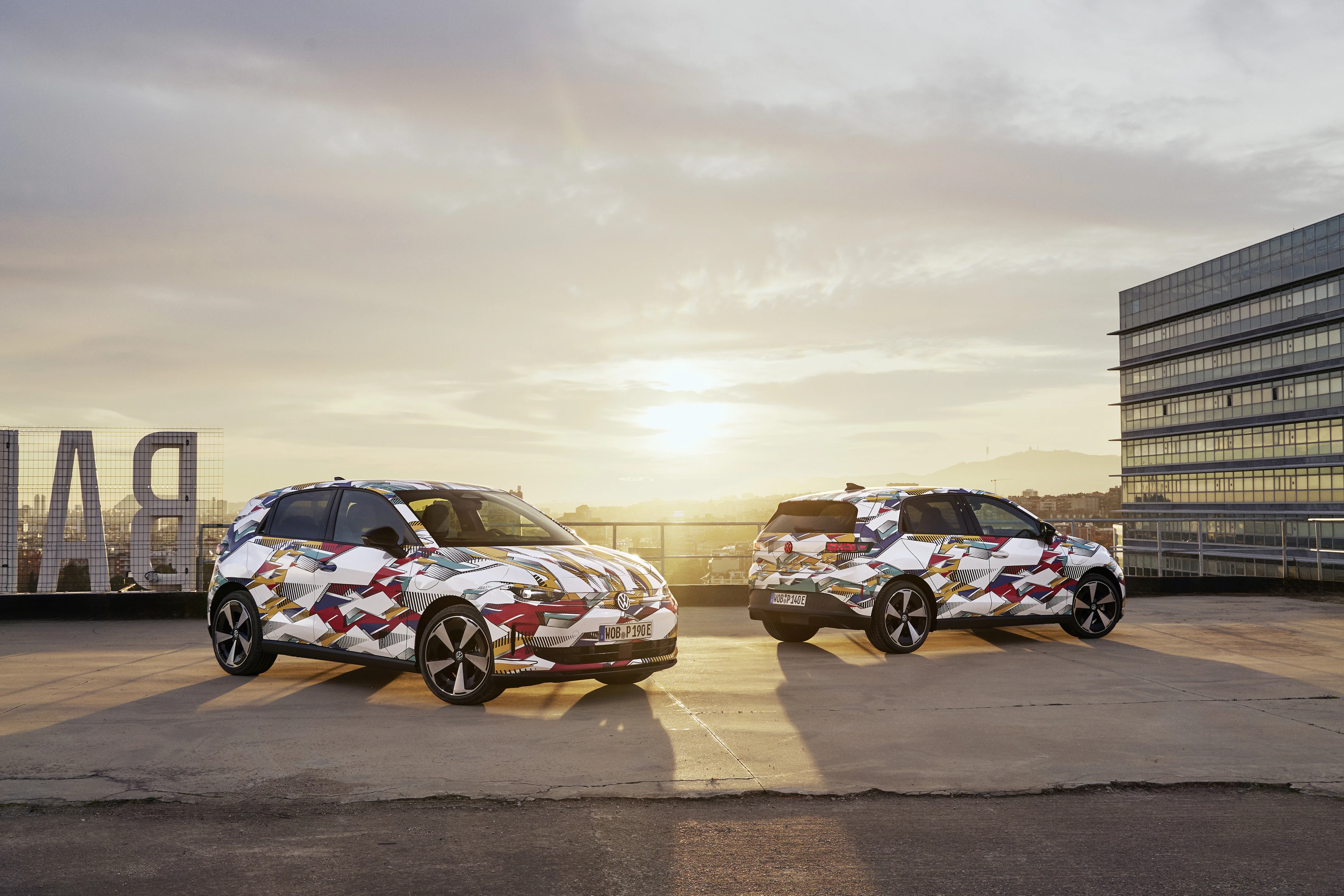
Offisielle dimensjoner er 4,053 mm lengde, 1,816 mm bredde og 1,530 mm høyde, med en akselavstand på 2,600 mm. Det plasserer den tydelig i B-segmentet. Volkswagen sier at forhjulsdriftsoppsettet og nyere elektriske moduler frigjør mer nyttbar plass enn man kanskje skulle forvente for størrelsen. Bagasjeromsvolumet er 435 liter bak setene — opp fra 351 liter i forbrennings-Poloen — og øker til 1,243 liter med setene nedfelt. Bilen har fem seter.
Batteri, lading og drivlinje
To batteripakker er bekreftet. Grunnpakken på 37 kWh bruker LFP-kjemi for lavere kostnad og bedre holdbarhet. 52 kWh-pakken bruker NMC-kjemi basert på Volkswagen Groups PowerCo-enhet, og tilbyr høyere energitetthet og lengre rekkevidde.
Rekkevidden med 52 kWh-batteriet er inntil rundt 450 km på WLTP-syklusen. Volkswagen har antydet at 37 kWh-versjonen kan levere inntil 300 km. Hurtig DC-lading fra 10 til 80 prosent tar under 23 minutter. 37 kWh-pakken lader med opptil 90 kW DC, mens 52 kWh-pakken lader med opptil 130 kW.
Fire motoralternativer er tilgjengelige, alle montert foran:
- 85 kW (116 PS) — grunnmodell
- 99 kW (135 PS) — mellommodell
- 155 kW (211 PS) — øverste ordinære variant
- 166 kW (226 PS) — GTI, kommer senere
Toppmodellen akselererer fra 0–100 km/t på under 7 sekunder, med en toppfart på 160 km/t. GTI-varianten legger til en elektronisk kontrollert differensialsperre (VAQ) og et spesielt avstemt chassis. Den er planlagt for slutten av 2026, med første leveranser i første halvdel av 2027.
Volkswagen har ikke bekreftet hvilke motoralternativer som kombineres med hvilket batteri, men 37 kWh-pakken vil sannsynligvis kombineres med de to laveste motoreffektene, mens 52 kWh-pakken er tilgjengelig for hele spekteret.
Interiør og teknologi
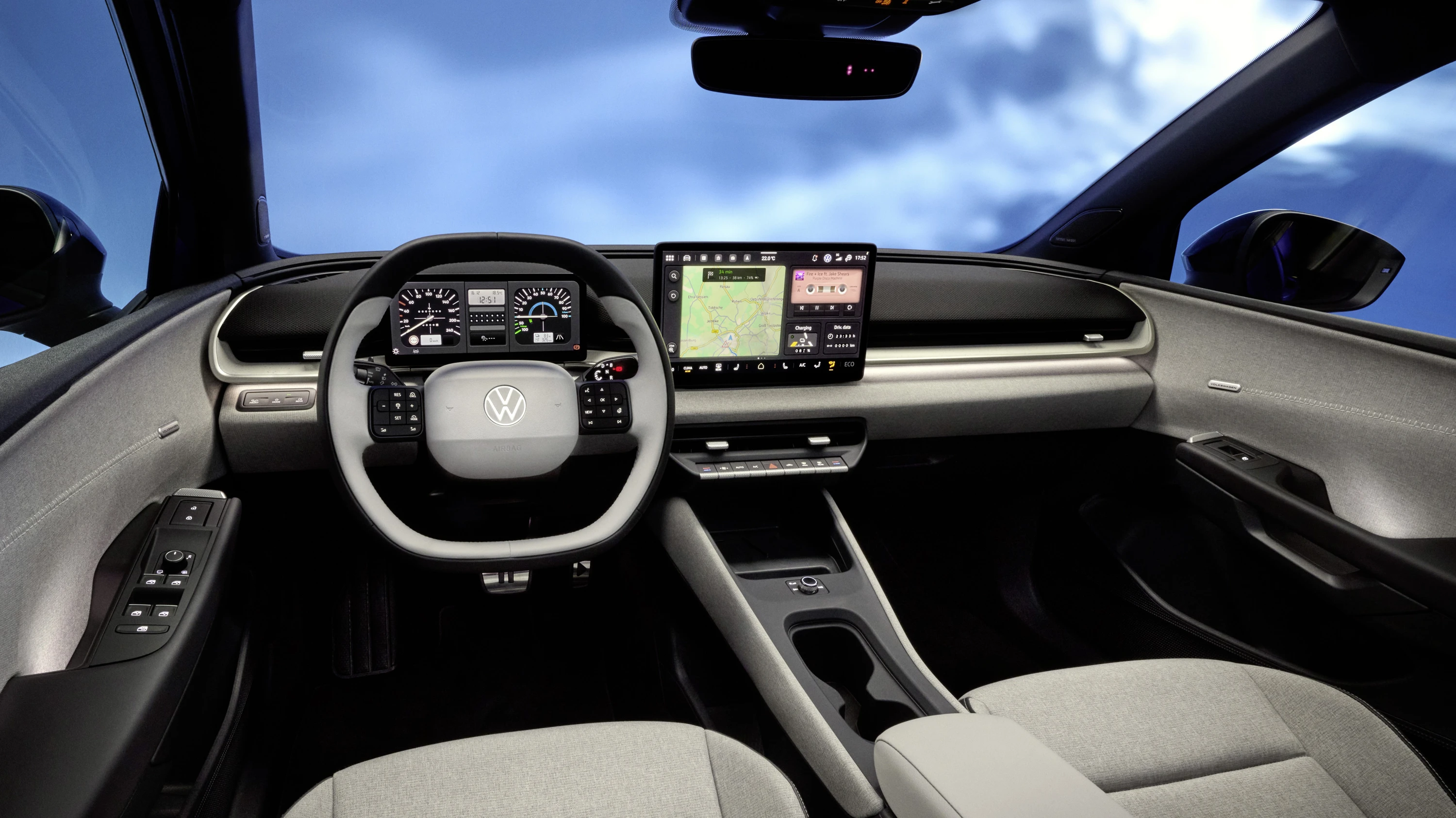
Den mest betydelige endringen fra tidligere ID.-modeller er interiørtilnærmingen. Volkswagen sier at ID. Polo introduserer en ny cockpitgenerasjon formet direkte av kundetilbakemeldinger. Budskapet er klart: merket vet at deres tidligere berøringsintensive interiører gikk for langt.
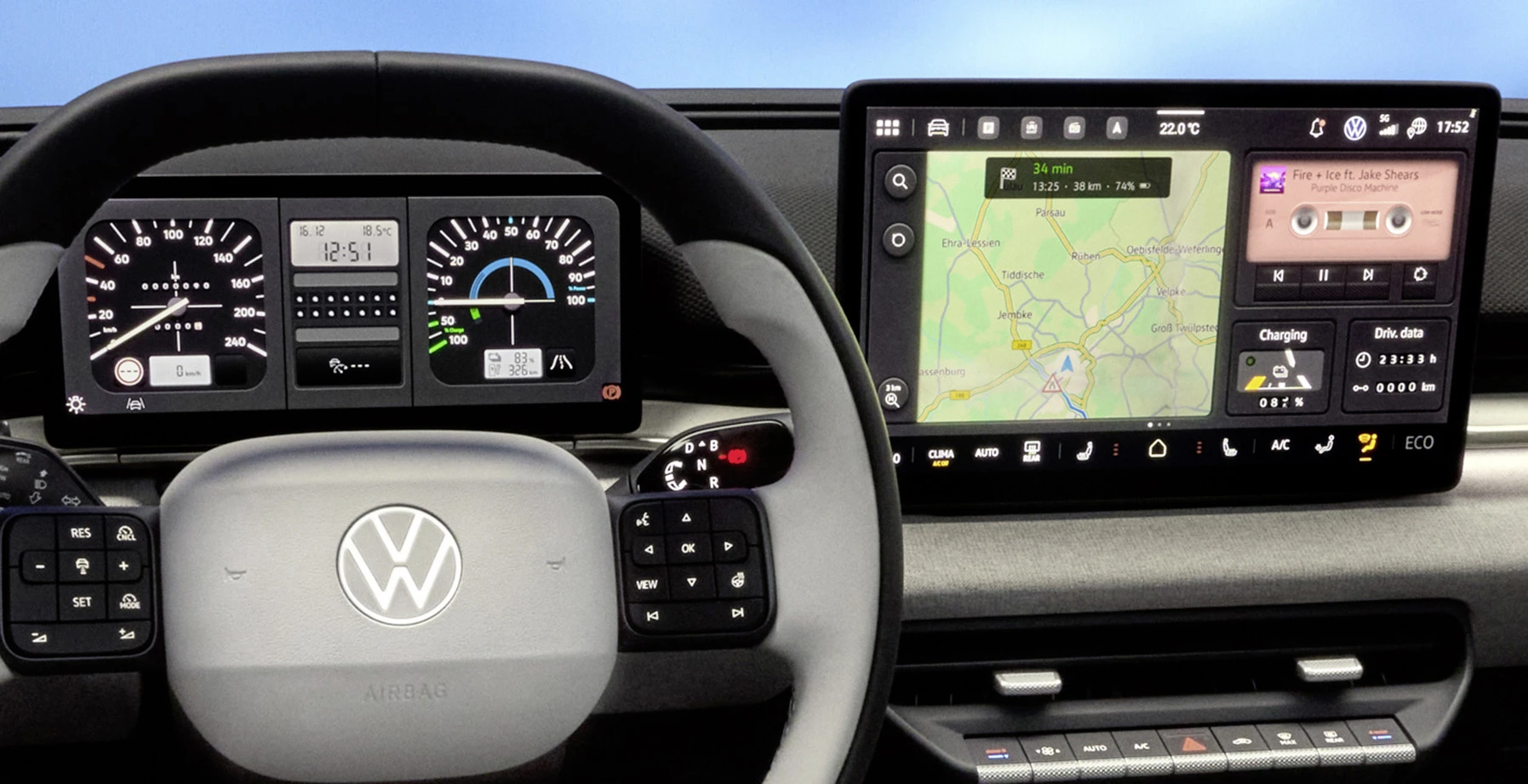
Oppsettet bruker en 10.25-tommers førerdisplay og en nesten 13-tommers sentral berøringsskjerm, plassert langs samme visuelle plan. Under infotainmentskjermen er det en egen stripe for klimakontroller og varselblinklys. Rattet har nystrukturerte knappesoner. Mellom smarttelefonholderen og koppholderne sitter en roterende bryter for lydfunksjoner — volum, sporpåvalg og stasjonsvalg. Den siste detaljen er viktig: en fysisk roteringskontroll for daglige lydoppgaver betyr færre interaksjoner med berøringsskjermen under kjøring.
Volkswagen beskriver fire prinsipper for det nye grensesnittet: klar informasjon, ryddige menystrukturer, flere knapper for direkte funksjoner og kjente betjeningsmønstre fra Volkswagen. Fysiske kontroller er tilbake for de funksjonene som skapte mest frustrasjon i tidligere ID.-modeller.
Instrumentpanelet kan også bytte til visuelle temaer inspirert av første generasjons Golf. Volkswagen kaller dette en del av sin 'Secret Sauce'-tilnærming — funksjoner som skaper en emosjonell tilknytning uten å gå på bekostning av brukervennlighet. Det er en liten detalj, men det gir den digitale kupeen litt karakter som de fleste elbilinteriører mangler.
Materialer inkluderer stoffkledde dashbord- og dørflater, med det Volkswagen beskriver som forbedret taktil kvalitet i knapper og håndtak. Selskapet prøver å få ID. Polo til å føles mindre som en kostnadsoptimalisert instegs-elbil og mer som en småbil fra en høyere klasse — noe som akkurat er formelen som gjorde forbrennings-Poloen vellykket.
Førerstøtte
Volkswagen bekrefter siste generasjon Travel Assist, som forventes å gjenkjenne røde trafikklys og stoppskilt samtidig som den støtter assisterte filskift og kombinert lengde- og sidestyring. Park Assist Plus med minnefunksjon og 360-graders Area View er også bekreftet.
Pris og lanseringstidspunkt
ID. Polo koster fra under 25,000 euro. Ved lansering høsten 2026 vil kun 52 kWh-batteriversjonen være tilgjengelig, priset til over 30,000 euro. Den mer prisgunstige 37 kWh-grunnmodellen forventes å følge i løpet av senhøsten 2026 eller tidlig 2027. Forhåndssalget åpner ved slutten av april 2026, omtrent samtidig med verdenspremieren.
GTI-varianten følger mot slutten av 2026, med leveranser i første halvdel av 2027.
Hva som fortsatt er ukjent
- Eksakte priser per utstyrs- og batterikombinasjon
- Egenvekt
- AC-ladehastighet
- Størrelse på frunk (hvis aktuelt)
- Tillatt tilhengervekt
- Tilgjengelighet utenfor Europa
- Eksakt rekkeviddetall for 37 kWh-varianten (300 km er en indikasjon, ikke et bekreftet WLTP-tall)
- 0–100 km/t og toppfart for ikke-GTI-varianter
Denne artikkelen vil bli oppdatert etter hvert som flere detaljer offentliggjøres.