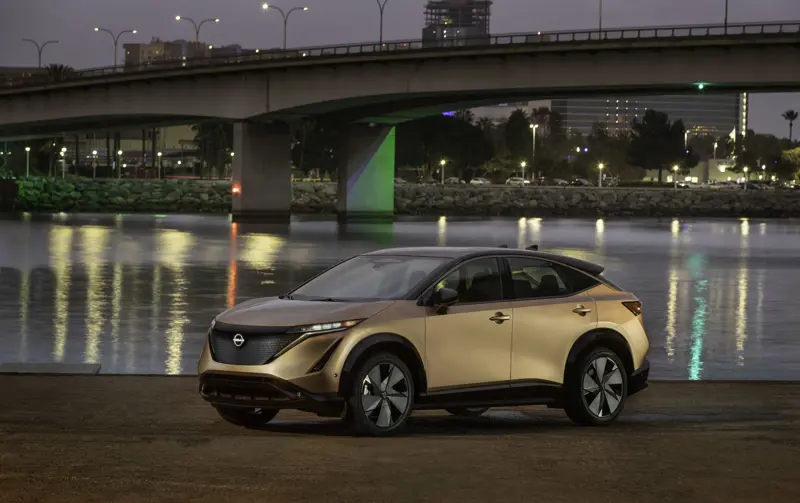
Nissan holds a pioneering position in the history of electric vehicles. The Nissan Leaf, launched in 2010, was the world's first mass-market electric car and has sold over 600,000 units globally, introducing millions of people to electric driving and proving that EVs could be practical everyday transportation. This early commitment gave Nissan invaluable experience in battery technology, EV manufacturing, and understanding customer needs.<br /><br />The Nissan Ariya, the brand's modern electric crossover, represents a significant step forward in design, technology, and capability. Built on the CMF-EV platform shared with the Renault-Nissan-Mitsubishi Alliance, the Ariya offers competitive range, dual-motor all-wheel-drive options, and a refined, tech-forward interior. It positions Nissan in the rapidly growing electric crossover segment where much of the market demand is concentrated.<br /><br />Nissan's EV strategy is closely intertwined with its alliance partnerships. The Renault-Nissan-Mitsubishi Alliance provides shared platforms, battery technology, and manufacturing resources that allow each partner to bring electric vehicles to market more efficiently. Nissan has also announced significant investments in solid-state battery technology, with pilot production planned for the latter half of the decade, which could deliver step-change improvements in energy density, charging speed, and cost.<br /><br />The brand has faced challenges in recent years, including financial restructuring and increased competition from both established automakers and Chinese EV brands. However, Nissan's long track record in electrification, its global manufacturing footprint, and its alliance resources position it well to remain a significant player in the electric vehicle market as it launches new models across multiple segments.<br /><br />Nissan has currently {0} all electric models with total {1} variants in the market. Below you find links for each model page.