Automotive Radar Sensors
Automotive radar measures radio reflections to estimate range, direction and relative motion. Its direct radial-velocity information and low dependence on ambient light make it valuable, but “works in all weather” is not an accurate specification.
How automotive radar measures a scene
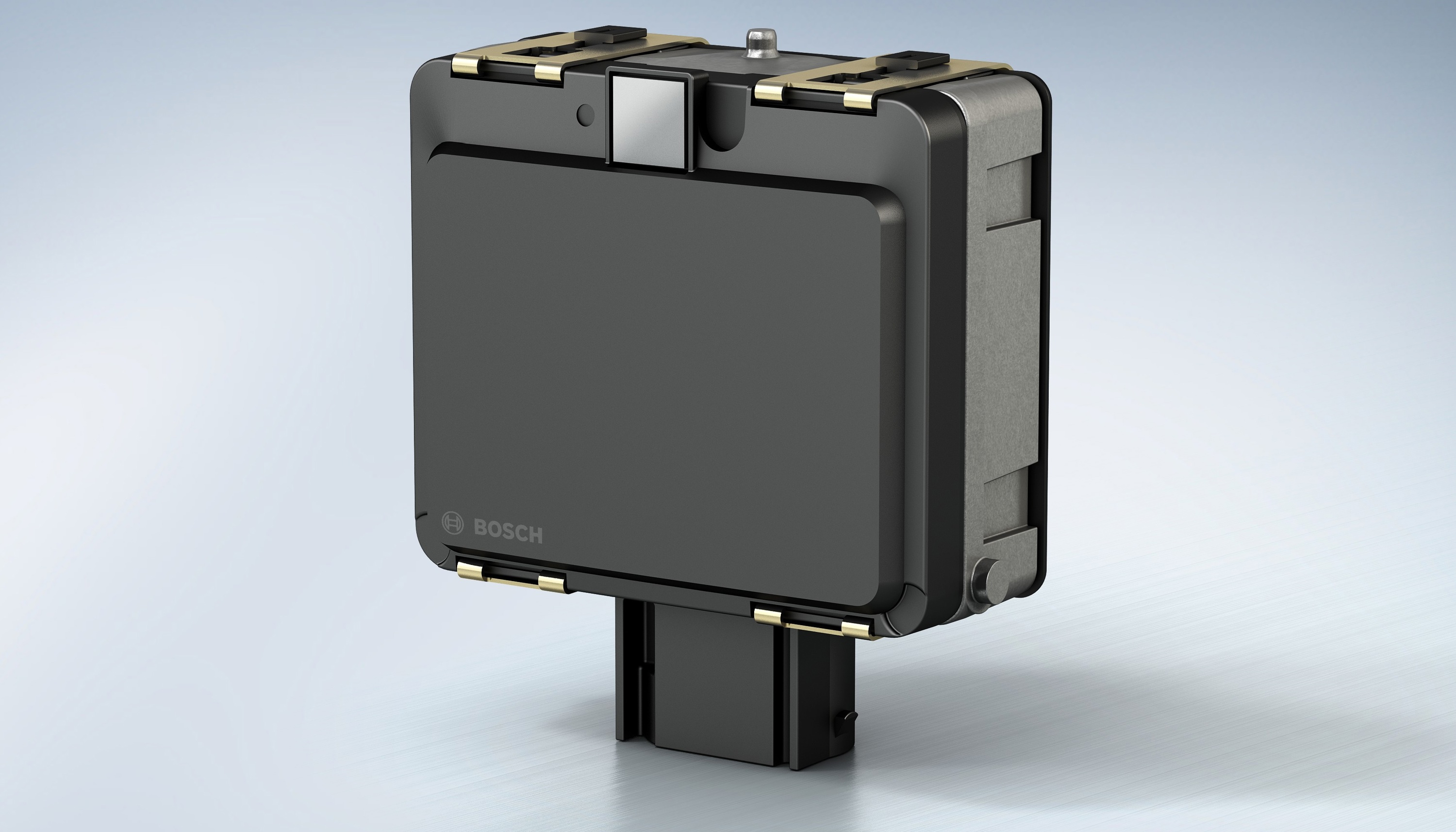
Most current automotive radar operates around 76–81 GHz. A transmitter emits a controlled waveform and receiving antennas measure reflections. Signal processing can estimate:
- range from propagation delay or frequency difference;
- radial velocity from Doppler shift;
- azimuth and, on capable designs, elevation from antenna phase;
- reflection strength, which depends on target geometry and radar cross-section.
Radar does not directly “see a car.” It produces detections or a radar image that software clusters, tracks and classifies. Guardrails, signs, road surfaces and other structures can create strong or indirect returns.
Placement and coverage
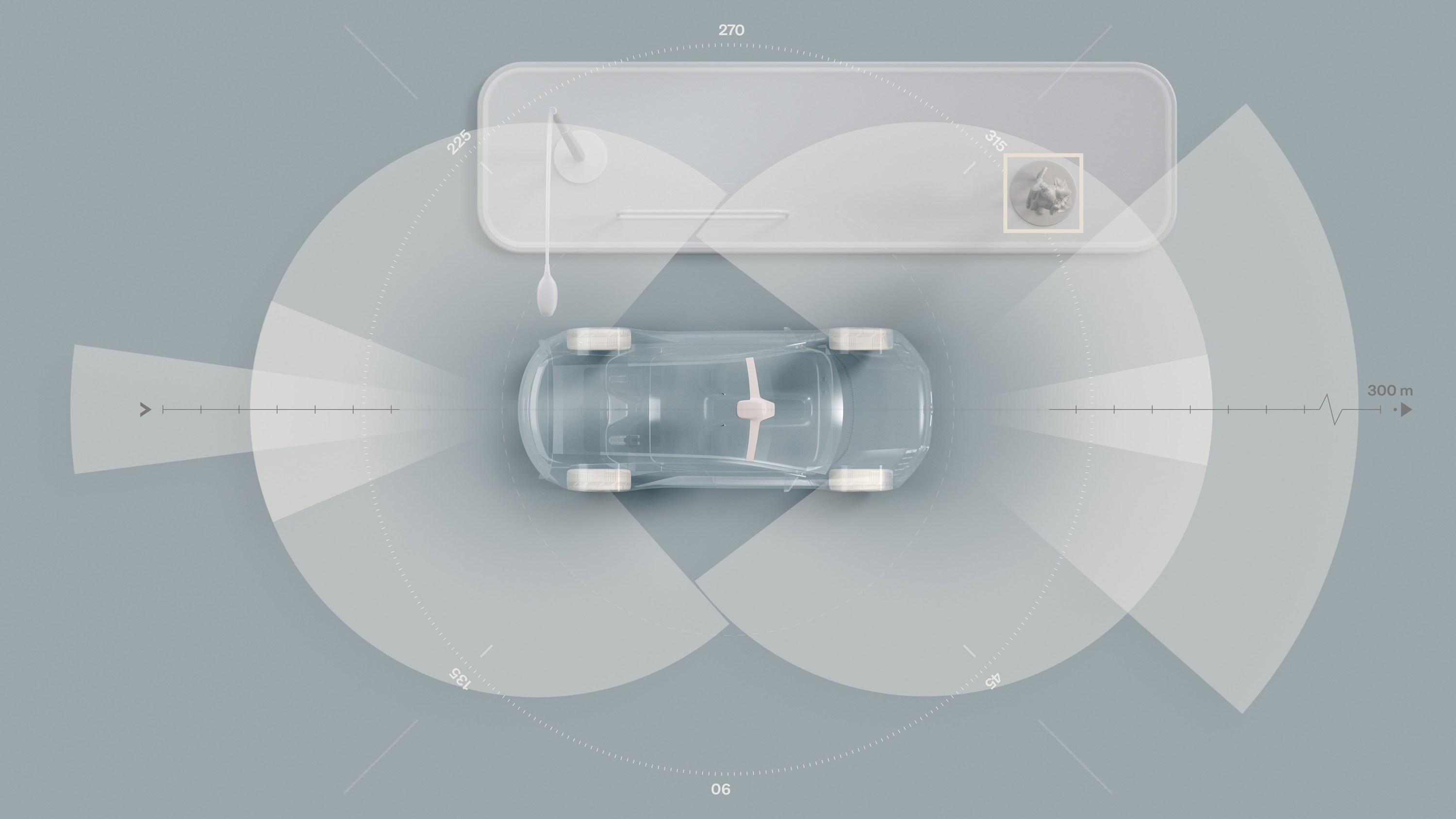
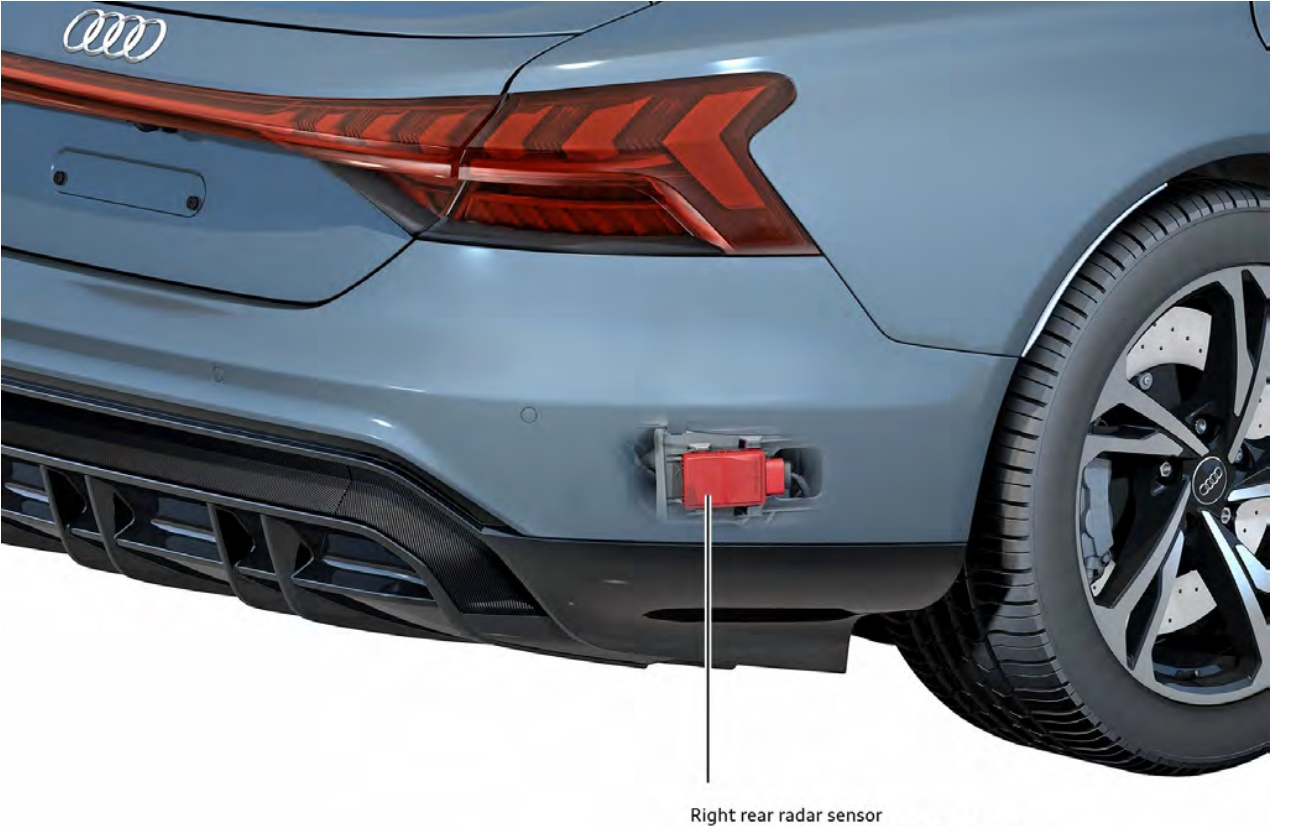
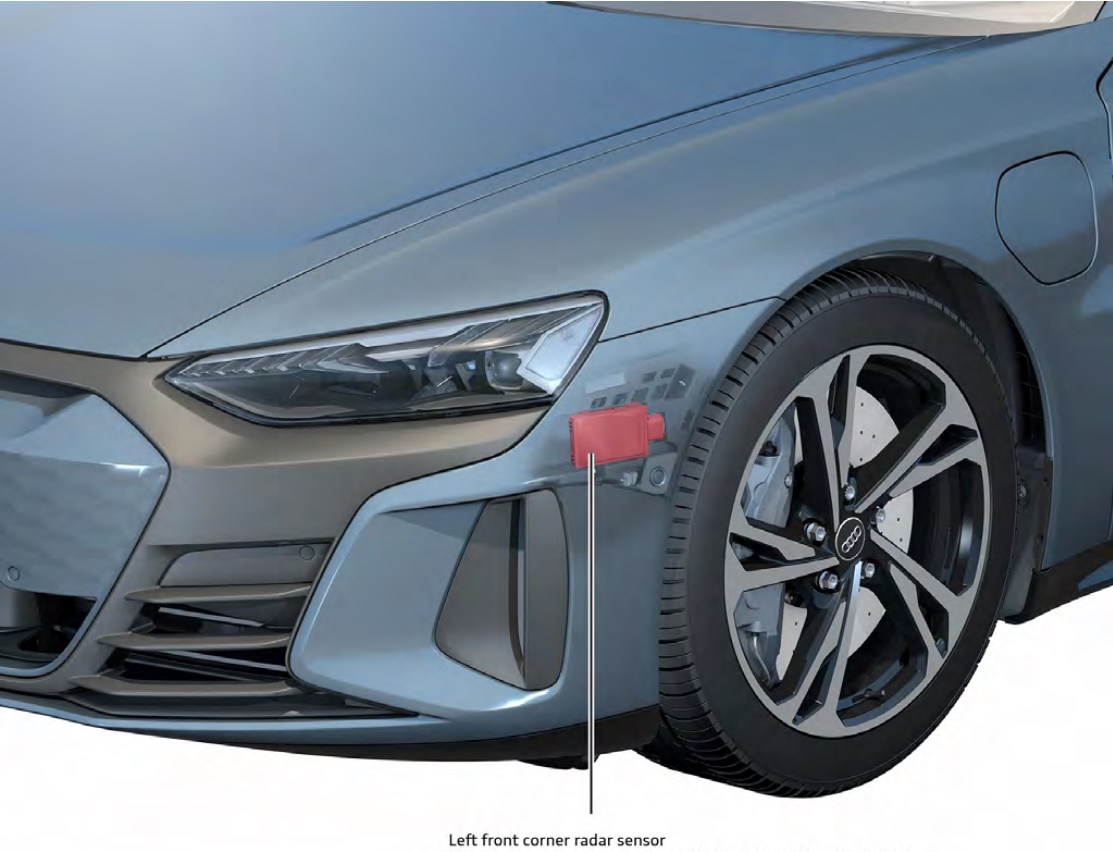
Longer-range forward radar supports speed and distance functions. Corner radar covers adjacent lanes and crossing traffic. Some vehicles add rear or higher-resolution imaging radar. Labels such as short-, medium- and long-range describe intended use rather than fixed universal distance bands.
The useful detection range depends on transmit power, antenna aperture, waveform, processing, target radar cross-section, angle, weather and the accepted false-alarm rate. A large metal vehicle and a small or low-reflectivity object are not equivalent test targets.
Driver-assistance uses
Radar commonly contributes to:
- adaptive cruise control and following-distance estimation;
- forward collision warning and automatic emergency braking;
- blind-spot monitoring and lane-change assistance;
- rear and front cross-traffic warning;
- detection of fast-approaching vehicles;
- occupant or interior motion sensing on some vehicles.
These functions may use radar alone for a limited measurement, or combine it with cameras and other sensors. Camera classification can add visual semantics; radar can stabilize relative-motion estimates. Sensor fusion explains why the result depends on association, timing and uncertainty rather than merely having both sensors.
Strengths
Radar is active and largely independent of daylight, color and visible texture. It can measure radial velocity directly and can detect some objects at substantial range. Radio waves at automotive frequencies may retain useful performance through conditions that strongly reduce visible-light contrast.
This makes radar an important input, not an all-condition guarantee. Spatial resolution, vertical discrimination and semantic classification have historically been weaker than cameras or lidar, although larger antenna arrays and imaging-radar processing are improving angular detail.
Weather, clutter and multipath
Rain, wet roads, spray and snow can create or alter radar returns. Controlled research with commercial 77 GHz sensors has measured rain-clutter detections, especially at short range and higher rain rates. See TU Delft: rain-clutter detections in commercial 77 GHz radar.
Multipath occurs when a signal reflects along more than one route, for example from the road, a barrier and a vehicle. The reconstructed detection can appear at an incorrect location. Stationary infrastructure also creates clutter that must be separated from relevant objects.
The defensible wording is that radar is comparatively resilient to illumination and some visibility loss, with performance that still depends on environment, target and processing.
Interference
Other automotive radars can overlap in time and frequency. NHTSA research found that unmitigated mutual interference could materially affect detections in simulated future traffic densities. See NHTSA: automotive radar interference study. Modern sensors use waveform design, scheduling, filtering and interference detection, but the issue cannot be dismissed as impossible.
Radar can also be degraded by a damaged or incorrectly repaired radome, ice, contamination, water films or unsuitable paint and accessories. See Calibration, cleaning and sensor health.
Imaging radar and classification claims
Higher-channel-count radar can produce denser angular and elevation information, sometimes called imaging or 4D radar. “4D” usually adds radial velocity to 3D location; it does not mean the sensor independently understands every object.
Product descriptions should disclose field of view, target definition, detection probability, false alarms, angular resolution and software generation. A maximum range without these conditions is not a vehicle-safety metric. The evaluation method in How to validate sensor and perception claims applies.
Radar in the architecture debate
Some camera-centric production configurations no longer use forward radar, while other driver-assistance and automated-driving systems depend on it. Both can be deliberate choices. Camera-only vs multimodal sensing explains why the question is whether the complete function meets its requirements and handles degradation, not whether radar is universally mandatory or obsolete.